lediplomate.media – printed on 05/20/2026
After several weeks of a major military confrontation between Israel, the United States and Iran, the Middle East remains plunged into a phase of extreme instability. If a precarious ceasefire seems for the moment to contain the direct escalation between Washington and Tehran, tensions remain high throughout the region: persistent clashes between Israel and Hezbollah in Lebanon, difficult negotiations around the Iranian issue, global energy crisis linked to the Strait of Hormuz and growing concerns of the Gulf monarchies.
At the same time, the Trump administration is trying to impose a new regional balance based on military pressure, economic coercion and the redefinition of strategic alliances in the Middle East. But Iranian resilience, the ambiguities of the Gulf countries and the fragilities of the ceasefire raise questions about the viability of such a project.
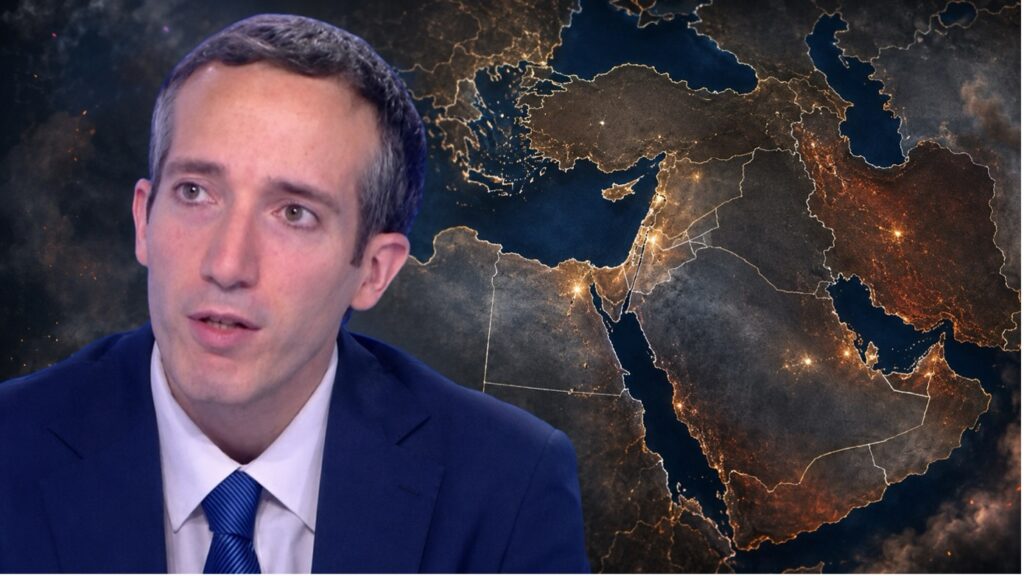
To analyze this major geopolitical sequence and its regional and international consequences, The Media Diplomat questioned Michel Fayad, Middle East specialist and analyst of regional strategic dynamics.
Comments collected by Roland Lombardi
The Diplomat: Several weeks after the start of the war between Israel, the United States and Iran, how can we characterize the current situation in the Middle East: real de-escalation or simple strategic pause before a possible resumption of fighting?
Michel Fayad : What we are observing is more of a tactical suspension than a de-escalation in the political sense of the term. The ceasefire is holding for the moment because each side has reached a cost threshold that it did not wish to cross – not because there is a shared desire to escape the cycle of confrontation.
Washington wanted to avoid getting bogged down after its strikes. Israel seeks to consolidate its gains without opening several fronts simultaneously. Iran, for its part, seeks to preserve its strategic capabilities while avoiding a confrontation that would threaten the survival of the regime. These are three logics of economic prudence, not a fundamental convergence.
And the structural causes of the crisis have not disappeared. The nuclear program remains intact. Hezbollah retains significant capabilities. The Houthis continue to disrupt the maritime balance. The crisis of confidence between Washington and Tehran is deep. We are in an armed truce, not a peace process.
The ceasefire between Washington and Tehran seems particularly fragile. Can the current negotiations really lead to a lasting agreement or are we facing a classic logic of tactical respite between two phases of confrontation?
For a lasting agreement to exist, there would need to be a minimum of strategic convergence between the two camps. However today, the objectives remain largely incompatible. Washington wants to permanently limit Iranian nuclear and ballistic capabilities, as well as Tehran’s regional influence. Iran considers precisely these capabilities as the guarantee of its survival in the face of its adversaries.
What we call “negotiations” is more about crisis management. The Americans are seeking to prevent an uncontrollable regional explosion – particularly because of the energy risk around Hormuz. The Iranians want to loosen the economic stranglehold while preserving the essentials of their strategic architecture.
The basic problem is that there is no longer any solid trust mechanism since the collapse of the JCPOA. Each party suspects the other of using discussions to gain time. A limited technical agreement remains possible. A true lasting strategic compromise seems extremely difficult to me in the short term.
Despite the American and Israeli strikes, the Iranian regime appears to have retained its political and security cohesion. How do you analyze the internal situation in Iran today and the posture adopted by Tehran in the negotiations?
This is an essential point, because part of the Western analyzes was based on a hypothesis which has not been verified: that according to which massive military pressure would cause rapid internal destabilization. The regime held.
The Revolutionary Guards maintain their control over the coercive apparatus. Political power remains structured around a logic of national survival. And above all, external aggression historically produces in Iran a reflex of patriotic cohesion – including among segments which, in normal times, are critical of the regime.
This does not mean that Iran is in a comfortable position. The economy remains under great pressure. Social tensions are real. But the regime has clearly concluded that it can absorb a high economic cost as long as its core strategic capabilities remain intact.
In the negotiations, Tehran therefore adopts a classic posture: calibrated resistance, rhetorical firmness, tactical pragmatism on the margins – but absolute refusal of any image of capitulation to Washington.
The Strait of Hormuz remains at the heart of the global strategic balance of power. Have the blockade and control operations carried out by the United States really weakened Iran’s capacity for nuisance or do they on the contrary reveal the limits of American power in the region?
Both dimensions coexist, and this is precisely what makes the situation so uncomfortable for everyone. The United States maintains overwhelming military superiority in the region – naval, air, technological. They are capable of partially securing the major maritime routes.
But this crisis also confirmed a reality that strategists know well: Iran only needs to disrupt traffic, and not completely block it, to produce a global shock. A few asymmetric attacks, targeted threats, an increase in maritime insurance premiums – this is enough to destabilize energy markets.
American power controls space militarily, but it cannot neutralize Iran’s asymmetric nuisance potential without entering into a very large-scale regional war. And this is exactly the Iranian strategy for decades: to compensate for conventional inferiority with a permanent capacity for disruption. Iran does not seek to defeat the United States militarily. He seeks to make the cost of confrontation too high in the long term.
The situation in Lebanon remains extremely tense with the continuation of Israeli strikes against Hezbollah. Is Israel now seeking to impose a new security order in southern Lebanon or to permanently weaken the regional pro-Iranian axis?
Israel pursues several objectives simultaneously. The first is security: permanently removing the threat of Hezbollah from its northern border. But beyond the tactical dimension, there is a broader strategic ambition – to weaken the regional architecture of Iranian projection as a whole. Hezbollah has, for years, been the most powerful element of this axis. Weakening it therefore constitutes a major priority.
The problem is that Israel comes up against a classic limit of asymmetric conflicts. We can inflict significant losses, eliminate executives, destroy infrastructure. But total elimination is an operational illusion. Hezbollah’s heavy weapons are located in Hermel, in the north of Lebanon – that is to say precisely where the IDF will not go, for obvious political and military reasons. And moreover, Hezbollah has been able to adapt its tactics: the use of fiber optic drones north of the Litani allows it to strike up to Galileo while circumventing Israeli electronic jamming systems This is a significant capability development that considerably complicates the security equation for Israel.
So what we are seeing is a strategy of prolonged erosion – not a realistic prospect of total elimination.
What is the real position of the Gulf monarchies today – notably Saudi Arabia, the United Arab Emirates and Qatar – in the face of this confrontation? Do they seek to discreetly support Washington or do they favor above all a logic of regional stability?
The Gulf monarchies are in a much more nuanced position than ten years ago. They remain structurally linked to the American security umbrella, but they have deeply integrated the potential cost of open regional confrontation.
Saudi Arabia, the Emirates and Qatar seek above all to preserve their economic stability, their investments and their major internal transformation projects. A major regional war would directly threaten their energy infrastructure and their financial attractiveness.
Hence a balancing strategy: close cooperation with Washington on the security level, but parallel maintenance of dialogue channels with Tehran. The Saudi-Iranian rapprochement initiated in recent years was not a simple symbolic gesture – it reflected a real desire to reduce the risk of uncontrollable escalation.
These states want neither an Iranian victory nor a total collapse of Iran which would open a phase of chaos even more dangerous for them.
Donald Trump seems to have chosen a strategy combining a show of force, maximum economic pressure and negotiations under duress. Does this approach seem coherent and effective to you or does it risk, on the contrary, accelerating the dynamics of regional and anti-American fragmentation?
Donald Trump’s strategy is based on a logic of permanent balance of power: strike hard to restore the credibility of American deterrence, then use this pressure as a negotiating lever. This approach can produce tactical results in the short term.
But it carries major risks. First, excessive pressure mechanically strengthens nationalist and anti-American dynamics in the region. Then, it pushes the targeted actors to accelerate their circumvention strategies – rapprochement with Beijing and Moscow, development of alternative financial networks, increased asymmetric militarization.
And above all, this strategy is based on a questionable hypothesis: that according to which the demonstration of force is sufficient to produce a stable regional order. However, the Middle East is crossed by very deep logics of fragmentation, where non-state actors and identity rivalries make any imposed stabilization extremely difficult.
Finally, what do you think are the possible scenarios for the coming months: gradual stabilization around a regional compromise, lasting bogging down in a low-intensity hybrid war, or resumption of a major military confrontation directly involving Israel, Iran and the United States?
The most likely scenario in the short term is that of getting stuck in a prolonged hybrid confrontation. A situation where no actor wants total war, but where everyone continues to use indirect forms of pressure – targeted strikes, cyberattacks, maritime operations, economic warfare, actions by allied groups.
Partial stabilization remains possible if a limited agreement emerges on nuclear power and maritime security. But this would require a minimum level of confidence which is, today, very low.
As for the risk of major escalation, it absolutely cannot be excluded. The region operates under very strong strategic tension, with imperfect communication mechanisms and sometimes blurred red lines. In this type of environment, a poorly calibrated incident, a particularly deadly strike or an error of interpretation can quickly trigger an uncontrollable dynamic.
The Middle East has entered a phase of extremely unstable recomposition, where the logic of confrontation remains, for the moment, stronger than that of a true regional political settlement.
#Iran,#Israel,#United States,#DonaldTrump,#Middle East,#Geopolitics,#Hezbollah,#Hormuz,#Persian Gulf,#Saudi Arabia,#Qatar,#United Arab Emirates, #Washington, #Tehran, #IDF, #Lebanon, #JCPOA, #IranianNuclear, #Trump, #HybridWarfare, #EnergyCrisis, #DetroitDormuz, #InternationalSecurity the,#MichelFayad,#RolandLombardi,#Diplomacy,#GeopoliticalAnalysis,#IranIsrael,#MiddleEastConflict,#InternationalPolitics,#War,#MiStrategy Literary,#InternationalRelations,#GlobalEnergy,#HezbollahLebanon,#GulfMonarchies,#Economic Warfare,#CyberWarfare,#WorldOrder,#TheDiplomat