
1. The ILO warns of the risk of losing tens of millions of jobs due to conflicts in the Middle East.
The International Labor Organization (ILO) warns that conflicts in the Middle East could lead to the loss of 14 million full-time jobs this year if crude oil prices rise 50% above their annual average level. This figure could reach 38 million by 2027. Rising energy costs, trade disruptions and strains on supply chains are seriously affecting the global economy. Arab countries and the Asia-Pacific region are expected to be among the hardest hit due to their dependence on energy flows and remittances from Gulf countries.
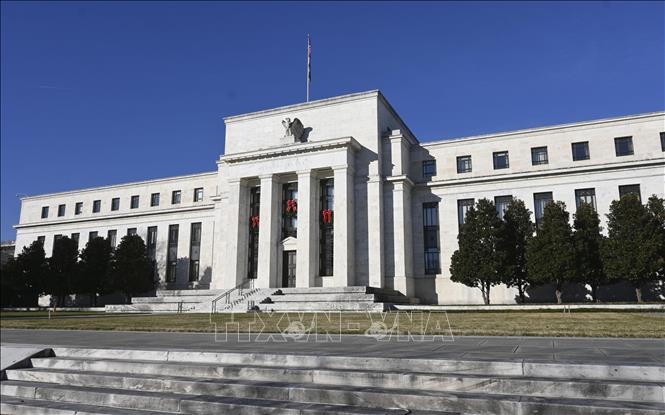
2. Kevin Warsh is preparing to take the helm of the Fed in a context of inflationary pressures and rising interest rates.
 Kevin Warsh will officially take office as chairman of the Federal Reserve (Fed) on May 22, succeeding Jerome Powell. He takes the helm of the Fed amid persistently high inflation and a stable labor market, dampening hopes for further interest rate cuts. Although appointed by President Donald Trump in the hope of lowering rates, experts say the new president could be under pressure to maintain a restrictive monetary policy, or even raise rates in order to control inflation and gain market confidence.
3. The EU responds to soaring fertilizer prices due to the conflict in the Middle East.
The European Union (EU) plans to release 200 million euros from its agricultural crisis reserve to support farmers in the face of soaring fertilizer prices. The blockade of the Strait of Hormuz, due to the conflict in the Middle East, has disrupted supplies and led to an increase in the prices of nitrogen fertilizers. The EU seeks to diversify its sources of supply and boost domestic production, but rules out suspending carbon border taxes on imported fertilizers. This measure aims to preserve fair competition for national industries and promote sustainable production.
4. Asian low-cost airlines plan to expand their operations.
Despite rising fuel prices due to the conflict in the Middle East, Asian low-cost airlines are continuing their expansion plans. Companies like Zipair, Scoot and AirAsia plan to acquire new aircraft and open new routes in the long term. These companies anticipate an imminent end to the conflict and are confident in their long-term investment strategies, because fleet renewal generally takes place in cycles of 5 to 10 years and is less sensitive to short-term market fluctuations.
5. The United States temporarily allows some poorer countries to access Russian oil.

The US Treasury Department will grant temporary blanket authorizations for 30 days, allowing some of the poorest and most vulnerable countries to access Russian oil currently blocked at sea. The measure aims to help countries dependent on energy to mitigate the impact of the crisis in the Middle East, while limiting China’s ability to build up stocks of low-cost oil. This decision demonstrates the United States’ desire to maintain sanctions pressure on Russia and Iran while protecting the most fragile economies from the risk of disruption to global supply chains.
6. TikTok is on the verge of reaching a $400 million out-of-court settlement with the US Department of Justice.
TikTok is close to reaching an out-of-court settlement with the US Department of Justice for around $400 million, following accusations of violating children’s privacy. This fine is significantly lower than the billion dollars mentioned previously. The Trump administration pushed for the deal, planning to use proceeds from the fine for urban beautification projects in Washington, D.C. However, child welfare organizations have criticized the fine as too lenient and insufficient to force TikTok to change its addictive practices.
7. China is promoting deep integration between AI and advanced manufacturing technologies.
Chinese Premier Li Qiang has stressed the importance of deep integration between artificial intelligence (AI) and advanced manufacturing technologies, particularly through the development of intelligent robots. He called for strengthening fundamental research, making breakthroughs in key technologies and accelerating innovation in intelligent machines, components and control systems. China hopes to leverage its large market, complete industrial chain and favorable policies to promote the high-quality development of its robotics industry.
8. Conflicts in the Middle East and their economic impact
In South Korea, many fishermen are abandoning their fishing grounds in the face of soaring fuel prices: On the island of Yeonpyeong, in South Korea, many were forced to abandon fishing and anchor their boats in the middle of the blue crab fishing season, due to the surge in prices of fuel and fishing equipment. The cost of fuel per trip increased by almost 50% compared to last year, a result of geopolitical tensions in the Middle East. The sharp decline in catches has resulted in insufficient revenues to cover costs, forcing many boat owners to lay off staff or temporarily suspend activity.
9. The global energy crisis is entering a dangerous phase.
The global energy crisis is worsening as the summer period of high consumption approaches, against a backdrop of conflicts in the Middle East which are disrupting oil supplies and threatening navigation in the Strait of Hormuz. Nearly 80 countries have implemented emergency measures to deal with soaring energy prices. Global oil demand has outpaced production, and the release of strategic reserves by many countries is set to end in July, increasing the risk of global recession if the Strait of Hormuz is not reopened quickly.
Source : https://baotintuc.vn/kinh-te/diem-tin-kinh-te-the-gioi-noi-bat-ngay-1952026-20260519213209420.htm




/2026/05/19/6a0c32b6091eb213689766.jpg "Football : Arsenal sacré champion dAngleterre, la fin de 22 années dattente qui récompense lefficacité dun collectif")

