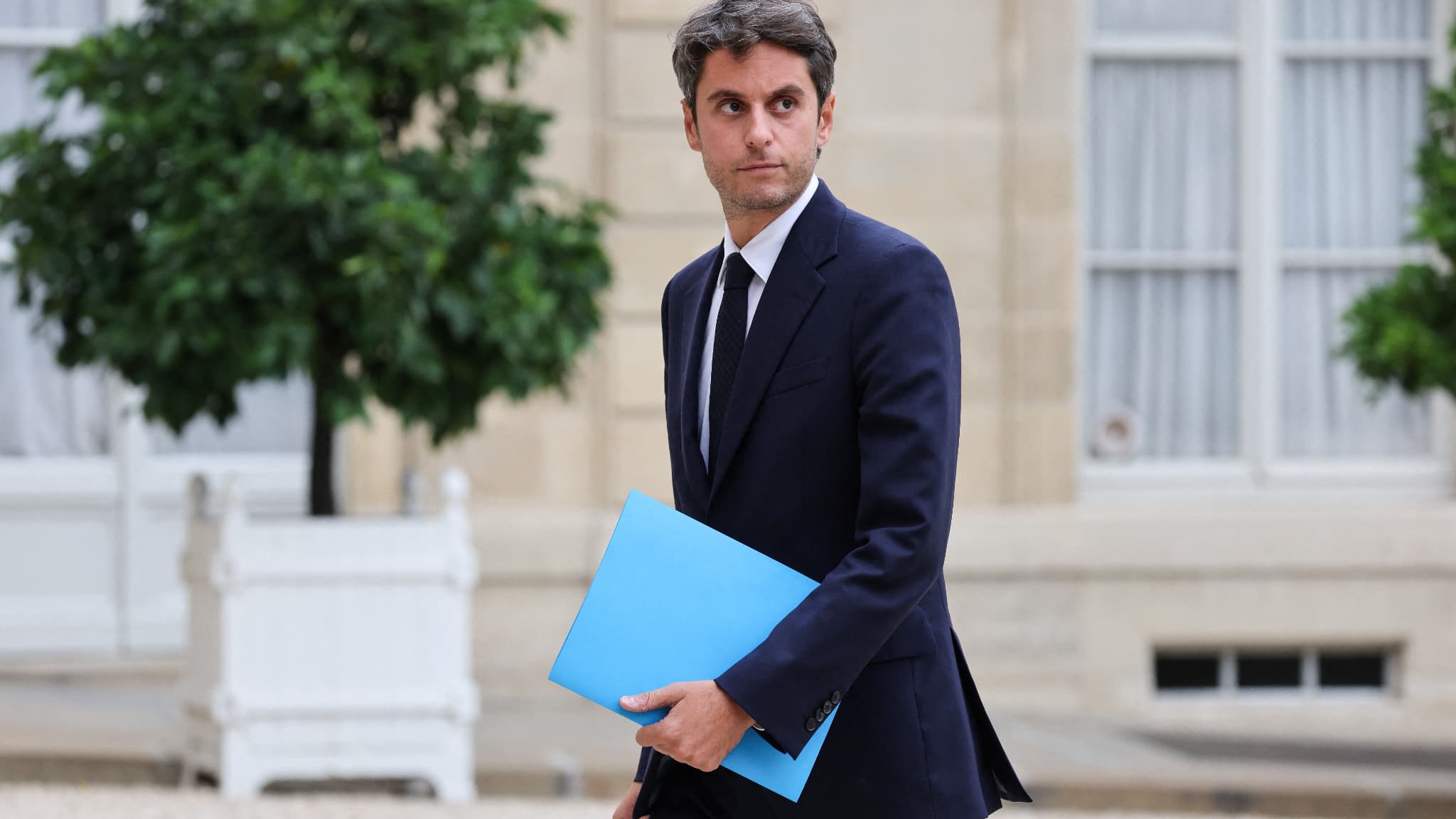
The UDR deputy tabled a first bill resulting from a recommendation in his contested report on public broadcasting. Its measure aims to “prevent conflicts of interest”, by controlling the transition of former public service officials to production companies.
UDR deputy Charles Alloncle tabled a bill to “prevent conflicts of interest” for public broadcasting leaders, translating one of the recommendations of his contested report on the sector, the result of a six-month commission of inquiry.
The elected official from Eric Ciotti’s party, an ally of the RN, hopes that the text will be examined during the niche reserved for his group, on June 25 at the National Assembly.
“Insufficient” measures
Registered on Tuesday, his bill consists of a single article providing for control over the transfers to production companies of former public broadcasting officials.
This would apply to managers whose functions included “the selection, conclusion or supervision of contracts for the production, co-production or commissioning of audiovisual works”, so that these companies are not favored
“As the law stands, the procedures for preventing conflicts of interest prove insufficient,” judges Charles Alloncle in the explanatory statement of his text.
It is the High Authority for Transparency in Public Life (HATVP) which would give its opinion on such mobility, as currently for certain public officials retraining in the private sector.
Tumultuous hearings and a contested report
During the tumultuous hearings of the commission of inquiry into public broadcasting, Charles Alloncle denounced a “system of castes and privileges”, opacity and conflicts of interest in the awarding of France Télévisions contracts to production companies.
In his report published last week, he also suggested prohibiting public broadcasting employees from being, moreover, at the head of a production company, and putting an end to the “host-producer system”. More generally, the deputy pointed out a lack of neutrality and control, as well as excessively high costs, in particular at France Télévisions.
He is accused by the left and the deputies of the central bloc of wanting to weaken the sector, or even privatize it.