The United States and Iran are clashing over Tehran’s nuclear program as the review of the treaty to prevent the proliferation of nuclear weapons begins on Monday at the United Nations (UN). This confrontation is likely to continue during this month-long meeting.
The stakes: Iran’s election as one of the 34 vice-presidents of the conference, where the 191 parties to the Treaty on the Non-Proliferation of Nuclear Weapons are reviewing its implementation, as they do every five years since it came into effect in 1970.
Iran was a candidate of the “non-aligned movement”, which includes 121 countries, mainly developing nations.
Tensions around the Iranian nuclear program escalated before the war in Iran, with President Donald Trump pledging to prevent the country from acquiring nuclear weapons.
Iran has enriched uranium to a level close to that required for the production of nuclear weapons, but Tehran insists that its program is exclusively for civilian purposes.
The meeting began with Iran offering to reopen the Strait of Hormuz if the US lifted their blockade on Iranian navigation and ended the war, while postponing negotiations on the nuclear program.
Iran is a signatory to the Treaty on the Non-Proliferation of Nuclear Weapons (NPT), which requires it to cooperate with the International Atomic Energy Agency (IAEA). However, Iran denied IAEA inspectors access to nuclear sites bombed by the US last June.
Christopher Yeaw, the US Deputy Secretary of State for Arms Control and Non-Proliferation, stated that despite potential differences of opinion on Iran’s ultimate intentions and how to manage its program, Iran has shown “disdain” for its treaty obligations.
“Instead of using this review conference to defend the integrity of the NPT and hold Iran accountable, we see Iran as vice president,” said Mr. Yeaw. “It’s more than shameful and undermines the credibility of this conference.”
The United States received support from Australia and the United Arab Emirates. The UK, France, and Germany – signatories of the 2015 nuclear agreement aimed at limiting the Iranian nuclear program, an agreement from which Donald Trump withdrew the US in 2018 – also expressed their “concern.”
Iran’s ambassador to the United Nations in Vienna, Reza Najafi, described the US accusations as “baseless and politically motivated,” opposing the US’s presence as vice president of the review conference.
He claimed that the US was the only country to use nuclear weapons and accused them of increasing their nuclear arsenal in violation of the treaty and hindering progress towards a Middle East free of nuclear weapons by supporting Israel.
According to Mr. Najafi, the attacks by the US and Israel twice in less than a year on Iranian nuclear facilities, described as a “serious violation of international law and a direct affront to the global non-proliferation regime,” are equally alarming.
Russia’s deputy ambassador, Andrei Belousov, head of the Russian delegation to the conference, lamented Iran being targeted and expressed hope that the criticisms and “politicization” that arose on the first day would not affect the outcome of the conference, which he hopes will be positive.
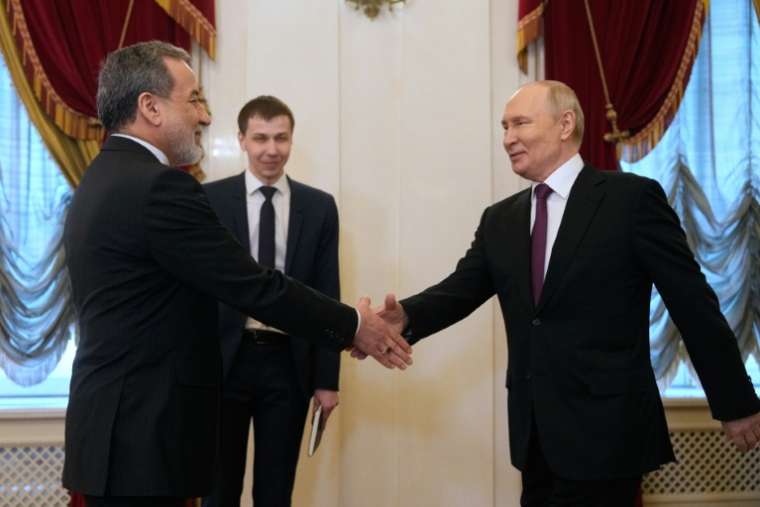
Iran’s Foreign Minister, Abbas Araghchi, met with Russian President Vladimir Putin on Monday, as reported by the Russian news agency TASS. Russia has generally remained on the sidelines of the current conflict, even though the possibility of taking over highly enriched Iranian uranium was discussed.
Russia blocks the agreement in the latest review
During the last treaty review conference in August 2022 (postponed by a year due to the COVID-19 pandemic), Russia blocked the agreement on a final document due to its invasion of Ukraine in February 2022 and references to Moscow’s occupation of the Zaporizhia nuclear power plant and bombings of Europe’s largest nuclear power station.
During the opening session on Monday, UN Secretary-General António Guterres urged treaty parties to “unite and preserve humanity from the grave threat of nuclear annihilation.”
For the first time in decades, he stated that the number of nuclear warheads is increasing, and nuclear tests are being considered. He added that the pact’s commitments have not been upheld for too long.
He called on all countries to reaffirm their commitment to disarmament and non-proliferation and, regarding new technologies like artificial intelligence and quantum computing, to “ensure that as long as nuclear weapons are not eliminated, humanity never loses control over their use.”
Under the treaty, the five original nuclear-armed powers – the United States, China, Russia, the UK, and France – have committed to negotiate for the gradual elimination of their arsenals, and non-nuclear weapon states have promised not to acquire them in exchange for the assurance of being able to develop nuclear energy for peaceful purposes.