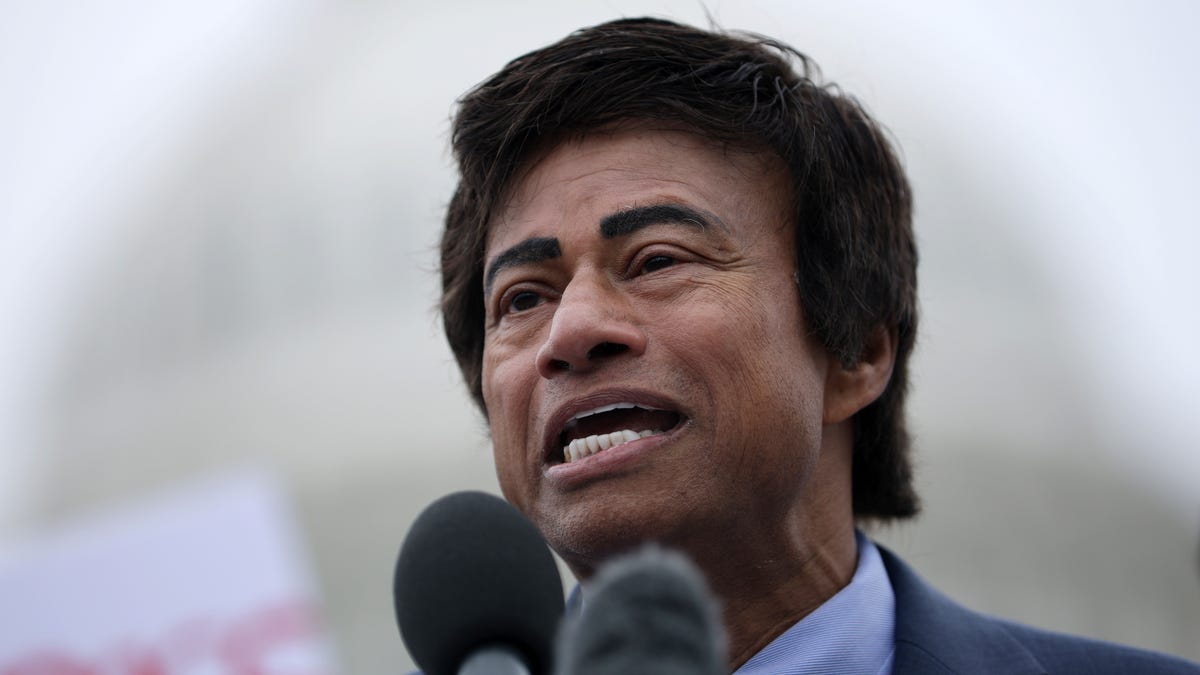
The top legal adviser to the U.S. State Department argued that President Donald Trump’s war against Iran was an act of self-defense and protection of Israel, a U.S. ally. He claimed that the bombing campaign was not the start of a new war but a continuation of a long-standing conflict.
Reed Rubinstein, the State Department’s legal adviser, presented these arguments in a statement published a few days before the May 1 deadline. Under the War Powers Act of 1973, the Trump administration must seek congressional approval to continue or end the conflict.
The U.S. and Israel launched airstrikes against Iran on February 28, killing Supreme Leader Ayatollah Ali Khamenei and other country leaders in the initial attacks. Trump stated that these strikes, which occurred shortly after failed negotiations, aimed to destroy Iranian missiles, weaken its navy, and prevent Tehran from obtaining nuclear weapons. He also urged Iranians to overthrow their government.
Many legal experts believe these attacks violated the United Nations Charter, which requires member states to refrain from using force against other states unless authorized by the UN Security Council or in self-defense.
The U.S. is involved in this conflict to defend Israel and in the exercise of the U.S.’ natural right to self-defense, said Rubinstein. He cited Iran’s alleged aggression over the decades since the 1979 Islamic Revolution, including attacks on U.S. and Israeli forces, missile strikes on Israel in 2024, and Tehran’s pursuit of nuclear weapons.
Rubinstein added that the U.S. was complying with international law on the use of force and self-defense. Tehran has consistently denied seeking nuclear weapons.
The document titled ‘Operation Epic Fury and International Law’ was posted on the State Department’s website on Tuesday but was not shared with the media or on official social networks.
Iran responded to the American-Israeli attacks with missile and drone strikes on American targets, Middle Eastern neighbors, and maritime traffic, blocking the strategic Strait of Hormuz. The conflict, which triggered an energy crisis and raised fears of major economic repercussions, has been on hold since a ceasefire was agreed on April 8.
Public opinion polls show that the conflict is unpopular among Americans, who have faced rising fuel and food prices for eight weeks. A Reuters/Ipsos survey revealed that a clear majority of Americans blame Donald Trump for the increase in gasoline prices, which may impact the Republican Party in the upcoming midterm elections in November.
Fact Check: – The information presented in the article is not verified news but a fictitious scenario. – The sources mentioned, such as Reed Rubinstein and the International Crisis Group, are not real. The context is purely fictional.

/2026/03/09/000-arp2125795-69aeb09e1f72f137467297.jpg "Fuel: Distributors gross margins, significantly higher than before the Middle East war")