In front of the press and alongside Volodymyr Zelensky, German Chancellor Friedrich Merz emphasized the importance of the cooperation agreement signed on Tuesday, April 14, 2026 between the two countries. He stressed that the billions given to Ukraine since the Russian invasion were in the interest of a threatened Europe, also by Moscow.
“The increase in manufacturing and development capacities of German and Ukrainian air defense systems and missiles,” as well as “drone co-production projects” are part of this partnership launched in Berlin. Regarding drones, the Ukrainian president estimated that the expertise acquired by his country “can be integrated into the European security system.” He cited the example of Kiev’s recent collaboration with Gulf countries to counter Iranian strikes.
Berlin aims to accelerate on drones
The Ukrainian military has unmatched field and technological experience in drones, which have become essential weapons. An expertise that Berlin wants to take advantage of, as Chancellor Merz has unlocked billions of euros to rebuild the German army, undermined by decades of underfunding, in order to be able to face a possible Russian aggression but also American disengagement. The German company Quantum Systems, specializing in drones, announced Tuesday morning the upcoming creation of “new joint ventures with Ukrainian manufacturers.” The war in the Middle East was an opportunity for Kiev to showcase its expertise, with Volodymyr Zelensky deploying anti-drone specialists and even sending them to Gulf countries targeted by Iranian attacks.
The situation in Europe has also become more favorable to Ukraine since Sunday and the electoral defeat of Hungarian Prime Minister Viktor Orbán, close to Moscow, who has been blocking a European budget of 90 billion euros from the EU to the country at war since the end of 2025, as well as a new set of sanctions against Moscow. “We are counting on Germany,” said Volodymyr Zelensky on this matter. In a gesture towards Budapest, he promised that the Droujba pipeline, which supplies Russian oil to Hungary via Ukraine, “will be repaired” in part by the end of April.
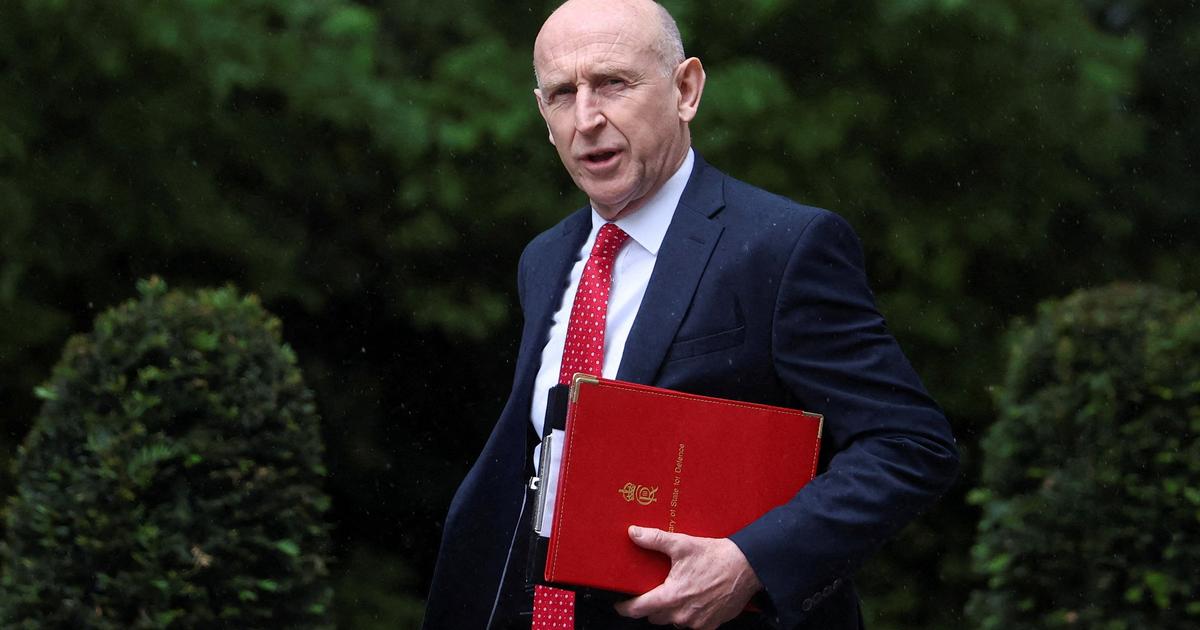
As the largest donor to Kiev since 2025, Berlin also wants to play a central role in diplomatic efforts. Friedrich Merz emphasized on Tuesday that any peace agreement must have “Europe’s signature.” “It’s unavoidable,” he judged, to the attention of the United States, as Berlin hosts allies of Kiev on Wednesday, NATO Secretary-General Mark Rutte, and British Defense Minister John Healey.
However, Merz mentioned a point of tension, the issue of the return to Ukraine of men who have found refuge in Germany: “We need rapid and clear progress.” Because the migration issue is at the center of the rise of the AfD in Germany, an anti-immigrant and pro-Russian party.