lediplomate.media – printed on 06/19/2026
By Giuseppe Gagliano, President of the Carlo De Cristoforis Strategic Studies Center (Côme, Italy)
The summit of the great who no longer command alone
In Évian-les-Bains, on the banks of Lake Geneva, the G7 presents itself with all the solemnity of major diplomatic meetings, but also with the weight of a historic transformation that is now impossible to hide. The seven countries which, for decades, represented the political, economic and financial heart of the West find themselves once again around the same table, but they no longer sit in the position they once did. They are no longer the uncontested board of globalization, they are no longer the cockpit of a willing world to automatically accept their decisions, they are no longer the exclusive center of the world economy.
They remain powerful, rich, armed, technologically advanced. But they are no longer alone. And above all, they are no longer obeyed.
Évian’s G7 was born at the heart of this contradiction. On the one hand, the West still needs to coordinate, to display its unity, to prevent its divisions from becoming irreparable fractures. On the other hand, each issue on the agenda confirms that the center of gravity of the world has displaced. Ukraine, Iran, Strait of Hormuz, China, debt of poor countries, climate, critical raw materials, energy security: each question refers to the same problem. The international order is no longer governable according to the old hierarchies.
The G7 has not disappeared. But his nature has changed. It is no longer the place where the fate of the planet is decided. It has become the space in which the West attempts to contain its own internal tensions, to maintain a minimum of strategic coherence and not to appear divided before a world that has learned to deal, to resist, to negotiate and, when necessary, to disobey.
Also read:ANALYSIS – G7: Can the club of the powerful still
Trump at the center of the European stage
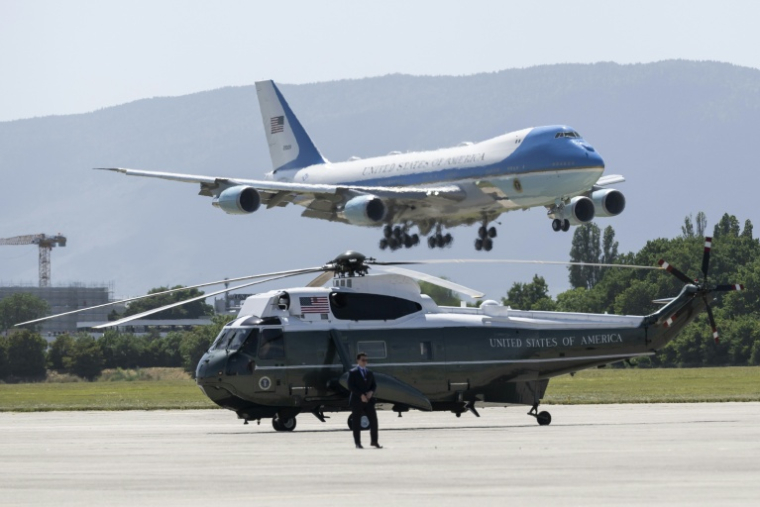
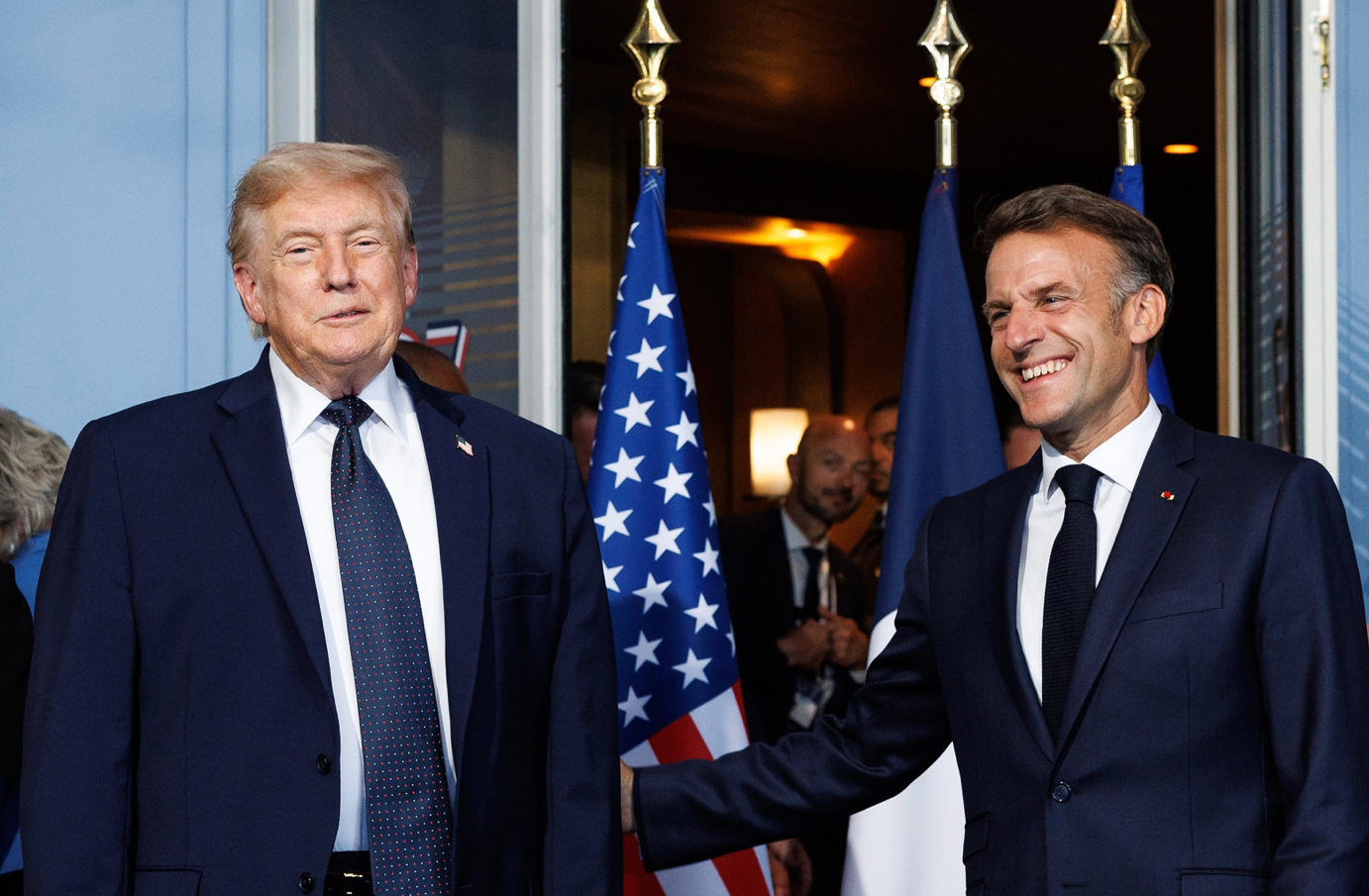
The arrival of Donald Trump dominates the summit because the United States remains the essential pivot of any Western balance. Europe can talk about strategic autonomy, evoke industrial sovereignty, proclaim geopolitical ambitions, but in the face of major crises, reality always comes back to the same conclusion: without Washington, there is no credible Western line, neither on Ukraine, nor on the Gulf, nor on China.
For European leaders, Trump is both a resource and a problem. A resource, because only the United States can still guarantee the military, financial and diplomatic weight necessary to hold the fronts open. A problem, because Trump does not reason according to the classic language of multilateralism. He does not like endless compromises, has little faith in traditional diplomatic architectures, prefers direct contact, bilateral negotiation, commercial pressure, threats as a political instrument.
Europe would like to rebuild an orderly transatlantic synergy. Trump, for his part, behaves like the majority shareholder of an alliance that he judges to be too expensive, too slow and too inclined to place the burden of security on the United States. This asymmetry reveals all of European weakness. Paris welcomes, Brussels finances, Berlin weighs economically, Rome seeks its place, but the real direction continues to depend on Washington.
The Évian summit therefore reveals an uncomfortable truth: Europe is rich but not fully sovereign, normative but not strategic, ambitious in speeches but dependent in decisive passages. It is the continent which is paying the most for the consequences of the war in Ukraine, energy crises and trade tensions, but it is also the one which is least successful in transforming its economic weight into geopolitical power.
Also read:ANALYSIS – G7 in Canada: Trump slams the door and tackles
Ukraine and the war without a clear outcome
The war in Ukraine remains the first major test of Western cohesion. kyiv continues to defend itself with tenacity, has shown a remarkable capacity for military adaptation, has been able to use drones, intelligence, communication and national mobilization effectively. But the war has long since entered its most difficult phase: that of attrition.
In wars of attrition, courage, political legitimacy or claimed moral superiority are not enough. What matters are munitions, men, factories, energy, logistics, territorial depth, the capacity to replace losses. Russia appears tired, hit, weighed down by the costs of the conflict. But it doesn’t seem close to collapse yet. It has sufficient resources, territory, military industry, mobilization capacity and external support to prolong the war.
Ukraine, on the contrary, remains heavily dependent on Western aid. Without funding, anti-aircraft systems, munitions, intelligence, training and diplomatic support, its capacity to resist would be considerably reduced. This does not diminish the value of Ukrainian resistance, but clarifies the strategic framework. kyiv can fight, but it cannot hold on indefinitely without a political decision from the West on the final goal of the conflict.
It is precisely here that the G7 meets its limit. He can promise new funds, new loans, new deliveries, new guarantees. But the question remains open: towards what outcome? Complete military victory? Freezing of the front line? Agreement with Moscow? European security negotiated? Delayed entry of Ukraine into new Western guarantees? Nobody wants to say it clearly, because each answer carries enormous political costs.
Europe, more than any other actor, finds itself trapped. She made the defense of Ukraine a test of her political identity, but she did not build the necessary instruments to support this choice alone. It has cut energy ties with Russia without having a real low-cost structural alternative. It has invoked rearmament, but its military industrial base remains insufficient. She spoke of continental security, but continues to depend on NATO and therefore on the United States.
The result is a war that Europe finances, endures and interprets, but does not direct.
Also read:ANALYSIS – BRICS in Rio : Une alliance en queste d’unité dans
Ormuz, Iran et sécurité énergétique
The possible agreement between the United States and Iran weighs on Évian as much as the war in Ukraine. The Strait of Hormuz is one of the major arteries of the world economy. Each tension in this area immediately translates into pressure on energy prices, maritime insurance, financial markets, inflation and the internal political stability of importing countries.
Iran is often presented as a regional problem, but this reading is reductive. Tehran is a power located at the most sensitive point in global energy geography. It can be sanctioned, isolated, threatened, but it cannot be removed from the map. It is located in the center of the Persian Gulf, near the Caucasus, connected to Central Asia, projected towards the Indian Ocean, in relation to Russia and China, capable of speaking to the global South in the language of sovereignty and resistance to Western pressures.
The Iranian question does not only concern nuclear power. It concerns oil, gas, the dollar, maritime routes, sanctions, Israel, the Gulf monarchies, China, Russia and the possibility of seeing the consolidation of commercial circuits less dependent on the Western system. An Iran reinserted, even partially, into international trade could strengthen Eurasian connections and reduce the effectiveness of economic isolation. An Iran once again hit or pushed back into the corner could, on the contrary, reopen the energy crisis, accelerate the militarization of the region and push other countries to seek alternative routes to the dollar.
For Europe, the stabilization of the Gulf would be of obvious interest. But, once again, Europe does not have an autonomous policy. For years it followed the line of pressure, accepted the framework of sanctions, saw its economic margins reduced in Iran and now hopes that a negotiation led by Washington will produce stability. It is a weak, almost passive position. The continent that most needs energy security remains a spectator of decisions taken by others.
Also read: PART 2 – The Great Green Game – Strategic Unthinking: Hell is
The Gulf is no longer a political protectorate
The Gulf monarchies are also evolving in a new framework. Saudi Arabia, the United Arab Emirates and Qatar maintain deep relations with the United States, but no longer want to depend on a single guarantor. They speak with Beijing, negotiate with Moscow, invest in Asia, seek an autonomous role in global finance, logistics, energy, technologies and regional diplomacy.
The old pact was simple: American security in exchange for the energy centrality of the dollar and strategic loyalty. This pact is not dead, but it is no longer automatic. The Gulf monarchies have seen the United States oscillate, change priorities, focus on the Indo-Pacific, withdraw from certain areas, then return, then threaten, then negotiate. They understood that American protection remains fundamental, but can no longer be the only insurance.
This is why they seek balance. They do not want to surrender to China, but they do not want to remain prisoners of Washington either. They do not want a total war with Iran, but they do not want a hegemonic Iran either. They do not want to give up the dollar, but are studying forms of diversification. This is the diplomacy of multipolarism: not a brutal break, but the multiplication of options.
The G7 must take into account this new behavior of regional actors. Non-Western allies are no longer extras. These are subjects who negotiate, ask, resist, buy, sell, invest and change tables when it suits them. This is perhaps the most profound transformation of the world order: not everyone openly defies the West, but almost no one wants to depend solely on the West.
Also read: DÉCRYPTAGE – Ukraine 2022-2026 : La négociation
China as the invisible center of the summit
Behind every G7 discussion looms China. Beijing is the true invisible center of the summit. The war in Ukraine also concerns the relationship between China and Russia. The Iranian crisis also concerns energy intended for Asia. Critical raw materials refer to value chains controlled or influenced by China. The energy transition largely depends on Chinese productive capacity. Trade imbalances are inseparable from the power of Chinese industry. Western economic security is born from the fear of depending too heavily on Beijing.
The problem is that China cannot simply be isolated. It is too big, too integrated, too necessary. It is a commercial partner, industrial competitor, strategic rival and systemic creditor. For decades, the West has built a significant part of its prosperity on low-cost Chinese production. He now discovers that this choice not only reduced prices: it transferred productive capacities, skills, industrial chains, negotiating power.
The energy transition shows this contradiction with the greatest clarity. Europe has made climate a major regulatory architecture. China has made it an industrial power. It produces solar panels, batteries, components, turbines, refined materials, technologies for electric mobility. The United States reacts with protectionism, subsidies and barriers. Europe is looking for an intermediate path, but risks ending up with very ambitious rules and insufficient factories.
The point is brutal: it is not enough to want to lead the green transition, we must produce the instruments for this transition. Whoever controls mining, refining, components, patents, logistics and manufacturing capacity also controls the pace of change. China understood this earlier and better than the others. The G7 is now seeking to catch up, but this catch-up requires years, immense investments, competitive energy, an industrial policy and a cohesion that the West does not always demonstrate.
The return of the State to the economy
The debate on the imbalances in the world economy marks the end of an illusion. For thirty years, the West has preached the opening of markets, liberalization, the reduction of the role of the state, the superiority of global value chains and the automatic virtue of interdependence. Today, he is rediscovering economic security, industrial policy, protection of sectors, control of investments, strategic raw materials, technological sovereignty.
This is not a proclaimed ideological turning point, but it is a real turning point. The State is returning to the center because the world market is no longer sufficient to guarantee security. The pandemic, the war in Ukraine, the energy crisis, tensions in the Strait of Hormuz, competition with China and logistical fragility have shown that efficiency without redundancy is a vulnerability. Producing where it costs less works as long as the world is stable. When the world becomes conflicted, no longer producing what we need means losing our sovereignty.
The United States responded with aggressive industrial policy, subsidies, selective protectionism, and capital attraction. China has never stopped using the state as the architect of development. Europe appears slower, divided, regulatory. It has savings, skills, businesses, research, but struggles to transform all of this into industrial power. The risk is obvious: becoming the continent of standards, while others become the continents of factories.
Development, debt and climate on the margins of power
While the G7 focuses on wars, economic security and competition with China, the big issues of the Global South are slipping to the margins. Development cooperation, debt of poor countries, climate change, food security and infrastructure do not disappear, but lose their political centrality. This is a strategic error.
The reduction in international aid signals a new hierarchy of priorities. Advanced countries spend more on defense, security, support for allies and protection of value chains. They spend less to bridge global economic divides. But poverty, the debt crisis, climate instability and lack of infrastructure do not remain local problems. They produce migrations, conflicts, radicalization, competition for resources, state fragilities and new spaces for Chinese, Russian, Turkish, Indian or Gulf influence.
Debt is one of the harshest forms of contemporary addiction. Many low-income countries are spending an increasing share of their foreign exchange earnings on debt servicing. This means fewer schools, fewer hospitals, fewer roads, less electricity, less agricultural investment, less sovereignty. Formally, they remain independent. Materially, they remain chained to creditors, markets, rating agencies, financial organizations and foreign currencies.
The climate suffers a similar fate. It is mentioned, but it no longer really governs the agenda. Trump’s positions make a compact Western line difficult. Europe continues to defend the ecological transition, but it must deal with social costs, industrial competition, technological dependence and internal resistance. Emerging countries claim the right to development and reject the idea of having to pay the price of a crisis historically produced by industrialized economies.
The Global South no longer listens in silence
The presence of Saudi Arabia, Brazil, South Korea, Egypt, India and Kenya shows that the G7 can no longer stand on its own. These countries represent energy, demographics, industry, agriculture, trade routes, raw materials, markets, regional security and political ambitions. They are not decorative guests. They are necessary interlocutors.
Brazil speaks for a part of the Global South that does not want to be drawn into a new Cold War. India embodies the autonomous power which dialogues with all and binds itself definitively to no one. Saudi Arabia represents the new energy and financial diplomacy of the Gulf. Egypt remains fragile but central to the Mediterranean, Africa and the Middle East. Kenya signals the growing importance of Africa in demographic, food and infrastructure balances. South Korea confirms that Asian technology is now an essential component of expanded Western power.
These actors do not refuse the G7. But they don’t suffer from it. They want investments, technology, security, infrastructure, credit, access to markets, diplomatic margins. They no longer accept lessons without compensation. They do not necessarily intend to break with the West, but do not want to surrender their sovereignty to it. This is the true sign of multipolarism: not always a frontal challenge, often a permanent negotiation.
The G7 as a necessary shadow
The G7 is now a shadow of the power it once was. But shadows can also be useful, if they help to understand the position of the body that produces them. For the West, this format remains important because it keeps channels of dialogue open between allies who risk diverging more and more. The United States is looking to China and the Indo-Pacific. Europe is looking towards Russia, Ukraine, the Mediterranean, energy and migration. Japan looks towards Asian security. Canada seeks to defend its own space between the United States, the Arctic and global trade.
Without a place of coordination, these trajectories could move further apart. The G7 therefore serves to preserve a common grammar. It is not enough to govern the world, but it can prevent the West from also losing the ability to talk to itself. This is small compared to the past, but it is not insignificant.
The problem is that this defensive function cannot be confused with global leadership. If the G7 wants to remain useful beyond the Western perimeter, it must confront what it has so far postponed: a serious reform of international finance, a credible policy in the face of debt, development cooperation which is not subordinated solely to security, an industrial strategy capable of competing with China without being reduced to sterile protectionism, a realistic energy line, a less moralizing diplomacy and more capable of recognizing the interests of others.
Évian and the end of automatic obedience
Évian tells of a West that is still strong, but no longer as dominant as before. Still rich, but less capable of guiding the world economy alone. Still armed, but less adept at transforming military superiority into political order. Still influential, but increasingly contested by powers and countries that no longer want to be peripheral.
The G7 remains necessary for the West, but it is no longer enough for the world. This is the formula of the new time. The wars in Ukraine and the Gulf, the pressure on Iran, the competition with China, the weight of the debt, the climate crisis and the search for economic security are not separate issues. They are symptoms of a broader transition: the move from a Western-centric order to a more fragmented, more competitive, more unstable and more negotiated system.
The real challenge is not to save the shape of the G7. It is to be understood whether the West is prepared to accept that its leadership can no longer rest on the automatic obedience of others. He will have to negotiate more, concede more, produce more, listen more. And maybe preach less.
If it knows how to do it, the G7 could still have a function. If he does not know how to do it, it will become the elegant rite of a world that continues to come together while the story moves elsewhere.