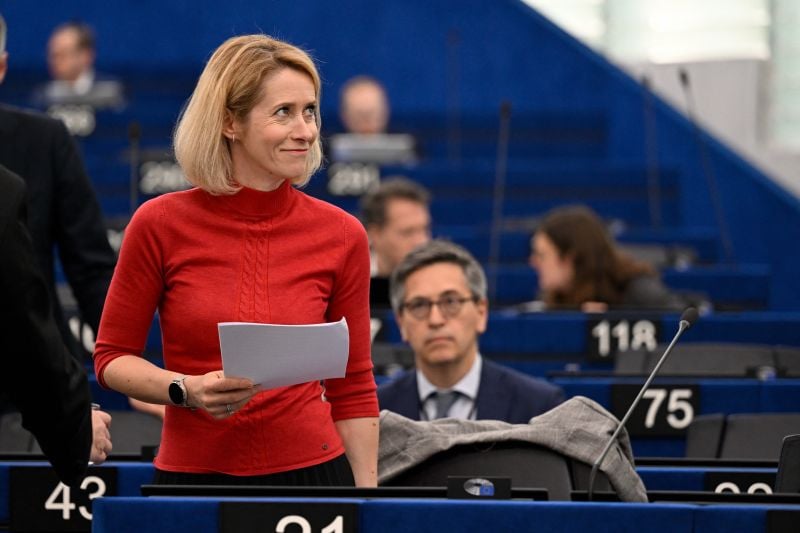
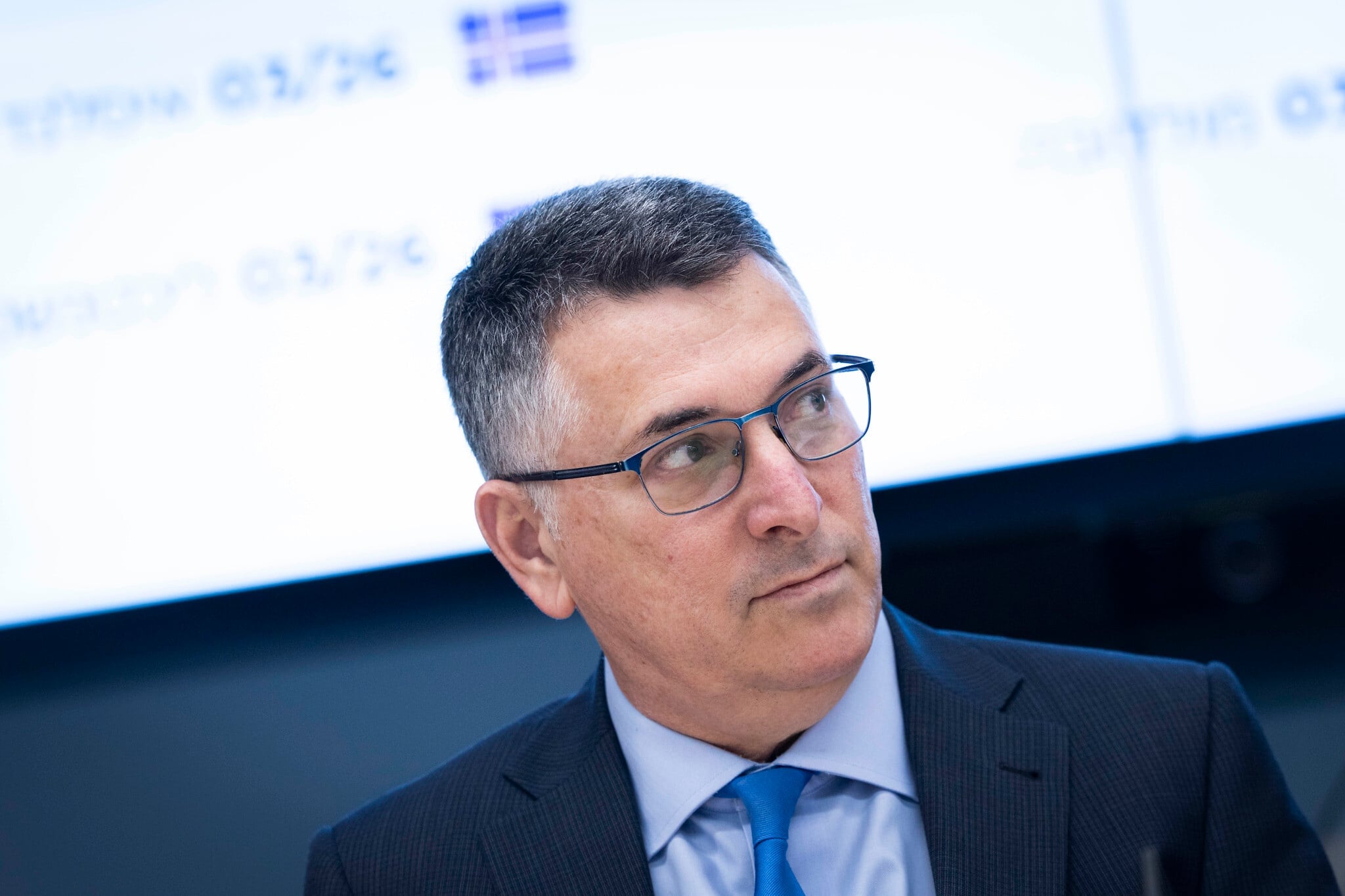
Foreign Minister Gideon Saar announced Thursday that he was suspending all contact with the head of European Union diplomacy, Kaja Kallas – the latter, according to some reports, compared Israel to the South African apartheid regime.
A decision which gave rise to a public quarrel between the two personalities, who debated the issue on social networks.
In a message that was posted on the social network reference to an article which claimed that she had made the remarks on apartheid in May, during high-level discussions in Mexico with government officials.
Officials and diplomats whose identity has not been revealed reportedly told the Euractiv site last week that Kallas had compared the treatment reserved by Israel for the Palestinians in Gaza and the West Bank to the apartheid system that existed in Africa of the South until the beginning of the 1990s. Words which would have been criticized by several European representatives.
Sa’ar added: “To date, she has not issued any denial, clarification or response regarding this serious statement” – which left the Israeli foreign minister “with no choice but to sever all contact with Kallas.” until she returns to the accusation of ritual murder that she launched against the only Jewish state in the world, and which is also the only democracy in the Middle East.
He said he was “grateful to the many European elected officials who condemned this serious statement”, before sharing some of these positions on X.
Ms. @kajakallas, the EU High Rep. for Foreign Affairs and Security Policy, has for some time now been acting obsessively and with blatant unfairness toward the State of Israel.
Recently, it was published that during her visit to Mexico, she compared Israel to the racist…
— Gideon Sa’ar | גדעון סער (@gidonsaar) June 18, 2026
In response to Saar, Kallas stressed that the EU was “committed to a constructive relationship” with Israel but did not address the reported comments on apartheid.
“Dear Gideon, as you know, the EU and Israel have many links. I attach great importance to our dialogue and our engagement, and I am prepared to continue in this spirit, in a respectful and constructive manner. Dialogue is the foundation of diplomacy, especially when differences arise. The EU is still committed to a constructive relationship with Israel,” Kallas wrote on his X account.
Apparently rejecting Sa’ar’s accusation – that she had acted unfairly in her approach to Israel – the European Union’s foreign policy chief repeated the EU’s position that a two-way solution States is “the only viable path” that will “bring peace to the Middle East.” She noted that the Union therefore “condemned the illegal Israeli settlements in the West Bank which make this objective increasingly difficult to achieve.”
Dear Gideon, as you know, the EU and Israel have a lot that binds us. I value our dialogue and engagement, and I’m open to continue in that spirit, respectfully and constructively. Dialogue is the foundation of diplomacy, especially when differences arise. The EU is always…
— Kaja Kallas (@kajakallas) June 18, 2026
However, a European diplomat who spoke on condition of anonymity told Euractiv in his article that “the comparison with apartheid is unacceptable and does not reflect EU policy.” “It’s a serious problem if she makes this kind of statement while officially representing the EU on the international stage.”
Israel rejects any accusations of apartheid, saying its own Arab citizens enjoy equal rights. Israel also points out that the country granted limited autonomy to the Palestinian Authority at the height of the peace process in the 1990s, giving it control over areas of the West Bank where the majority of the territory’s Palestinians live.
Despite the breakdown in contact, Saar responded to Kallas in a message that was written in Hebrew on X, telling him: “Even in what you say here, you avoid denying or condemning” the comments that were reported. He added that “that says it all.”
“To my knowledge,” he continued, the comments that were reported “do not reflect the position of the European Union.”
“The question is simple: if you actually made these shameful and defamatory comments, then take responsibility for them. If you didn’t keep them, deny them. As long as this matter remains pending, my decision will remain unchanged,” he declared.
An EU foreign affairs spokesperson declined to say whether Brussels was officially denying or retracting comments allegedly made by Kallas on apartheid.
While he was asked, during a press briefing, if a denial had been officially issued by the Union, Anouar El Anouni reiterated the answer given to a previous question which concerned the severance of contacts decided by Saar, claiming that he had “already exhausted [le] subject and [qu'il] had nothing else to add.”
He noted that Kallas would remain open to continuing dialogue with Israel.
It is difficult to say exactly what the severance of contact with Kallas will entail, and whether it will apply only to Kallas herself or also to her office and other bodies under her supervision – although, given the importance of her role, it will most likely be the first hypothesis.
The terms were similarly vague when Sa’ar decided to cut off all contact with UN Secretary-General Antonio Guterres last month, after the latter included the Israeli army on his blacklist of entities facing credible accusations of sexual violence in war zones.
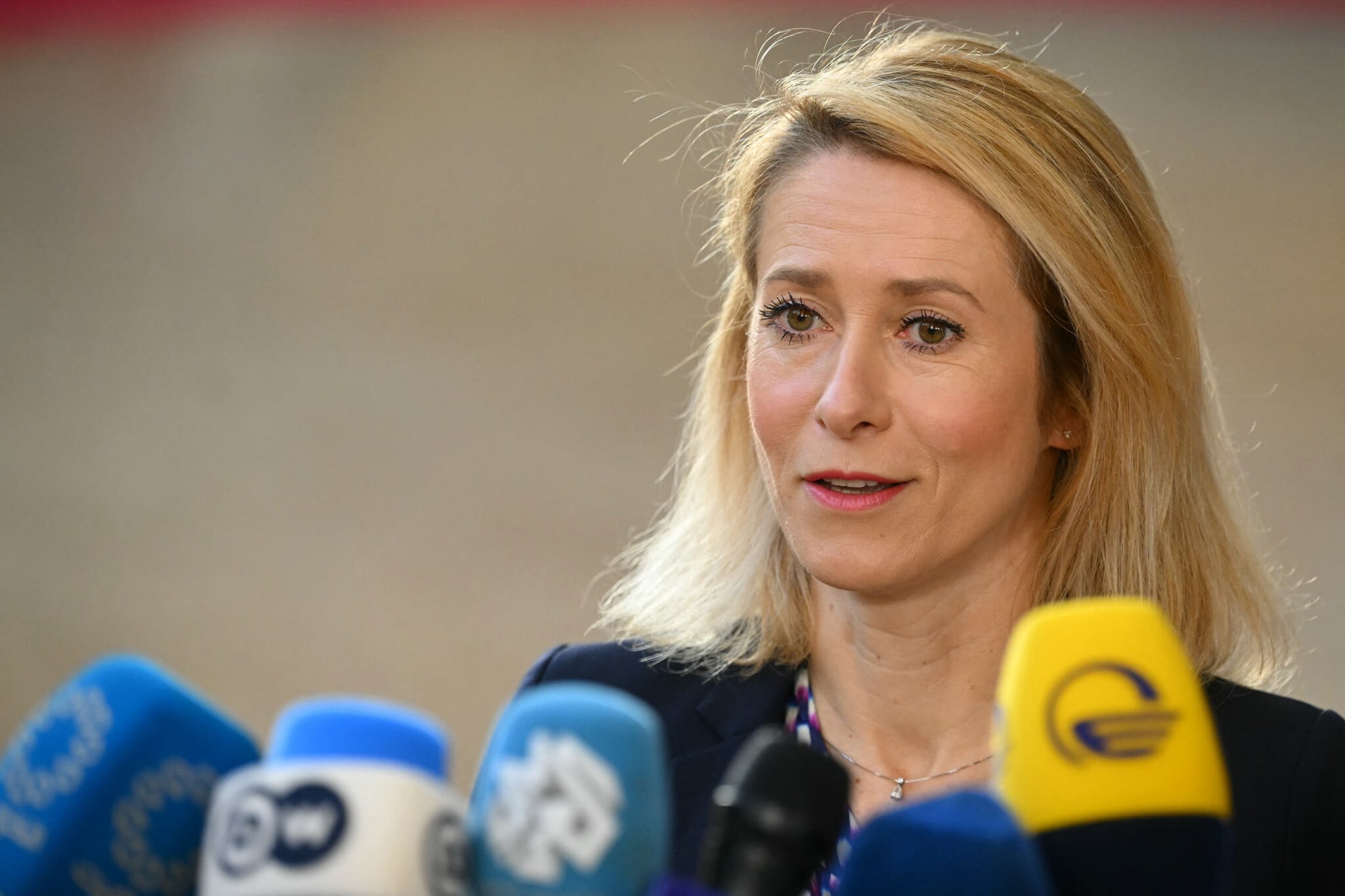
According to Euractiv, Kallas is the subject of criticism for controversial comments she may have made on other issues, with a European Commission official responsible for foreign affairs deploring, on condition of anonymity, her “reckless comments on multiple occasions”.
The EU’s highly critical attitude towards Israel over its conduct of the war in Gaza reached new heights following Israel’s invasion of Lebanon in March – in response to attacks on Israel by the Iranian-backed Hezbollah terrorist group — and after the Knesset adopted a new law providing for the death penalty for Palestinian terrorists convicted in the West Bank.
Last April, several EU member states rejected an initiative by Spain, Slovenia and Ireland which aimed to suspend the bloc’s cooperation agreement with Israel.
Last month, the EU approved sanctions against “extremist and violent” Israeli pro-settlement movement supporters’ organizations and their leaders, as well as leaders of the Hamas terror group.