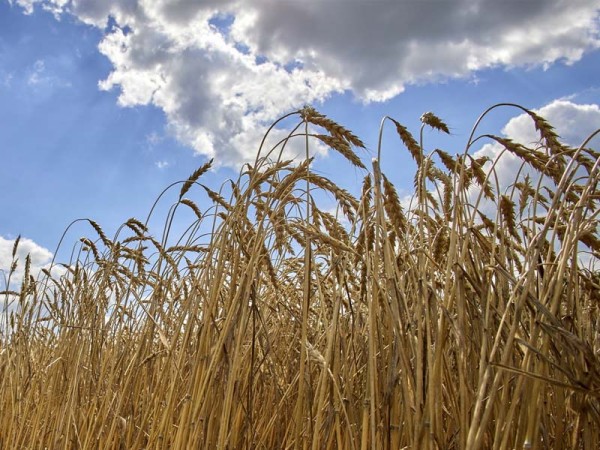
On the Old Continent, analysts report “good production prospects, with the weather which has once again become favorable for crops in Western Europe after the heatwave of the last week of May”, explains Sébastien Poncelet, analyst at Argus Media France, to AFP.
Same story across the Atlantic, where the growing season has started: “the first assessments of the state of summer crops showed that they were doing quite well,” notes Arlan Suderman, analyst for the StoneX brokerage platform.
These projections led the funds to launch a “ liquidation movement “, according to Sébastien Poncelet, a reversal of trend compared to the February-March purchasing race.
Thus, on the Chicago Stock Exchange, a bushel of wheat (27 kg) traded at $5.89 on Wednesday, practically the lowest since April. It is 80 cents cheaper than the peak observed in mid-May.
American corn and soybeans followed the same movement.
On Euronext, wheat continued to appear on Wednesday at its lowest level since February, at 203 euros per tonne. “The psychological support of 200 euros (…) is holding up for the moment,” remarks Mr. Poncelet.
The analyst assures, however, that “the fall (in prices) has been cushioned in Europe compared to the United States”, notably by the strengthening of the dollar compared to the euro, which makes European goods more attractive.
“Incessant comings and goings”
At the same time, the support provided to prices by the geopolitical risk premium linked to the Middle East is diminishing, and cereals are gradually detaching themselves from the upward trajectory of oil.
The conflict has not had a significant impact on the world’s supply of cereals.
“Operators are tired of the headlines and the incessant back and forth on a potential peace agreement” between Washington and Tehran, explains Arlan Suderman.
“So they come to focus on the usual fundamentals of this time of year. »In the United States, this results in the return of questions about Chinese soy orders.
The White House announced in mid-May that Beijing would purchase “at least $17 billion per year of U.S. agricultural products in 2026 (prorated for the remaining months), 2027 and 2028, in addition to the soybean purchase commitments it made in October 2025.”
This prospect initially aroused some enthusiasm in the American market, before gradually fading, with investors doubting that Beijing would fully honor this commitment.
Demand for biofuels
“In general, China sources its soybeans and corn from South America until around August or September, then it turns more towards the United States from this period,” notes Dewey Strickler, analyst at Ag Watch Market Advisors.
American soybean farmers will therefore have to be patient before being able to gauge Chinese needs.
Although falling, the price of oilseeds should find some support thanks to the demand for biofuelsrelaunched by the government of Donald Trump with an increase in quotas imposed on refiners, estimates Arlan Suderman.
The markets are also preparing to welcome the update of the forecasts of the American Department of Agriculture (USDA) on world harvests for the current campaign.
In the latest edition of its report, the ministry anticipated a much smaller wheat harvest in the United States than in 2025. An upward revaluation will be a downward factor for prices.
According to Sébastien Poncelet, the USDA, however, rarely adjusts its forecasts for corn and soybeans during this June report, preferring to wait for data on sown areas published later in the month.