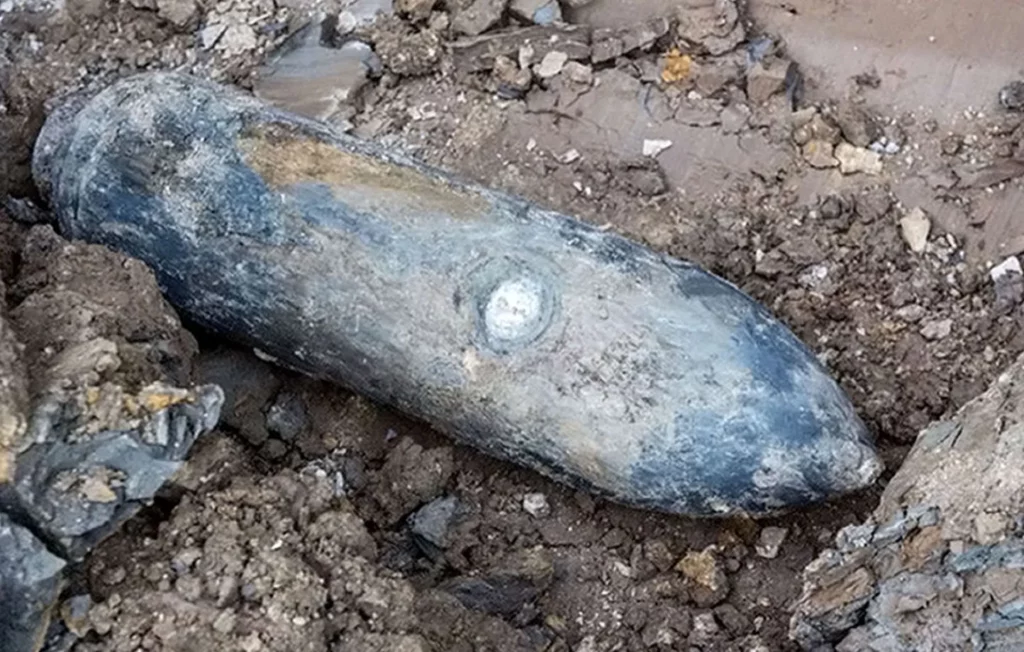
Russia resurrects PMD-6 mines from WWII to saturate the Ukrainian front
Faced with economic constraints and international sanctions, Russia has relaunched the production of antipersonnel mines inspired by the Soviet PMD-6a weapon withdrawn from arsenals in 1949. This resurrection of equipment from the Second World War testifies to a low-cost weapons strategy aimed at lastingly contaminating the Ukrainian territories.
Examples of this modernized mine were discovered in the Sumy sector by Ukrainian forces, allowing for the first time an in-depth technical analysis. This discovery reveals a new facet of Russian military strategy and its dramatic humanitarian implications for civilian populations.
A Soviet relic from the 1930s returned to service
The original PMD-6 was a wooden pressure mine, designed in the 1930s by the Soviet military industry. Its rudimentary design and low manufacturing cost explain its return in an updated form in the contemporary Russian arsenal.
According to the specialized Ukrainian project “Міни та кава з канапками” (Mines and coffee with sandwiches) cited by the site specialized in Militaryni, mass production of this modernized mine would have started about a year ago. It was only after the capture of several examples in the Sumy sector that Ukrainian mine clearance experts were able to carry out a detailed technical examination.
The new version is distinguished by its relatively high quality molded plastic body, capable of supporting up to two kilograms of camouflage without triggering the firing mechanism. The lid remains articulated by a hinge on the main body, faithfully repeating the original mechanical diagram.
A low-cost weapon with deadly consequences
Technical analysis reveals an explosive charge consisting of a 200 or 75 gram TNT cartridge depending on the variant, armed with a Soviet MUV type detonator. The original PMD-6 activated under a pressure of between 6 and 28 kilograms, the weight of a young child, making it one of the mines the most dangerous for civilian populations.
The exact activation threshold of this modernized version remains undetermined, but Ukrainian experts believe it likely retains these deadly characteristics. This armament strategy is part of a logic of saturation of the terrain, transforming conflict zones into contaminated territories in the long term.
The most worrying aspect lies in the total absence of a self-destruct mechanism and an anti-manipulation device. Each device placed thus becomes a permanent threat, capable of remaining active indefinitely.
Gross violations of international humanitarian law
This lack of a self-destruct mechanism directly contravenes amended Protocol II of the Convention on Certain Conventional Weapons (CCW), which entered into force in December 1998. This protocol requires the integration of self-destruct mechanisms into any modern antipersonnel mine.
By freeing itself from these international obligations, Russia transforms each device into a lasting trap, contaminating rural and peri-urban areas for decades.
Ukraine could thus become, at the end of the conflict, one of the most mined countries in the world, according to estimates by Handicap International. This alarming prospect adds to the colossal challenges of post-conflict reconstruction.
A humanitarian scourge of tragic dimensions
The figures for 2024 illustrate the scale of the disaster: 6,279 people were killed or injured by mines or explosive remnants of war, constituting the highest annual toll in four years. Nine out of ten victims are civilians, almost half of whom are children.
The Russian strategy of using modernized PMD-6 mines is part of a military logic of long-term territorial denial, transforming the liberated areas into death traps for civilian populations who will try to return there. This approach is proving particularly effective in fixing Ukrainian forces and complicating their tactical movements.
Economic constraints reveal a war of attrition
This resurrection of obsolete weapons testifies to the economic constraints weighing on the Russian war effort. Faced with international sanctions and difficulties in supplying sophisticated electronic components, Moscow favors proven and inexpensive technological solutions.
Western military experts see it as a form of asymmetric warfare, using rudimentary means to maximize the psychological and humanitarian impact on Ukrainian civilian populations. This strategy illustrates the broader issues of European rearmament in the face of new threats.
Faced with this massive contamination, the international community will have to develop new adapted demining strategies, while Europe strengthens its arsenal of sanctions against violations of international humanitarian law. The Ukrainian territories will require decades of mine clearance to regain their security, transforming this war into a lasting mortgage on the future of the country.