The operators are returning to Wall Street today, after a three-day weekend due to “Memorial Day” celebrated across the Atlantic. Yesterday, most European indices jumped, driven by hopes for peace in the Middle East. But the scenario darkened during the night as American bombs fell on southern Iran. Futures on indices nevertheless suggest a rising opening on Wall Street, which is suddenly digesting the news of the last 48 hours: the Nasdaq-100 should climb by 1.1% ahead of the S&P (0.7%) and the Dow Jones (0.5%).
On Monday, the markets were largely reassured by the resumption of negotiations between Iran and the United States and by the relative relaxation on the Hormuz side, where around thirty ships passed through without incident. A sign of the relaxation at work, oil fell by almost 6% and Donald Trump even seemed measured, for once is not customary. “The negotiations are taking place in an orderly and constructive manner, and I have asked my representatives not to rush things, because time is on our side,” he indicated before talking about relations with Iran “much more professional and productive” than before.
Comforted by these positive signals, the markets chose to ignore the main sticking point between Washington and Tehran, namely the future of Iran’s nuclear program, a subject which was deliberately left out of the negotiations.
Return of tensions in the Middle East
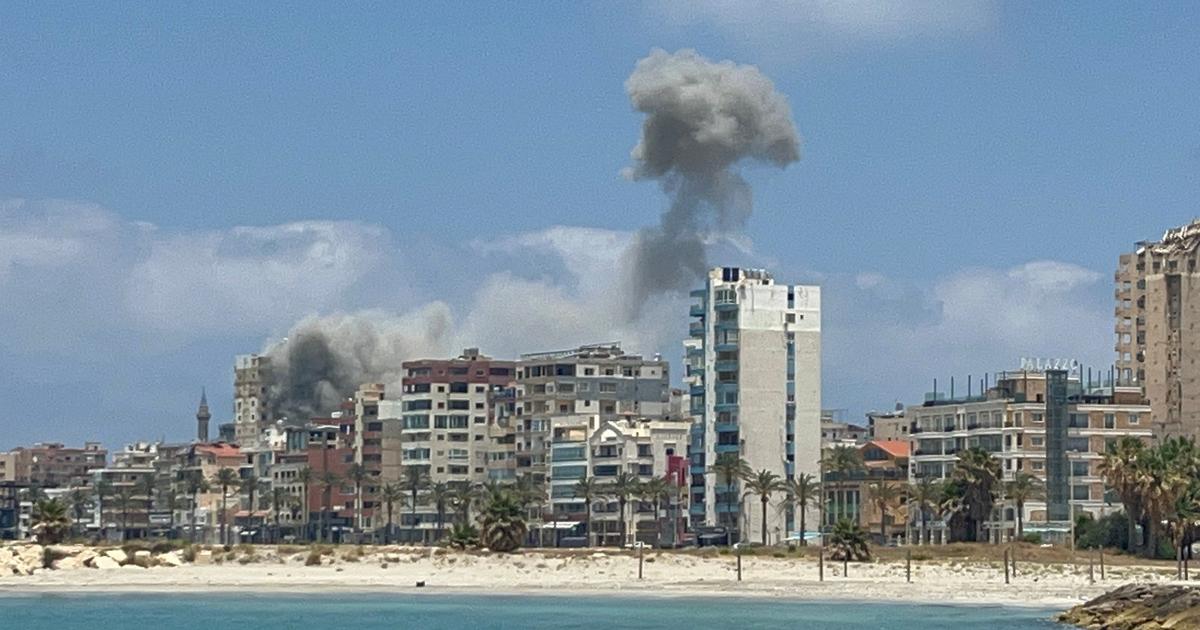
Except that the geopolitical climate suddenly became tense overnight at the same time as the American army was bombing sites in the south of the country as well as mine-laying ships, according to Washington.
At the same time, Donald Trump indicated that he demanded that Iranian enriched uranium be handed over to the United States for repatriation and destruction or, preferably, in collaboration with the Islamic Republic of Iran, destroyed on site or in another acceptable location, under the supervision of the Atomic Energy Commission.
Despite this renewed tension, the rebound in black gold prices remains relatively contained, with WTI trading at USD 92 per barrel (2%).
UBS in fact cites “generally stable” global oil flows characterized by “very low” Iranian exports, while Saudi Arabia is slightly increasing its loadings via Yanbu, without however fully compensating the expected volumes.
“The rise in oil prices should only have a limited impact on the spending of American companies, with energy producers remaining disciplined with their investments,” the Goldman Sachs teams analyzed this morning.
AI in support of markets
According to the bank, investment by American companies should remain very dynamic in 2026, driven by spending linked to artificial intelligence and new tax incentives. Goldman Sachs believes that AI will strongly support investments in infrastructure, equipment and software throughout the year. The tax measures of the “One Big Beautiful Bill Act” are also starting to have an impact on investment spending.
Across the Atlantic, AutoZone published a net profit of 641.5 MUSD for its 3rd quarter 2025-2026, lower than consensus expectations which expected 611 MUSD. The stock is expected to fall sharply at the opening, around -5%.
Elsewhere, Eli Lilly is expected to rise 0.7% after announcing agreements to acquire three companies, Curevo, LimmaTech Biologics and Vaccine Company, thereby advancing its strategy of investing in differentiated technology platforms to address important health problems.
Speakers will also learn about consumer confidence (Conference Board) for the month of May at 4 p.m. The index reached 92.8 last month and the consensus is for 92 this month.
In the meantime, the dollar is stable against the single currency, around 0.858 euros.