By Dr. Mohamed H’Midouche, DBA
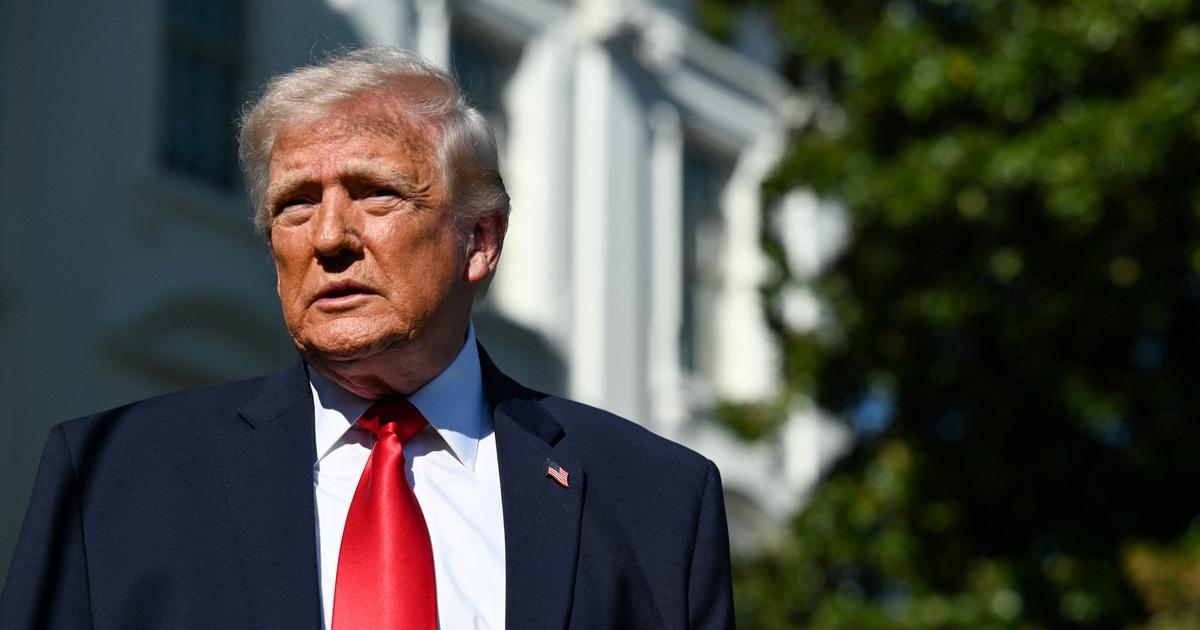
Energy is becoming a weapon of power. The agreement announced on March 19, 2026 in Washington between the United States and Japan, mobilizing up to 40 billion dollars for the development of Small Modular Reactors (SMR), is the most recent illustration.
But beyond this announcement, a central question now confronts African decision-makers: Can Africa achieve sustainable energy and industrial sovereignty without integrating controllable, secure, and financeable energy, in addition to renewables and hydrogen?
The answer to this question goes beyond just the energy field. It engages the continent’s position in the industrial value chains of the 21st century.
The global energy landscape is undergoing a profound transformation. SMRs are no longer a marginal innovation, but a structuring lever of power. Behind their development lies a strategic competition where major powers seek to structure complete value chains, ranging from technology to financing, including operation, maintenance, and training.
In this context, Africa can no longer simply be a deployment space. It is faced with a decisive choice: to participate in this restructuring or suffer the consequences. The question is not only about energy, but also industrial, geopolitical, and sovereign.
The debate between renewable and nuclear energies is outdated. Efficient energy systems nowadays rely on an intelligent combination of multiple sources.
Renewable energies offer undeniable abundance, but their intermittence limits their capability to support sustainable industrialization alone. SMRs provide controllable energy, capable of stabilizing grids and powering industrial activities. Hydrogen allows energy storage and conversion into an industrial vector, opening the way for new value chains.
In this complementarity, energy sovereignty is constructed. This systemic view of energy issues is not new; it extends previous analyses emphasizing that SMRs cannot replace renewable energies but rather serve as a complementary structuring element in an integrated approach to the African energy mix.
The African challenge remains massive. More than 600 million Africans still lack access to reliable electricity, and the continent’s energy demand is projected to double by 2040. In these conditions, the issue is not only about expanding access to electricity but also about building energy systems capable of supporting industrialization, local resource transformation, and critical infrastructure development.
Without a stable energy base, African ambitions in refining, metallurgy, agro-industrial transformation, data centers, desalination, or hydrogen production will remain fragile. Energy is therefore less of a sector and more of a condition for the structural transformation of the continent.
In this dynamic, the role of the International Atomic Energy Agency (IAEA) is crucial. Beyond its normative mission, it supports states in structuring their civil nuclear programs by strengthening regulatory frameworks, developing competencies, and ensuring alignment with international safety, physical security, and non-proliferation standards.
For African countries, this support is a decisive factor for credibility, both with investors and technological partners. It is also essential for preparing human capital, auditing infrastructure, defining regulatory requirements, and sequencing the steps of a possible SMR program with method and caution.
Safety and security in nuclear energy cannot be overlooked, especially in contexts where security risks remain high. Technological advances have enhanced intrinsic safety systems, but the credibility of programs primarily relies on the quality of governance.
In several regions of the continent, challenges also relate to security environments: political instability, presence of armed groups, vulnerability of critical infrastructure, and risks of sabotage. These factors require increased vigilance in the design, location, protection, and operation of installations.
The financing of SMRs is one of the main deployment challenges. Initial costs, generally estimated between $4,000 and $10,000 per installed kilowatt, remain significant, even though modularity allows for progressive investments better suited to budgetary capacities and gradual demand growth.
The agreement announced in Washington in March 2026 between the United States and Japan offers a clear illustration. Behind the $40 billion commitment lies a structured model combining public financing, state guarantees, industrial capacities, and private actor involvement, notably through groups like GE Vernova and Hitachi. This type of setup reflects a major evolution: SMR financing becomes a tool of industrial policy and geopolitical influence.
Risk coverage by insurance companies is also a determining factor. Given the specific nature of nuclear risk, private markets alone cannot bear the burden. SMR projects rely on hybrid mechanisms combining specialized insurances, sovereign guarantees, and international risk-sharing devices.
For Africa, the challenge is not only about financing actors. It is about negotiating balanced setups, integrating technology transfer, local training, participation of national companies, safety guarantees, and cost visibility.
Across the continent, several countries are advancing nuclear programs. South Africa relies on its historical experience, Egypt is developing a structured program with international partners, and Rwanda, Ghana, and Kenya are progressing with adapted institutional frameworks, often with support from the IAEA.
While these trajectories are not uniform or interchangeable, they reflect an awareness: energy is no longer just about access. It has become a central lever for economic transformation, industrial competitiveness, and strategic repositioning.
Morocco stands out in this landscape with a structured and forward-thinking approach. The Kingdom has a credible institutional framework with AMSSNuR and CNESTEN, a strategic research, training, and expertise center.
Beyond these foundations, Morocco has major strategic advantages. Phosphates, with the world’s largest reserves, contain extractible uranium. The mining potential of Mont Tropic in the Atlantic could also hold essential critical minerals for future energy technologies.
Combined with an ambitious strategy on renewables, natural gas, and green hydrogen, these elements pave the way for integrated positioning from resources to industrial transformation. The Moroccan case demonstrates that energy sovereignty is based on the integration of resources, technologies, competencies, and industrial strategies.
African energy transition cannot rely solely on traditional partnerships. South-South cooperation is a strategic lever that is not yet fully mobilized.
Sharing experiences, pooling competencies, networking regulators, joint engineer training, and developing regional projects can help structure a collective approach. African institutions, including development banks, regional energy pools, and centers of excellence, have a crucial role to play.
African energy sovereignty must be collective. In a world marked by reconfigured alliances, fragmented markets, and competition for strategic technologies, continental integration becomes imperative.
Conclusion: A Historic Responsibility
The initial question clearly posed was: Can Africa build energy and industrial sovereignty without integrating SMRs into a broader architecture that includes renewables and hydrogen?
The answer is clear: it cannot fully do so. But beyond this answer, a historic responsibility emerges. It is not just about adopting a technology, but about defining a trajectory that allows the continent to become a player in the energy value chains, rather than just a recipient of externally designed solutions.
In the 21st century, true energy sovereignty will not be measured by the energy consumed, but by the energy mastered, transformed, and exported.
References:
– Reuters (2026), Japan, US announce energy projects, critical minerals action plan, March 19. – Bloomberg (2026), Trump, Takaichi Unveil $40 Billion US Nuclear Power Project, March 19. – Nikkei Asia (2026), coverage of the US-Japan energy partnership and nuclear investments, March. – International Atomic Energy Agency (IAEA), publications on civil nuclear programs and SMRs. – World Bank, data on access to electricity in Africa. – H’Midouche, M. (2024), interview in DIFA – Defense Infos Financial Afrik, issue 08, October.
About the author: Dr. Mohamed H’Midouche, DBA, is the CEO of Inter-Africa Capital Group and a former international civil servant. He is an expert in development finance and energy strategies in Africa.