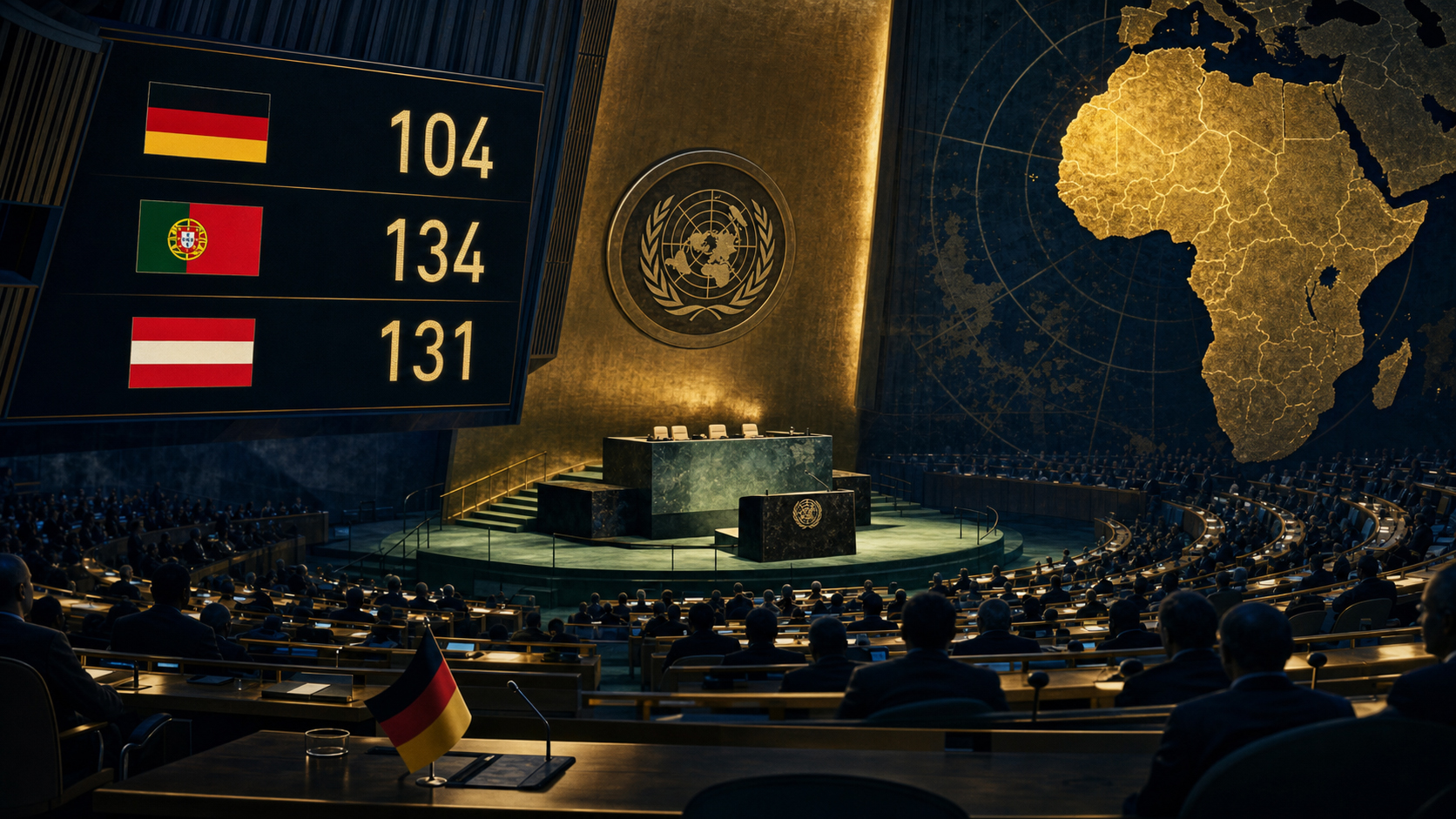
From a geopolitical point of view, we are witnessing the end of the Western-dominated international order, as well as the entry into a fragmented, multipolar, and conflictual world where raw power, whether military or economic, prevails over the rules and international institutions that have been in place since the end of World War II.
These transformations are reflected in the multiplication of tension hotspots, from the war in Ukraine to the rivalries between the United States and China, passing through the crises in the Middle East with strategic points such as the Strait of Hormuz in recent weeks, which concentrate major energy and military stakes.
We all studied history and geography in high school, but the world has changed so rapidly that those who were trained in the 1980s or earlier learned about an international order that no longer exists.
From the fall of the Berlin Wall in 1989 and the dissolution of the Soviet Union in 1991 to the wars in Yugoslavia in the 1990s, then to the September 11, 2001 attacks, the 2008 financial crisis, and Russia’s war against Ukraine since 2014 and 2022, the geopolitical landmarks have shifted profoundly.
It is complex and, to simplify, the comic strip “La Guerre des voisins” (Dargaud, 2025) by Mikko uses the analogy of a building where all the countries of the world are located, with continents becoming floors and conflicts becoming neighborly disputes.
The new complexities of the world are explained as if the planet were a huge condominium where each country would be a unit and where the assembly of unit owners would become the United Nations General Assembly.
The proposal may make you smile, and humor is strong in the album – especially through clichés and stereotypes that spare no one, including Canada – but it has the advantage of very effectively popularizing contemporary issues of international politics.
Through the comic strip, issues as diverse as the Israeli-Palestinian conflict, tensions between India and Pakistan, Russia’s war in Ukraine, climate change, as well as the influence of social networks, mechanisms of the international economy, and cultural wars are addressed in a didactic and humorous way.
The building analogy is very useful for simplifying world issues.
The environmental challenges of the planet thus become the management of waste, overheated apartments, and water damage in the building.
What is also interesting is that the album rightly emphasizes that today’s geopolitics cannot be understood without social networks, which have become true global media.
Social networks, and their algorithms, can lead to a kind of globalization of populism and the far right.
It’s not just social networks, but also the large technology companies, whose size, influence, and economic weight exceed that of several countries.
We have heard a lot about the GAFAM (Google, Amazon, Facebook, Apple, and Microsoft) in the United States, but in China, there are the BATX (Baidu, Alibaba, Tencent, and Xiaomi), which also have a huge influence, not to mention NVIDIA, a key player in artificial intelligence and today among the largest market capitalizations globally.
How to explain the Israeli-Palestinian conflict from a historical perspective ranging from Roman times to the most recent proposals concerning Gaza, especially those associated with Donald Trump where Gaza would be transformed into a sort of “Middle Eastern Riviera,” a tourist area with luxury hotels?
How to explain the use of artificial intelligence to transform images of authoritarian leaders – by themselves! – into Christ-like figures or animal caricatures of their opponents?
It may be humor and comic strips that help us better understand the upheavals of recent years, from the geopolitical power of tech giants to the rise of populism, which remains complex.
Comic strips and humor sometimes help us see more clearly.