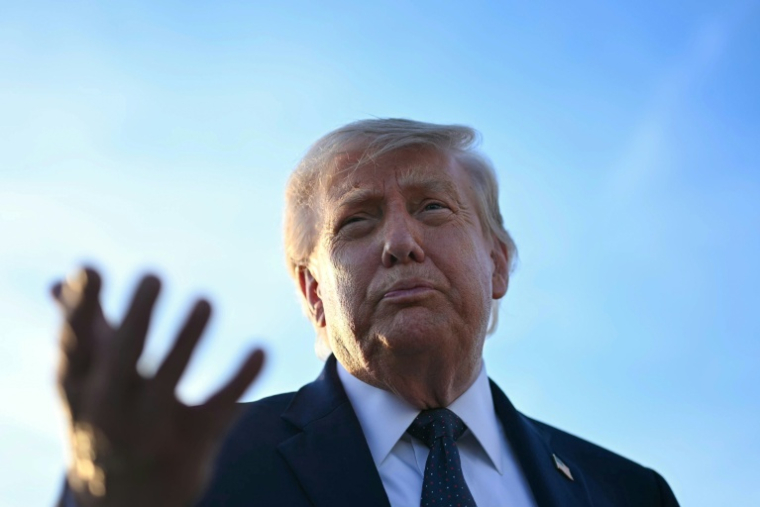
US President Donald Trump speaks to the media on the tarmac after arriving at Orly airport, south of Paris, on June 17, 2026 (AFP / Mandel NGAN)
The United States and Iran confirmed having signed their memorandum of understanding remotely on Wednesday, a celebration of which is planned for Friday in Switzerland, opening a two-month period of negotiations.
This framework agreement aims to put an end to the war triggered on February 28 by Israeli-American strikes on Iran, which left thousands dead, sowed chaos in the region and shook the world economy.
Here are the latest developments related to this conflict.
. Oil in reverse
Oil prices fell at the start of the Asian session, after a brief jump of 5% on Wednesday, reflecting the nervousness of the market before the signing of the agreement.
Around 02:00 GMT on Thursday, the barrel of Brent, the world benchmark, fell 1.47% to $78.38.
. Iranians and Americans confirm having signed the memorandum of understanding
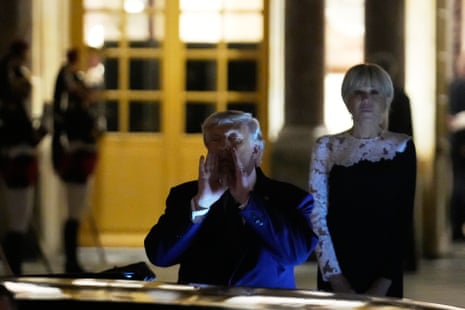
The memorandum of understanding, which includes the Lebanese front, was signed Tuesday evening by Donald Trump, visiting France.
“I just signed it,” he told the press as he left the Palace of Versailles. A White House official subsequently published a video on X where we see the Republican signing the agreement alongside his French counterpart Emmanuel Macron.
The text “was finalized by the signature of the presidents” of Iran Massoud Pezeshkian and the United States, declared for his part the spokesperson for the Iranian Ministry of Foreign Affairs, Esmaël Baghaï.
It “acknowledges the failure of the United States”, according to the head of the Iranian negotiating team, Mohammad Bagher Ghalibaf on state television.
. “Immediate” effect according to Pakistani mediator
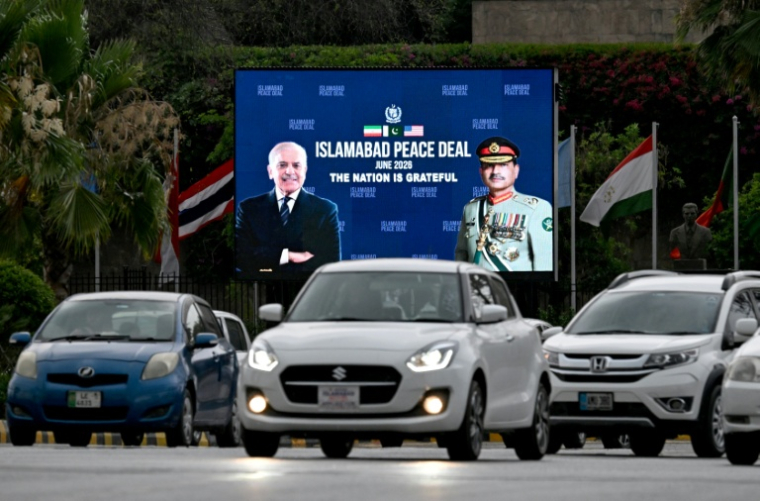
Cars drive past an electronic billboard featuring Pakistani Prime Minister Shehbaz Sharif (left) and army chief and Field Marshal Syed Asim Munir, praising their mediating role in the conflict between Iran and the United States, in Islamabad, June 17, 2026 (AFP / Aamir QURESHI)
The memorandum of understanding “will come into force with immediate effect and, as a first step, the Islamic Republic of Iran will reopen the Strait of Hormuz without delay and the United States of America will immediately lift the naval blockade,” Pakistani Prime Minister Shebaz Sharif wrote on X.
He also confirmed that a ceremony will take place on Friday in Switzerland “to commemorate this significant event and kick off technical discussions” which should last 60 days.
. Iran wants to make ships in Hormuz pay after 60 days of negotiations
Iran reiterated its intention to charge ships crossing the Strait of Hormuz, after a period of 60 days without fees provided for by the memorandum of understanding with the United States, the time to negotiate a final text.
The Strait “will not return to the pre-war situation,” chief negotiator Mohammad Bagher Ghalibaf said in an interview broadcast late Wednesday evening on state television. “Iran has a right of sovereignty over Hormuz and, of course, we will collect a fee for these services,” he added.
Since the conclusion of the memorandum of understanding, during the night from Sunday to Monday, 14 ships carrying raw materials crossed the strait on Monday and Tuesday, according to data from the maritime monitoring platform Kpler on Wednesday, a rate comparable to that of the previous week.
. Text of the memorandum of understanding published
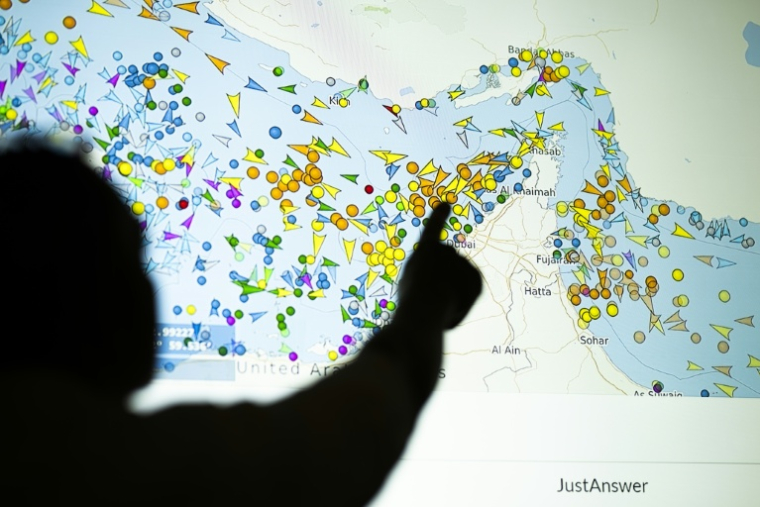
Illustrative photo taken in Nicosia on May 4, 2026 showing a person in front of a screen displaying the movements of ships in the Strait of Hormuz on a maritime tracking website (AFP / -)
Under the terms of the text made public by the American authorities, Tehran undertakes in particular to dilute its stocks of highly enriched uranium – under the supervision of the International Atomic Energy Agency (IAEA) – within the framework of two-month negotiations following the signing of the protocol.
Washington is committed to facilitating the establishment of a fund of 300 billion dollars for the reconstruction and development of Iran in the event of a final agreement.
Tehran would also be allowed to resume its oil sales upon signing the protocol, and all sanctions would be lifted in the event of a final agreement following subsequent negotiations.
. Trump threatens to ‘drop bombs’ on Iran
If the Iranians “do not behave well, we will start throwing bombs right in their heads again”, warned Donald Trump from the G7 in France.
“It’s not a final (text). It’s a memorandum of understanding,” and “if I don’t like it, if they don’t behave well, we’ll start throwing bombs right in their heads again,” he said.
. Israeli strikes in Lebanon
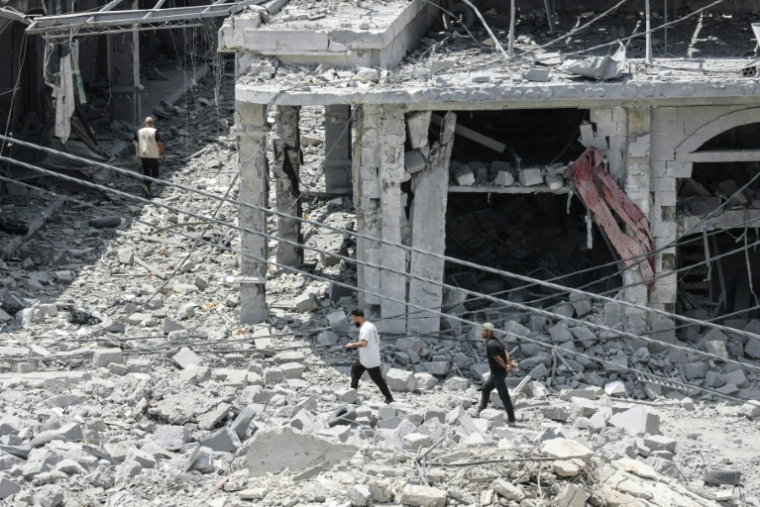
Residents of Nabatiyé walk among the ruins of the city’s historic market, June 15, 2026 (AFP / MAHMOUD ZAYYAT)
Israeli air strikes targeted southern Lebanon on Wednesday, notably the Nabatiyé region, despite the country’s inclusion in this memorandum of understanding providing for a cessation of hostilities, according to Tehran, Washington and the Pakistani mediator.
Moscow urged “all parties involved in the armed conflict, including Israel” to respect the memorandum of understanding, and Beijing asked “all parties” to implement it “genuinely”.
The leader of pro-Iranian Hezbollah, Naïm Qassem, described the Tehran-Washington agreement as a “great victory” for Iran, and called for it to “take advantage” to “expel Israel” from Lebanese territory.
. Trump touts his ‘tremendous partnership’ with Netanyahu
Donald Trump praised his “formidable partnership” with the Israeli Prime Minister, Benjamin Netanyahu – whom he had overwhelmed the day before with harsh criticism – describing their disagreement on Lebanon as a “small difference”.
“To be completely fair” to Mr. Netanyahu, “who happens to be a good man, he gets a little carried away sometimes,” he said.