A senior NATO military official is studying alternative options to defend Europe in the event it comes under attack from Russia, after the United States announced a reduction in the number of planes and warships it would make available in the event of a crisis.
The NATO Force Model is Plan A for making the forces of the 32 member countries available in times of peace, crisis or war. It limits the military means that commanders can use in phases during the first six months of any conflict.
But last month, the Pentagon warned its NATO allies that it would scale back its engagement to focus on threats elsewhere, including those from China in the Indo-Pacific region.
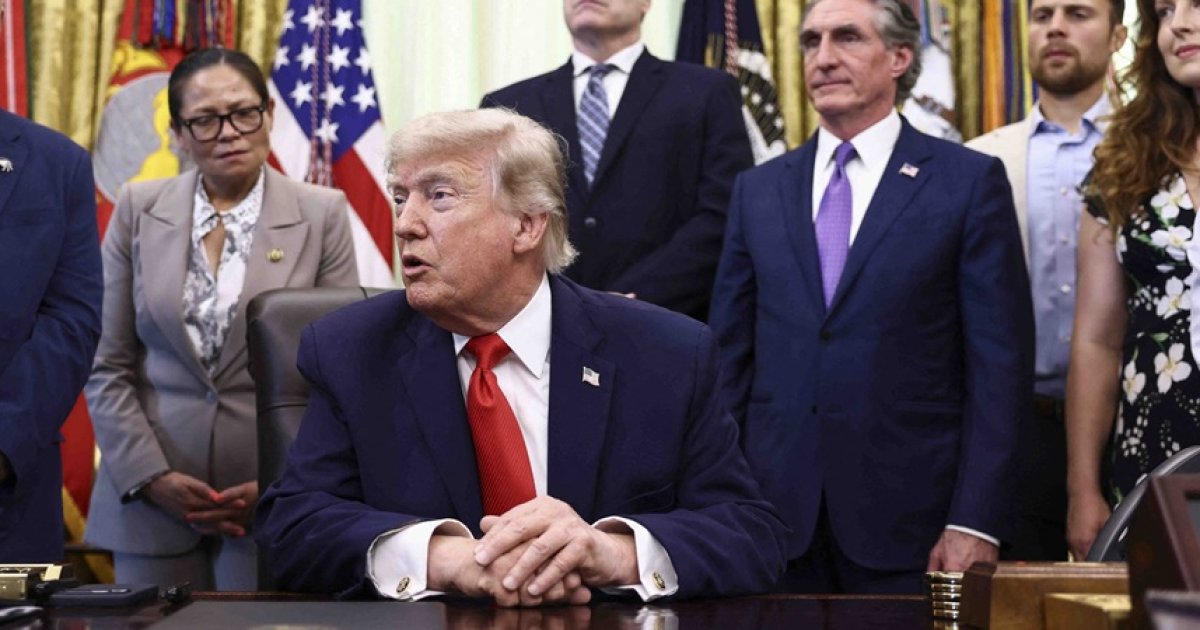
European countries and Canada have been waiting impatiently for more than a year for the Trump administration to clarify its plans after signaling that Europe was no longer a top security priority for the United States. They knew that cuts were coming, but did not know their extent, their speed and their nature.
U.S. Gen. Alexus G. Grynkewich, NATO’s supreme allied commander in Europe, said “the United States remains committed to providing limited but critical capabilities to the alliance.”
“We need to focus on what we can acquire quickly, deploy quickly, and what we can adapt quickly and maintain over the long term, and that goes for long-range weapons” as well as drones, Grynkewich stressed Thursday at the Berlin Air Show (ILA Berlin).
“This sort of thing could help us mitigate risks in the short term if we find ourselves in a position to deter and defend,” he added.
After allies met June 2-3 to assess the gaps left by the U.S. decision, Grynkewich said European allies and Canada should fill them by providing manned and unmanned aircraft, as well as warships. This should be done “now and in the short term,” he asked.
The precise nature of these drops remains secret, but reports in German and American media suggest that an aircraft carrier would leave the European theater, accompanied by its group of warships and planes, as well as a submarine. In-flight refueling planes and dozens of fighter jets would no longer be available.
All these numbers are rare in Europe, and we do not know where it would be possible to find them quickly. However, Washington wants to know how its allies intend to compensate for this shortcoming between now and the summit which will bring together President Donald Trump and his NATO counterparts in Turkey on July 7 and 8.
Decreases in Kosovo
On Friday, NATO headquarters announced that it would reduce its security forces in Kosovo by withdrawing some troops and equipment. The Kosovo Force (KFOR) began deploying in 1999 to maintain peace between Kosovo and Serbia.
Once composed of 50,000 personnel, KFOR has been steadily reduced over the years as tensions have eased, although an additional 1,000 troops have been deployed there in recent years. 2023, after the resurgence of violence.
“Current conditions provide an opportunity to further optimize the size and delivery of KFOR,” Grynkewich said. His team refused to specify which forces could leave and whether Americans would be deployed there.
“It is not a question of numbers, but of optimizing and guaranteeing the security and safety of all people living in Kosovo, and more broadly in the region,†his spokesperson said.
The United States currently has 590 soldiers deployed within KFOR, which places it in second position among the 31 contributing countries, behind Italy, which has 907 soldiers. American Black Hawk helicopters are also stationed at the vast American base at Camp Bondsteel.
Regardless, Grynkewich said in Berlin that Russian intelligence reports and troop movements suggest that “Russia is not seeking conflict with NATO.” Russia is currently mired in the war in Ukraine and struggling to recruit enough soldiers.
European governments and intelligence services have warned that Russian President Vladimir Putin may be able to launch an attack elsewhere on the continent within three to five years, especially if he achieves victory in Ukraine.
—
Associated Press journalists Kirsten Grieshaber in Berlin and Zana Cimili in Pristina, Kosovo, contributed to this report.