This measure is proposed in the latest package of sanctions presented by the European Commission, at the instigation of several member states including the Baltic countries.
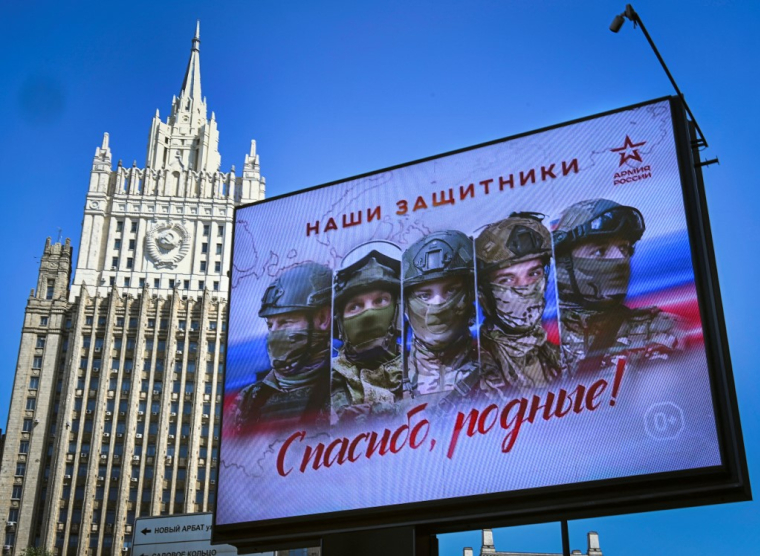
A billboard promoting the Russian army in Moscow, May 22, 2025 (illustration) (AFP / ALEXANDER NEMENOV)
The President of the European Commission Ursula von der Leyen proposed on Tuesday June 9 to ban Russian ex-combatants in Ukraine from entering the EU, as part of a new “package” of sanctions against Russia. “We are proposing for the first time to ban entry into the European Union to anyone who has served in the Russian armed forces since the start of the war” in Ukraine, she declared to the press in Brussels. And this, “so that Europe remains closed to anyone who participated in the invasion of Ukraine, it’s as simple as that,” she added.
Several EU member states, including the Baltic countries, have been pleading for months
for such a ban on visas for Russian soldiers, considering it inadmissible that they could go tourism in Europe after having fought in Ukraine.
These measures are part of a new “package” of sanctions, the 21st since the Russian invasion of Ukraine in February 2022.
The oil price war
The EU also wants to suspend the mechanism which until now made it possible to keep the price of crude oil exported by Russia around 15% lower than the price on the oil market.
This cap, decided by the G7 countries, is imposed on all intermediaries wanting to export crude oil. But to avoid an overly rigid system, it was decided last January that it would be equipped with an automatic adjustment mechanism, to keep the ceiling price at least 15% lower than that on the market. But, due to the war in the Middle East, crude prices around the world have soared, and this adjustment mechanism can no longer achieve the initial objective: reducing Russia’s revenues from its oil exports, which finance most of its war against Ukraine. However, energy revenues “have fallen by around 40% at the start of 2026”, said Ms von der Leyen. To keep these revenues down, “we therefore propose to simply suspend this adjustment until January of next year,” she explained. In January, when the automatic adjustment mechanism was introduced, the cap was set at $44.10 per barrel.
The price of a barrel of Ural crude, which serves as a reference for this mechanism, is currently hovering around $90, or twice as much as last January. This new set of sanctions also targets, and for the first time, the fishing sector. “We are proposing to impose significant restrictions on imports of certain fishing products and a total ban on others, such as cod,” said the President of the European Commission.
Regarding the fight against the evasion of sanctions by certain countries,
The Commission proposes to add 14 Chinese companies to the list of those banned from trading with EU countries.
Brussels also wants to ban certain cryptocurrency transactions, used to circumvent Western financial sanctions against Russia. “Our sanctions continue to hit hard and hurt a lot. They weaken the economic foundations of Russia’s war effort,” assured Ms. von der Leyen. On Monday, the head of EU diplomacy Kaja Kallas estimated the cost to Russia of European sanctions at around 1.5 trillion euros.