Logo of the International Energy Agency (IEA or IEA in English, International Energy Agency) at the entrance to its headquarters in Paris on March 11, 2026 (AFP / Ludovic MARIN)
The world is drawing on its oil reserves at a “record” speed as the war in the Middle East drags on: the International Energy Agency has warned as summer approaches of the scenario of an oil market “in deficit” for months and new outbreaks of price.
“More than ten weeks after the start of the war in the Middle East, growing supply losses in the Strait of Hormuz are depleting global oil stocks at a record pace,” said the IEA in its monthly report on oil markets.
“The rapid decrease in reserves in a context of persistent disruptions could herald future price surges,” adds the OECD energy agency, which considers it “likely” to see them fluctuate further “as the peak summer holiday period approaches.
Observed global stocks actually fell by 250 million barrels over March and April, or a rate of 4 million barrels per day, according to the IEA.
Based on the optimistic scenario of a gradual resumption of oil flows transiting the Strait of Hormuz from June, “demand could return to growth towards the end of the year, but supply should recover more slowly”, estimates the IEA.
As a result, the oil market will remain “in deficit until the last quarter of the year”: according to IEA analysis, global oil demand could exceed supply for a cumulative impact since the end of February of 900 million barrels until September.
The gap will be filled by approximately less than half thanks to the gradual release of 426 million barrels from the strategic stocks of the 32 member countries of the IEA, a decision announced in March, and without precedent.
But once countries have drawn on these stocks, “there will remain a deficit of 500 million barrels to be absorbed by industry stocks, reductions in demand, an increase in supply – or a combination of these factors”, explained to AFP Toril Bosani, head of the Industry and Oil Markets division. at the AIE.
“It’s extremely worrying,” Adi Imsirovic, lecturer in energy systems at the University of Oxford, told AFP. “We have already lost a billion barrels of reserves” and “we have less than half left before reaching minimum operational levels”, he summarizes
– Offer reduced by 6% –
Triggered on February 28 by the offensive of the United States and Israel against Iran, the war in the Middle East is paralyzing around 20% of global gas and oil trade due to Tehran’s blockage of the very strategic Strait of Hormuz.
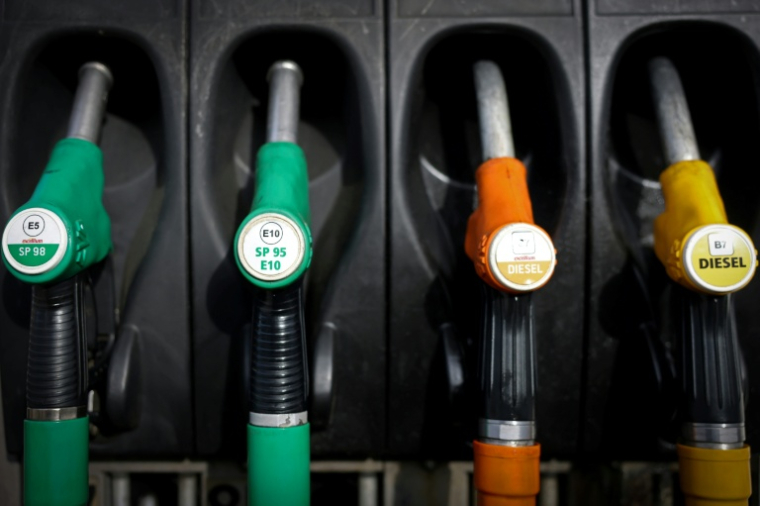
A gas station in Montélimar, in the south of France, May 8, 2026 (AFP / Alex MARTIN)
Faced with localized shortages, particularly in Asia, which is very dependent on imports from Hormuz, and the surge in fuel prices, measures to reduce consumption are multiplying around the world, between flight cancellations and calls to reduce gasoline and diesel consumption in India or to resort to teleworking in the public service in France.
In Brussels, the European Commission keeps repeating that there is no shortage of kerosene in Europe, but it is preparing for all scenarios, in particular by looking for alternatives in terms of American fuel.
According to the IEA, global oil supply fell by a further 1.8 million barrels per day (mb/d) in April to 95.1 mb/d, bringing total losses since February to 12.8 mb/d. In the event of a gradual resumption of flows passing through the Strait of Hormuz from June, global oil supply should decrease on average by 3.9 mb/d in 2026, to stand at 102.25 mb/d.
This represents a loss of 5.9% compared to pre-war estimates, the IEA told AFP.
Global oil demand is expected to contract by 420,000 barrels per day year-on-year in 2026, to reach 104 million barrels per day, or 1.3 mb/d less than pre-war forecasts, mainly affecting today petrochemicals and aviation.
For its part, OPEC forecasts published on Wednesday still see oil demand increasing in 2026 but less strongly than expected: it should reach 106.33 million barrels per day in 2026, i.e. growth of 1.2 mb/d over one year compared to +1.4 mb/d estimated in its report of April.