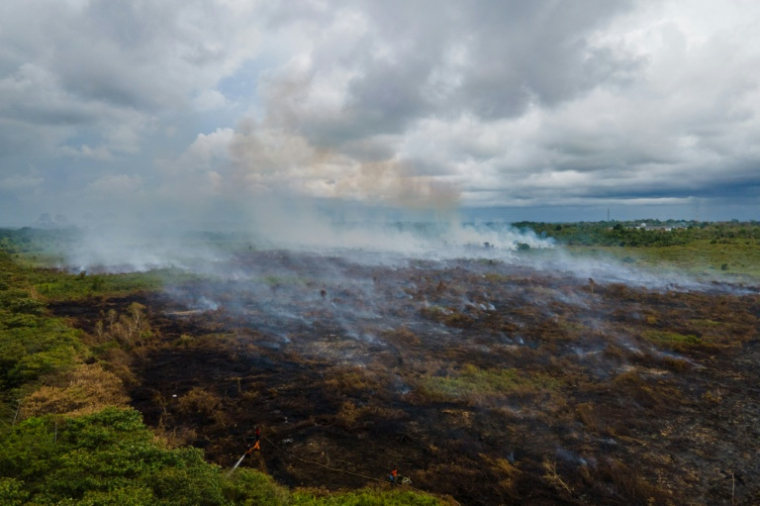
A fire in a peat forest transformed into oil palm plantations in Meulaboh, in the Indonesian province of Aceh, on February 15, 2025 (AFP / CHAIDEER MAHYUDDIN)
Already shaken by the effects of the war in the Middle East, Asia is now faced with the prospect of strong weather hazards from El Niño which could cause a surge in energy demand, weaken hydroelectric production and devastate crops.
This natural climate phenomenon causes global changes in winds and precipitation.
The United Nations reported that favorable conditions for its development could appear as early as the period from May to July.
The World Meteorological Organization estimates that the episode could be particularly intense, with some calling the event a “super El Niño”.
The Asian continent, already vulnerable to heatwaves, could be hit hard. El Niño displaces traditional precipitation, increasing the risk of drought and fires.
“The underwater anomaly we’re seeing so far is quite marked,” says Peter van Rensch, a climatologist at Monash University in Australia.
“It looks a bit like what we observed during the 1997-1998 episode, which was probably the most intense El Niño phenomenon,” he told AFP.
The outlook is still uncertain and Mr van Rensch noted that it was possible that El Niño might not develop at all.
– Catastrophic impact –
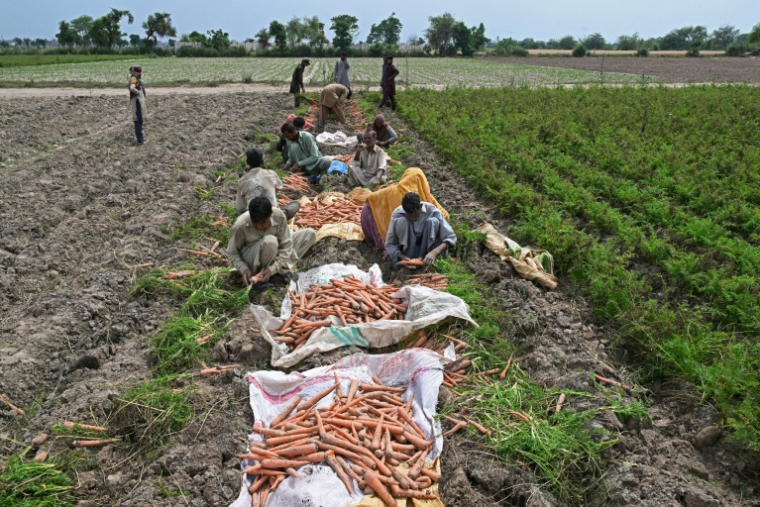
Farmers harvest carrots in a field on the outskirts of Lahore, April 19, 2026 (AFP / Arif ALI)
In 1997, El Niño caused devastating fires in Indonesia. Today, the authorities fear the lowest rainfall in 30 years.
These alerts come as Asia fears shortages of fuel and fertilizer passing through the Strait of Hormuz.
Iran has closed this strategic waterway since the United States and Israel launched attacks on the country on February 28, disrupting global fuel supplies.
Rising temperatures will put a strain on already fragile electricity networks, warns Haneea Isaad, energy financing specialist at IEEFA (Institute for Energy Economics and Financial Analysis).
“For countries heavily dependent on the Strait of Hormuz for their oil and gas deliveries, the strain on supply will lead to increased fuel rationing, demand management and a reduction in economic activities… which will affect overall GDP growth,” she said. the AFP.
The droughts that El Niño can cause in parts of the region also represent a threat to countries highly dependent on hydroelectricity, said Dinita Setyawati, an analyst at the Ember think tank.
“Most ASEAN countries rely heavily on hydropower,” she warned, noting that the Mekong countries, Nepal and parts of Malaysia were particularly vulnerable.
These risks were highlighted in 2022, when a heatwave in China led to a drop of more than 50% in hydropower production in Sichuan, causing electricity shortages that affected both households and industry.
– Agricultural risks –
A hotter and drier climate will also create new risks for agriculture, already under pressure in the face of rising costs of fertilizers and energy needed for farm equipment.
“If crop prices do not increase enough to offset rising input and transportation costs, producer margins will shrink, increasing the risk of reduced fertilizer inputs and lower yields,” warned BMI, a subsidiary of research firm Fitch Solutions.
“This would worsen food price inflation and accentuate food insecurity, particularly in markets dependent on imports and vulnerable to climatic hazards.”
In parts of Asia, El Niño could cause intense rainfall and flooding, which could impact sectors such as rice harvests in southern China, according to Ms. Isaad.
The impact of climate change on the El Niño phenomenon is still little known.
However, research shows that climate change will itself lead to more frequent and intense heat waves, as well as sudden, heavy rainfall causing flooding.
Faced with these threats, experts recommend that countries in the region strengthen the resilience of their energy systems by diversifying and greening their networks.
“Solar and wind, coupled with batteries, offer a more resilient infrastructure than centralized fossil fuel infrastructure,” said Ms Setyawati.