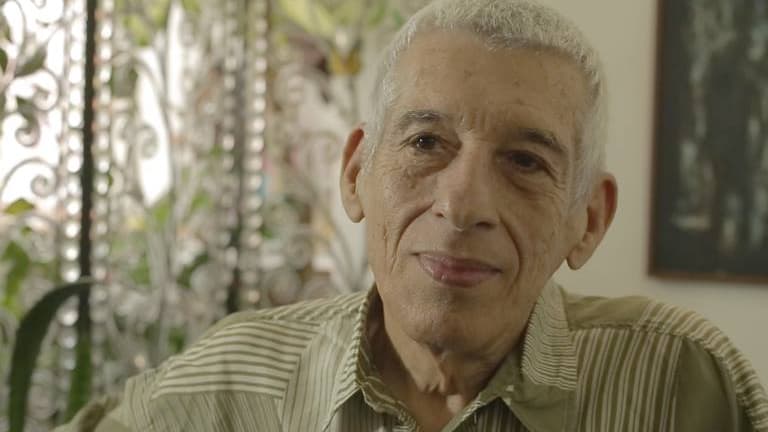
Between institutional rigor and strategic investments, elected officials have drawn the outlines of a united future for the region. Under the presidency of Alain Marfaing, this second session was marked by a dense legislative marathon of 73 deliberations, aimed at structuring governance and voting for a 2026 budget capable of responding to contemporary challenges.
To establish this new dynamic, the Council first focused on the creation of thematic commissions, designed as spaces for territorial co-construction. As President Alain Marfaing underlined, “these commissions are essential; they must allow elected officials and services to work together, over time, to build and monitor the territory’s projects.” In this spirit of openness, he notably entrusted the finance committee to Arnaud Diaz, affirming his desire that this mandate be “placed under the sign of dialogue and collective work”, where “everyone must be able to find their place”.
State levies estimated at 700,000 euros
However, this political will is part of a particularly demanding national financial context. The Community of Communes of Haute-Ariège (CCHA) must in fact deal with state charges estimated at 700,000 euros for the year 2026 alone, an amount which will rise to more than 1.4 million euros over two years.
If inflation and the reduction in tax compensation weigh on savings, the community maintains remarkable solidity, with a debt reduction capacity controlled at 4.5 years and gross savings of 11%. Wishing to preserve its capacity for action, the twelve vice-presidents have also taken the symbolic decision to reduce their own compensation in order to keep the operating budget unchanged compared to 2025.
This far-sighted management makes it possible to release significant investment capacity, with a balanced section of more than 15 million euros. Intermunicipal solidarity remains the central pillar of this programming, since more than 7 million euros are earmarked for direct support to municipalities.
At the same time, structuring projects are continuing, such as the extension of the Val-de-Sos health center or the tourist development of Lake Noubals, in Donezan. Education is also a priority with the completion of the Cabannes school group for the start of the school year in September 2026. Finally, the ecological transition is accelerating through the development of heat networks and the overhaul of waste collection.
In order to make this action more understandable to residents, the president announced the publication, before the summer, of an institutional magazine and a booklet of services intended for residents, affirming the desire of Haute-Ariège to transform constraints into opportunities for sustainable development.