“The new Ecuadorian mango season, scheduled for the last quarter of 2026, is being prepared in a context marked by climate uncertainty,” explains Bernardo Malo, president of the board of directors of the Mango del Ecuador Foundation. “Temperatures that are too hot compromise flowering. Added to this is the absence of rain during the traditionally wet months. We are experiencing a climatic anomaly, conditions are not favorable for mango cultivation. HAS”
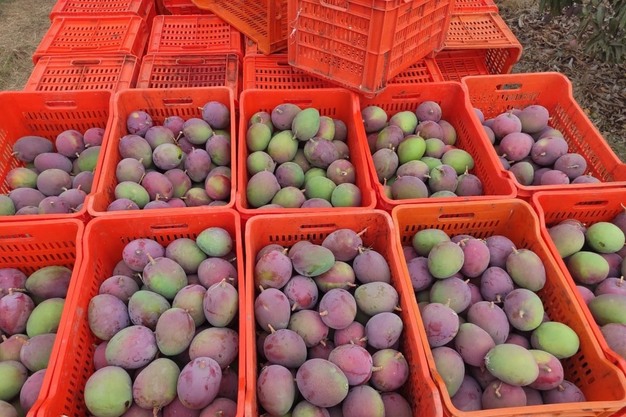 © Mango Foundation of Ecuador
Mangoes need cooler temperatures for optimal flowering. If the current high temperatures continue, production could experience difficulties. Although it is still too early to make volume projections, the sector fears that 2026 will not be the normal year expected after the fluctuations of the last three seasons.
In 2025, domestic supply has fallen. “There has been a drop in exports of at least 15 to 18%, while official statistics only show a drop of 7 to 8%. The difference is explained by the fact that a significant quantity of mangoes intended for Colombia resumed their supply to the United States, which compensated for the contraction in production. HAS”
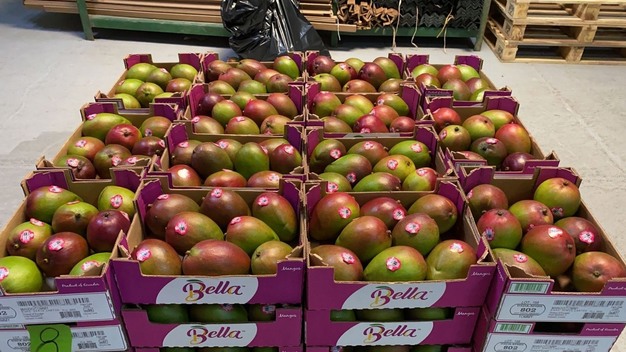 © Mango Foundation of Ecuador
The United States continues to absorb more than 90% of Ecuadorian mangoes. There is no overlap between Ecuador and Mexico in terms of production windows, which allows Ecuador to position itself in the period where Mexico – the main supplier to the American market – is absent. However, there is indirect competition with Brazil and Peru, who overlap at the start and end of the season respectively.
Brazil’s exit from the American market in 2025 for tariff reasons has had a mixed impact, according to Malo. “This has reduced supply in the United States, but the market remains driven primarily by demand. HAS”
“Price behavior in 2025 has been favorable. Less saturation and orderly transitions between Brazil, Ecuador and Peru helped maintain good results. The strengthening of the category in supermarkets also contributed, supported by the fact that 100% of Ecuadorian production is GlobalGAP certified. HAS”
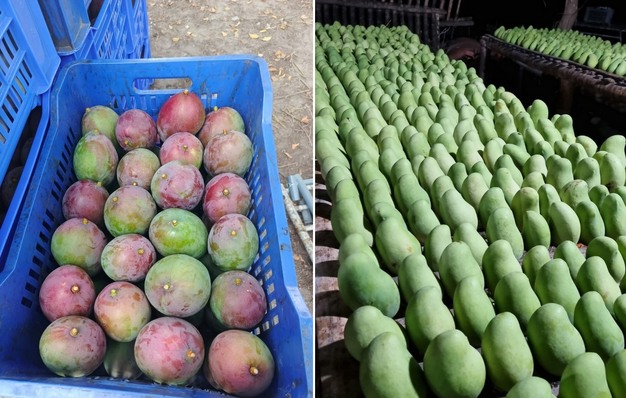 © Mango Foundation of Ecuador
“Ecuador continues the path of diversification, but with limits. Europe mainly requires non-fibrous varieties such as Kent, but climatic conditions do not allow its optimal production. The national offering is based on Tommy Atkins, a fiber variety, which is restrictive for European segments. Destinations like Canada, Chile or Central America absorb part of the fruit, but do not reach the consumption levels of the United States and Europe. HAS”
After the 2025 campaign, Malo underlines an essential lesson: the need for an organized offer, of quality, of adequate caliber and traceability, intended above all for the supermarket channel. According to him, the sector has reached maturity after three decades of professional exports. “Market development will depend on climate and Ecuador’s ability to consistently serve its primary destination, the United States. HAS”
 For more information:
Bernardo Malo
Mango Foundation of Ecuador
Tél. : +593 999252808
[email protected]
www.mangoecuador.org


/2026/06/10/6a292e07beea5864549772.jpg "Coupe du monde de football 2026 : les villes françaises toujours frileuses sur linstallation de fan-zones pour visionner les matchs")