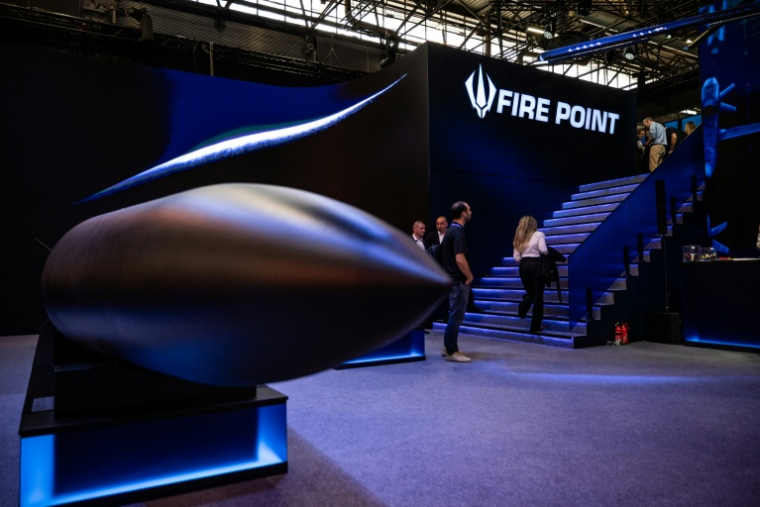
The stand of the Ukrainian Fire Point at the Eurosatory global defense exhibition in Villepinte, north of Paris, June 15, 2026 (AFP / Guillaume BAPTISTE)
A burning refinery near Moscow hit the same morning by its drone parades on the giant screen of the Ukrainian Fire Point at Eurosatory, a showcase of expertise sought in this global defense show where Ukraine is in the spotlight.
“Currently, we are producing 300 drones of this type per day,” Denys Chtilerman, co-founder of Fire Point, also designer of the Flamingo cruise missile used for deep strikes against Russia, told AFP.
Production is organized in a resilient manner: if a workshop is destroyed by a Russian strike, the teams are redeployed to other operational sites. The machines are designed to be assembled by poorly qualified personnel.
At the heart of a controversy mixing accusations of favoritism and an anti-corruption investigation that the company contests, Fire Point is nevertheless recognized by a number of experts and industrialists interviewed by AFP as one of the main architects of the deep strikes against Russia, “which hurt”.
“This is everything we don’t have in Europe, and it will constitute a good challenge,” underlines Charles Beaudouin, commissioner of Eurosatory.
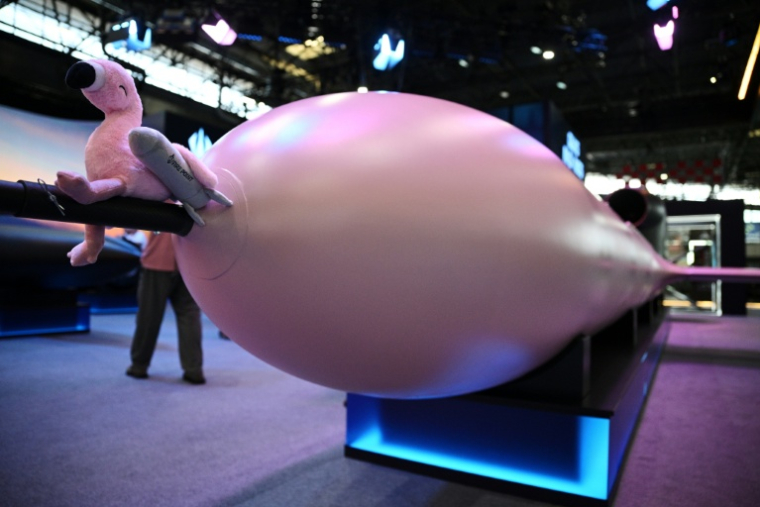
The Flamingo (Flamant) cruise missile from the Ukrainian Fire Point at Eurosatory in Villepinte, north of Paris, June 16, 2026 (AFP / JULIEN DE ROSA)
With a spectacular stand and the motto in the form of a play on words in English “Love at first strike”, Fire Point has gone from a start-up employing 18 people in 2023 to “the largest company in the Western world in the production of long-range drones and cruise missiles”, according to its founders.
A tank lives 4 minutes
The ground robot Ravlyk (snail) appears tiny at the foot of imposing KNDS tanks. A contrast that makes Olexiï Severyne of Unmanned Ukrainian Technologies, who has signed a partnership with the Franco-German giant, smile.
“In modern combat, a tank only lives 4 minutes and that’s not going to change,” he says.
The dynamic demonstrations from Eurosatory and the armored vehicles manufacturers confirm this: the tank must now be preceded by drones and protected against them.
Small, mobile and inexpensive – its lifespan at the front does not exceed around thirty days – the Ravlyk is equipped with six independent wheels, which allows it to continue its progress even when half of them are out of order.
Mine clearance, logistics: RoverTech’s ground robots are designed to “survive in the kill zone”, this no man’s land separating two adversaries paralyzed by the permanent threat of drones.
“As long as our drones have not cleaned, the tank cannot move forward,” emphasizes Borys Droujak of RoverTech.
Améliorations en continu
Since the start of the conflict, Tchakloun’s (Magician) interceptor drones have continued to accelerate to follow the evolution of the Russian Shahed: from 120 km/h at the start of the conflict to jet versions capable of reaching 450 km/h.
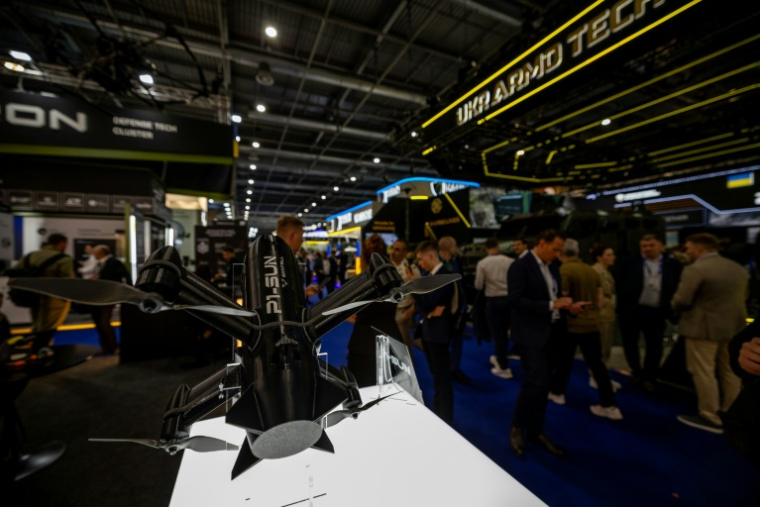
The P1-Sun interceptor from the Ukrainian Skyfall exhibited at Eurosatory in Villepinte, north of Paris, June 15, 2026 (AFP / Guillaume BAPTISTE)
Skyfall has transformed its famous P1-Sun interceptor nicknamed Pissioun (zizi) into an L version (long penis) equipped with an artificial intelligence module, a spokesperson for the group told AFP.
“At 800 meters, the AI tells the pilot where the Shahed is before he can see it with his own eyes. The AI detects it, follows it, the pilot presses a button” to destroy.
“This reduces the mental and physical load on the driver” who is always in the loop.
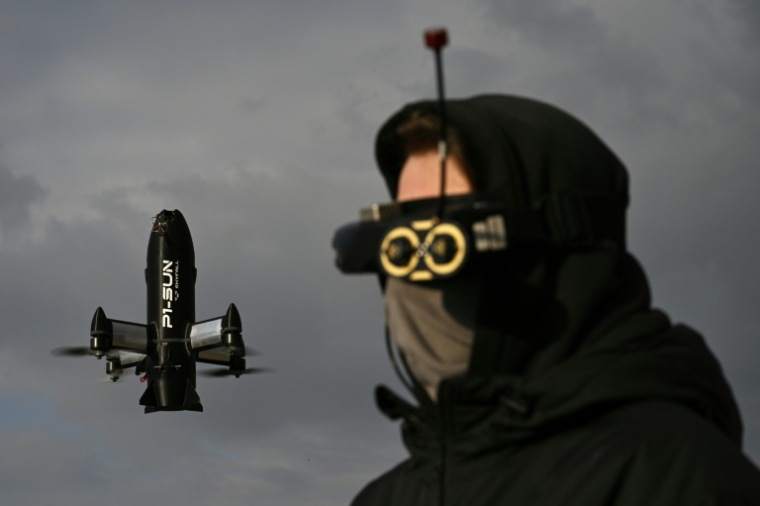
Test of the P1-Sun interceptor drone from the Ukrainian company Skyfall in Ukraine, March 19, 2026 (AFP / Genya SAVILOV)
Before Eurosatory, SkyFall signed a strategic partnership with Airbus: the European giant will provide its expertise in the command and control of operations, while SkyFall will provide its drone technologies proven on the battlefield.
“Engine” of European defense
Specializing in attack drones, Vyriy is targeting joint ventures with Europeans.
Its strengths?
“We are in a conflict that lasts longer than the Second World War. We have developed an asymmetric advantage” not only against the enemy with a much larger army, but also “within our own industry”, explains a Vyriy official.
“Our drone can cost 16,000 hryvnias” (300 euros), “cheaper than other products on the market,” he continues.
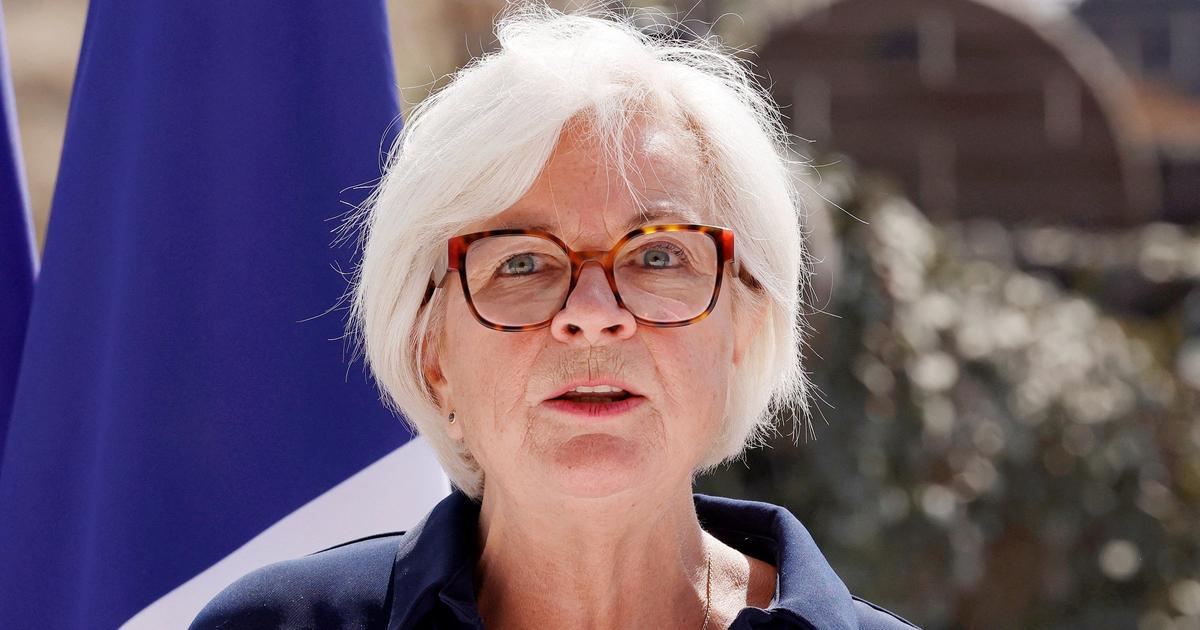
“There is a big strategic push from Ukraine at this show,” said Alice Rufo, French Minister Delegate for the Armed Forces.
Their presence shows that it is “possible to hold on, to transform, to reinvent and to be sufficiently resilient to become one of the engines of the European defense industrial and technological base”, she concluded.