
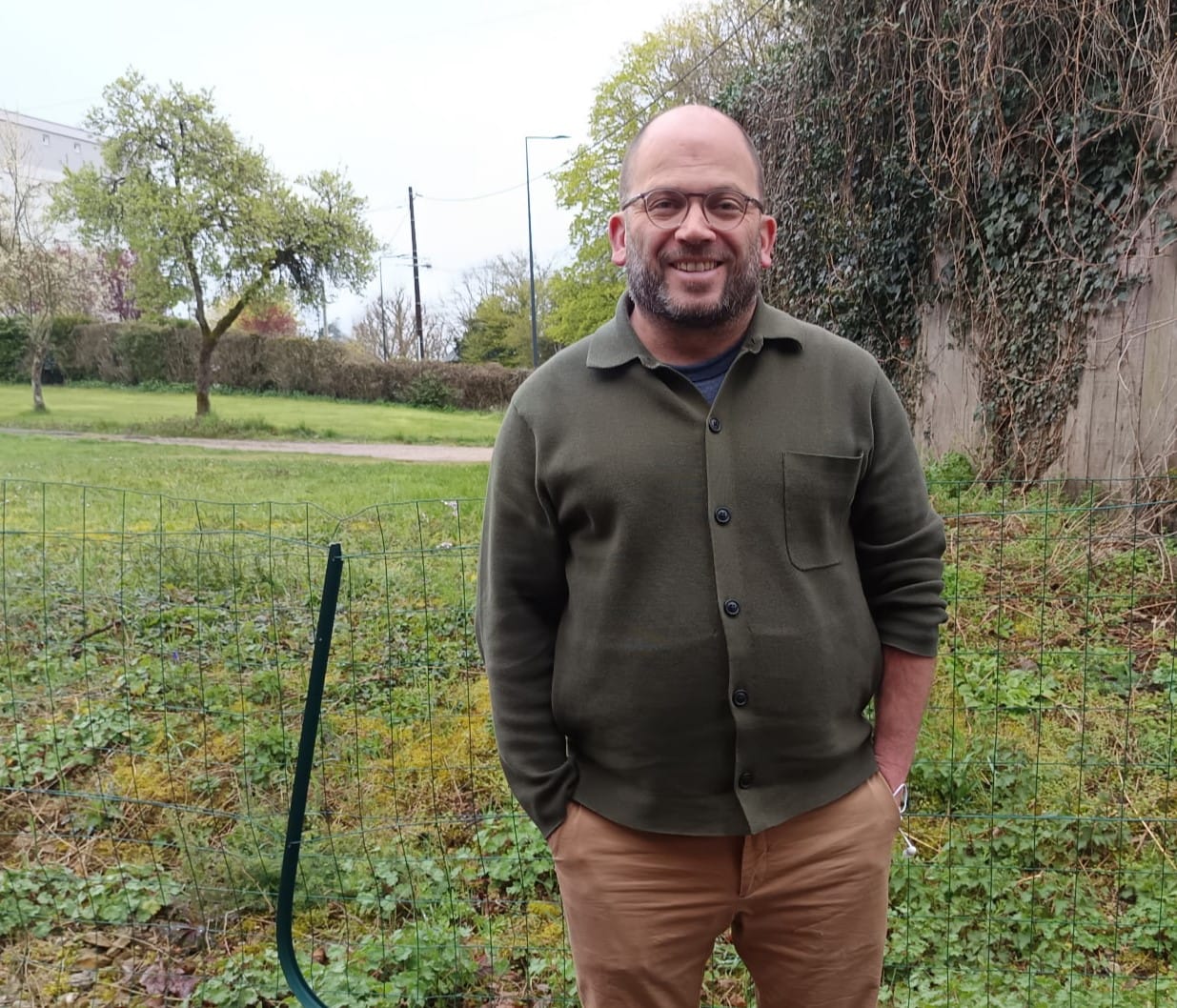
Looking back on the election, Vincent Lebrou, lecturer in political science at the Marie and Louis Pasteur University of Besançon, draws the lessons from these municipal elections which will have reserved their share of surprises, notably in Besançon and Pontarlier. Analysis.
Firstly, at the national level, what lessons do you draw from these 2026 municipal elections?
Vincent Lebrou: I learned a lot from it. The first is that it continued and further strengthened the process of fragmentation which has been at work in the French political landscape since 2016-2017 with the appearance of La République En Marche. This partisan fragmentation clearly impacted the local level during these municipal elections in France where the traditional parties which sought to keep the control of as many cities as possible have been shaken up a little more and even if the extremes have not won as many cities as they would have liked, the voters have, through their vote, prolonged this partisan fragmentation at work almost everywhere in France.
The second lesson is precisely that this fragmentation is not massively accompanied by a radical change of political colors in the municipalities. The two major political forces that remain in place at the head of town halls are the center-left and the center-right. Even if parties like the RN and LFI have made some breakthroughs here and there, they have not obtained results that allow a rebalancing of the national political landscape. Maybe it will come next time, but this is not the case yet.
And if we zoom in on Franche-Comté, what is your analysis?
V.L. : I have the impression that the region more or less follows the national movement. With a relatively high abstention rate here too, and this hermeticism against national or extremist forces: LFI like the National Rally did not win any commune in Franche-Comté, they remained at the doorstep. But they have also made progress in the municipal councils with more elected officials. Generally speaking here in Franche-Comté, the right has clearly gained ground, particularly in the largest municipalities. We also see a certain gender divide in our region.
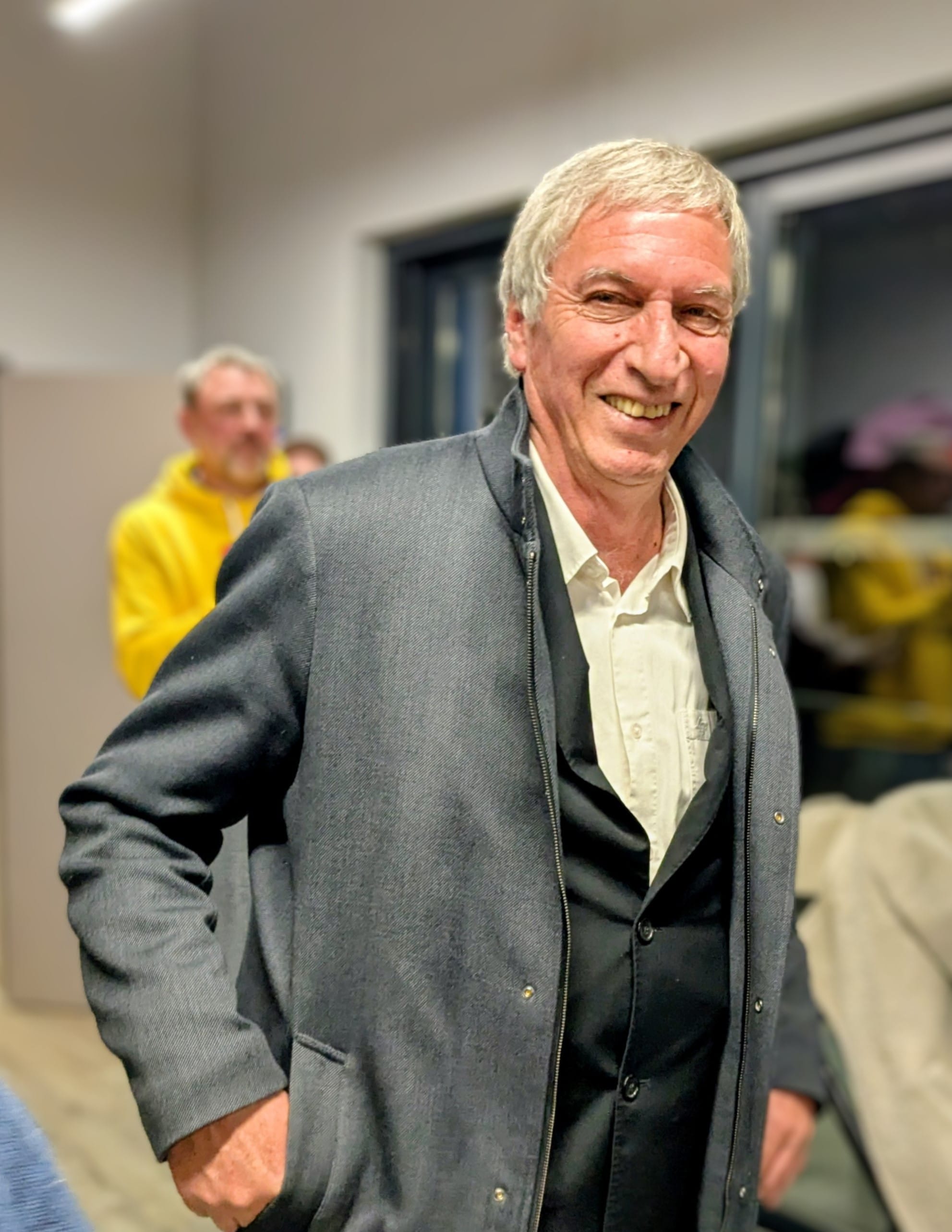
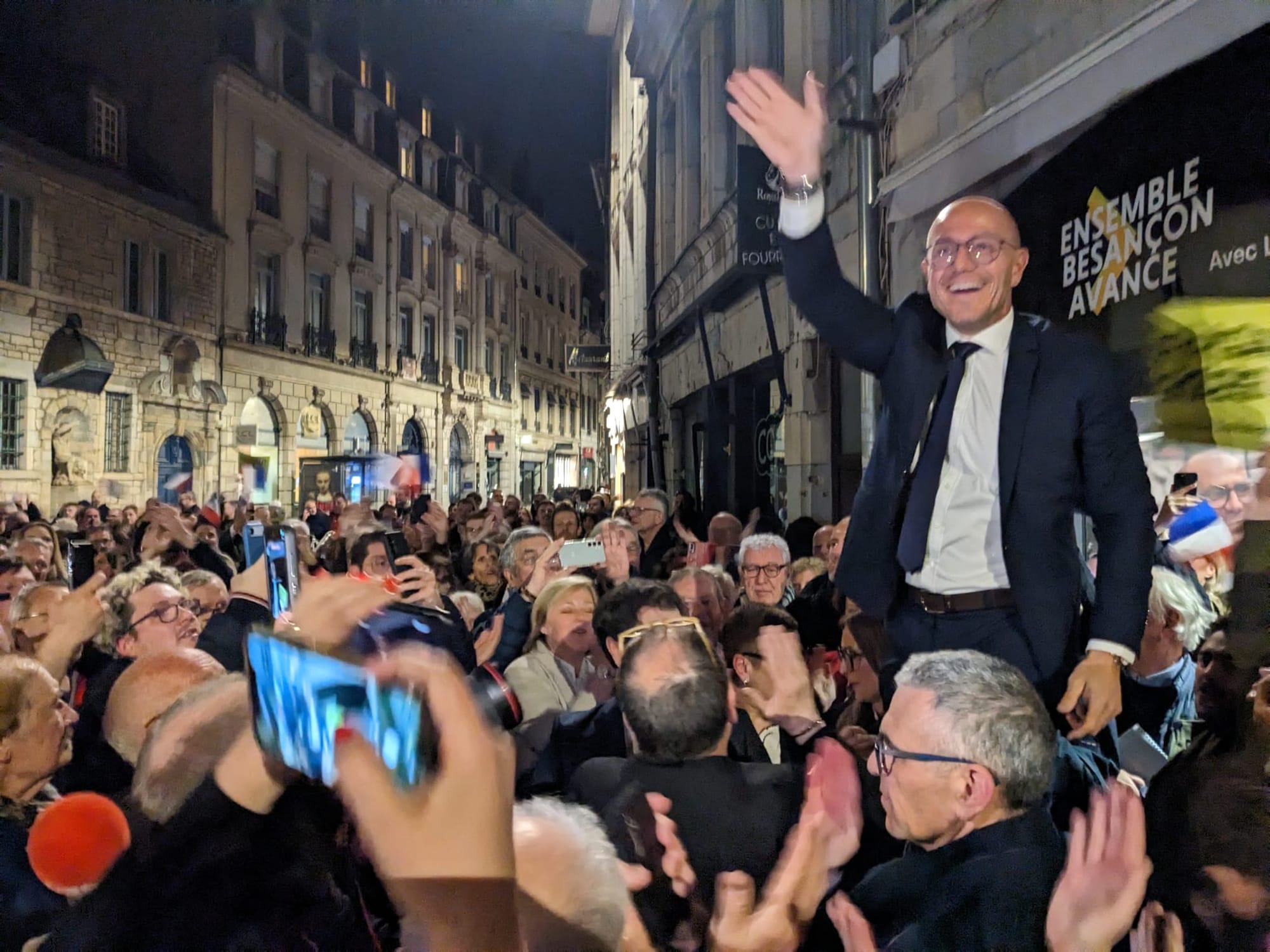
It was from Besançon and Pontarlier that the two main surprises arrived with the victories of Ludovic Fagaut and Patrick Comte.
What is it to say?
V.L. : In the region’s largest cities, those with more than 3,500 inhabitants, the proportion of women mayors has decreased significantly compared to 2020. We went from around 30% of women mayors to less than 17%. The proportion of women is declining.
The abstention rate, even if it is not as high as in 2020 with a vote organized at the time in the midst of Covid, is still very high. How do you explain it?
V.L. : For around forty years in France, abstention has increased constantly and regularly in all elections. This is particularly true for legislative elections (more than 60% abstention in 2017). These 2026 municipal elections do not escape this observation with a small 57% participation at the national level for the second round. There are also more and more blank or invalid votes in France, more and more citizens incorrectly registered or not registered on the electoral lists. The share of the electorate who are not registered on the lists has exceeded 10%. Inevitably, municipal elections do not escape the rule and the growing disaffection of citizens, linked to the distrust that they increasingly show towards their elected officials.
However, these municipal elections, with 5 exceptions in Doubs where municipalities did not have lists, continue to interest candidates!
V.L. : It is a paradox because in fact, the number of candidates remains relatively stable. Nationally, there were almost 1 million candidates in total in the 35,000 French municipalities. These elections remain a truly democratic moment which still mobilizes a lot.
So what explains this difference between candidates and voters?
V.L. : This distortion has sociological origins. The people who present themselves, this is particularly the case in the largest municipalities, are very different sociologically from the population they represent. How many employees or workers are among the heads of the list in the cities? The municipal level does not escape this distortion. Franche-Comté once again gives a good reflection of what happened at the national level.
Besançon rocks to the right and center, it’s a small earthquake. How do you explain it?
V.L. : The outgoing team is of course responsible for this failure. But in a more structural way, I think that Besançon followed a national right-wing movement, marked by a sort of systematic demonization of progressive ideas which characterizes all major left-wing cities. Of the 10 major environmentalist cities in France, there are only 2 left. Besançon embodies this national movement where it has become difficult to bring this kind of ideas to life. The town hall of Besançon was also swept away by this movement of disqualification, accused of being ideological dogmatism. This argument worked very well.
And do you think it is misleading?
V.L. : This type of argument is more akin to a form of political exploitation of the mandate. Anne Vignot certainly did not do everything well, I think she will readily admit it herself, but it has become very politically profitable to make this kind of reproach based on dogmatism by saying that her program had been built in spite of common sense, when it is not insane to defend ideas that are supposed to prepare for climate change in our cities. This argument attached to supposed dogmatism, valid or not, was in any case very effective. Voters have left few places for parties that advocate new policies. Everyone says we need to change things, but we very quickly see conservative reflexes reappear. We heard the same arguments as in Besançon in a city like Strasbourg for example, where the environmentalist mayor Jeanne Barseghian suffered exactly the same attacks as Anne Vignot in Besançon. The list which won in Strasbourg with Catherine Trautmann, even if it is not from the right, is a representative of social democracy historically well anchored in the Alsatian capital. We want change, but not that much…
Anne Vignot, it is unanimously recognized, also lost because of disastrous communication, on her program as much as on her results. So communication is essential in a campaign?
V.L. : In politics, communication is important first of all to promote what we have done. Did she do it enough? Probably not. Communication is also very important in politics because it is a means of neutralizing one’s opponents. Even if it is not very ethical, it is a way of disqualifying the voice of an opponent. This theme of good communication has clearly not been sufficiently invested by environmentalists, in Besançon as elsewhere.
Another scenario in Pontarlier where by not getting involved in his succession, the outgoing mayor may have contributed to losing his camp, which left in dispersed order. Is this a political mistake?
V.L. : The function of a mayor is also to control his rivals. This is his role, including within his own team, and of course, beyond his team. Here we have a very classic case with the announced departure of a former mayor after 27 years in office. This logically arouses appetites and this issue had not been resolved before, the outgoing team is therefore paying cash. This non-positioning undoubtedly contributed to losing the representatives of the outgoing list. Would things have been different if the mayor had intervened? We cannot say this. Patrick Genre felt that it was no longer his role to get involved and in a way, that’s quite noble of him. He felt that it was up to democracy to decide. The two representatives of his camp paid for it with a large defeat.
Our region and our department are rural territories. Did the reform of the ballot in municipalities with less than 1,000 inhabitants also contribute to diverting voters from this ballot?
V.L. : It is still a little early to analyze the phenomenon in detail, but in a configuration where these municipalities represent the vast majority of municipalities in the region and in more than three quarters of them there was only one list, this voting method necessarily played into the disaffection of voters. The ban on mixing undoubtedly also played a role.
But the main argument in my opinion is this overall distrust of citizens with regard to political representation, and this distrust also affects the municipal level. There is also the fact that intercommunalities are taking more and more power to the detriment of the municipalities and some people wonder what is the point of voting for your mayor. I see a final argument for this distance from the polls, including in rural areas where we are undoubtedly less invested than before in associations, in unions or in parties, which leads to a sort of depoliticization in many families who have lost the taste for voting.
Bio express
- Vincent Lebrou has been a lecturer in political science at the Marie and Louis Pasteur University since 2019.
- In 2015, he defended a doctoral thesis at the University of Strasbourg on the implementation of the community cohesion policy.
- His research mainly focuses on the reception of public policies at the territorial level and citizen mobilizations aimed at democratizing political action.
- He was particularly interested in the role played by citizen and participatory lists in the context of the 2020 and 2026 municipal elections.
This article is brought to you by the editorial staff of The Bisontine Press
Subscribe online in just a few clicks




/2026/06/17/6a323f0cca58b097905408.jpg "On vous explique la célébration flûte traversière de Kylian Mbappé après son but face au Sénégal")


