
- Brève introduction
- Houthi terrorists declare total ban on Israeli shipping in Red Sea
- Trump halts large-scale Israeli attack on Tehran as Tire evacuated and bombed
- Ila Berlin: Germany formalizes the abandonment of the FCAS fighter and highlights its national alternative
- Pope Leo
- Ukraine: Putin rejects summit with Zelensky as Ukrainian naval drone explodes in Romanian port
- Press review
- Editorial
Brève introduction
On June 10, 2026 – the 103rd day of the war – dawn broke over a theater of operations in the Middle East which extended towards the south and, above all, towards the sea. The Houthi terrorists of Yemen, the last pawn of weight that the dictatorial and mafia oligarchy of Tehran, which had been in reserve since the April ceasefire, entered the conflict head-on: the first rocket attack against Israel since April 8 and the declaration of a “complete and total ban” on Israeli navigation in the Red Sea. With the Strait of Hormuz still blocked by Iran, the simultaneous threat to Bab el-Mandeb presents the worst imaginable scenario for the world economy: the double strangulation of the two energy arteries that connect the Persian Gulf to Europe and to Asia.
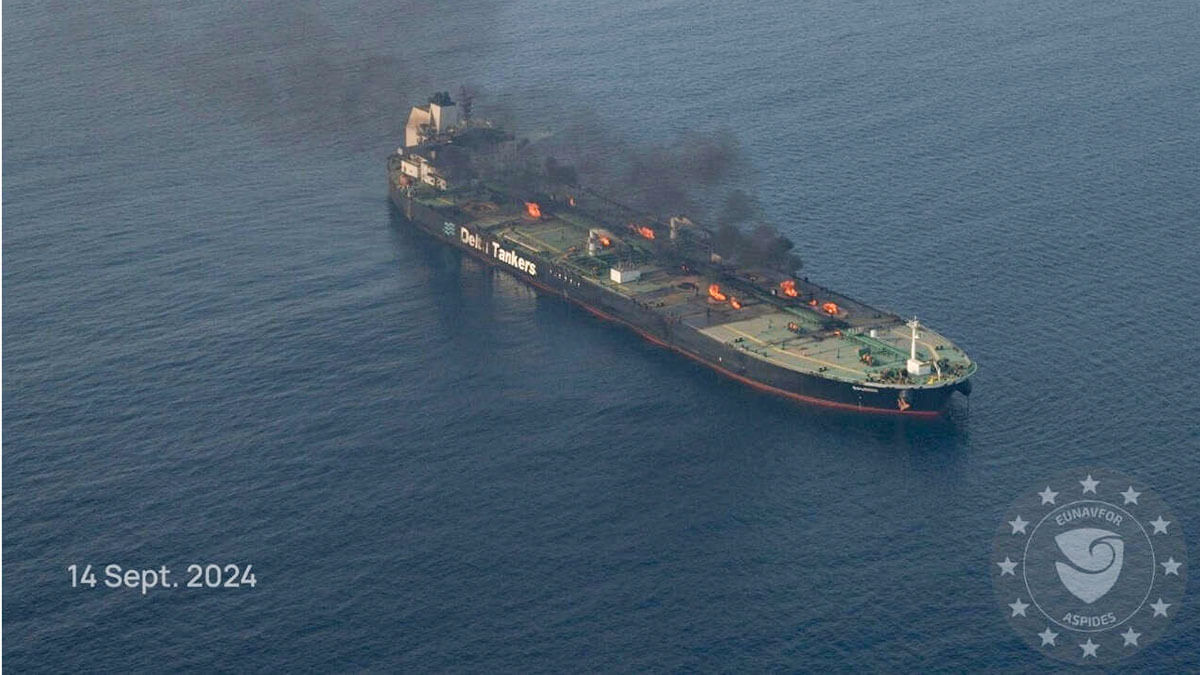
This is not an improvisation: the commander of the Quds Force of the IRGC (Islamic Revolutionary Guard Corps) himself announced a “new resistance security belt” which would extend precisely from Hormuz to Bab el-Mandeb. And the threat is no longer rhetorical: on the night of June 8 to 9, the cargo ship M/V Norderney – flying the flag of Antigua and Barbuda, operated by a German company – was hit by an anti-ship ballistic missile and a cruise missile in the Bab el-Mandeb area, according to military confirmation American news relayed by the international press.
On the Washington-Jerusalem axis, the day revealed information of primary importance: according to Israeli and American sources cited by CNN, President Trump personally convinced Netanyahu on Monday to cancel a large-scale attack that Israel was preparing against Tehran, warning that further strikes against Iran could leave it “isolated”. Meanwhile, Lebanon is once again paying the price for a war that does not concern it: Israel ordered for the first time the evacuation of the entire city of Tire – including its Christian quarter, so far spared – and bombed it mercilessly, killing at least eight people according to the Lebanese Ministry of Health.
At the time of writing, the mutual suspension of attacks between Israel and Iran continues: Tehran has not – as yet – made good on its threat to resume hostilities due to the campaign in Lebanon, although Israeli Defense Minister Israel Katz proclaimed that the army “will continue to operate in Lebanon” and that he “categorically” rejects Iranian threats.
In Europe, the funeral of the FCAS (Future Combat Air System) is made official today: the German Council of Ministers adopts its new national aviation strategy – which establishes Airbus as the essential co-leader of any future combat program – and Chancellor Merz present at the opening of the ILA show in Berlin, the same place where Airbus and Dassault shook hands in 2018 to build the sixth generation European fighter together. Eight years later, this handshake turned into a death certificate, and from these ashes now emerges a purely German industrial alternative, “Team Gen 6”. At the same time, Pope Leo disturbing, once again, of a moral authority that Europe does not find in its chancelleries.
On the Ukrainian front, Putin formally rejected Zelensky’s offer to conduct direct negotiations, insisting that military action will only cease when Moscow has achieved its “goals”; the largest exchange of prisoners in months – 185 on each side, under the mediation of the Emirates – demonstrates, however, that the technical channels remain open. And a minor incident but full of symbolism: the explosion of a broken Ukrainian naval drone in a Romanian port on the Black Sea reminds us that the war now affects, concretely, the territory of NATO (North Atlantic Treaty Organization). This analyst describes a war with variable temperatures; today, the temperature is rising at sea and falling, by just a few degrees, on land.
Houthi terrorists declare total ban on Israeli shipping in Red Sea
Facts
In the early hours of June 10, the Houthi terrorists of Yemen – Ansar Allah, a terrorist organization financed, armed and strategically directed by Tehran – confirmed the threats announced on Monday June 8, through their military spokesperson Yahya Saree, going to the point of brazenly announcing a “complete and total ban on Israeli maritime navigation in the Red Sea”, warning that they would consider “all enemy movements as legitimate military targets” as soon as the communiqué was published. Saree invoked the principle of “unity of fronts” and claimed a salvo of missiles against “sensitive targets” in the Tel Aviv region – “occupied Jaffa”, in the jargon of the terrorist organization – in response, he said. declared, to Israeli aggression against Lebanon, Iran and Gaza.
The Israeli army confirmed the interception of a missile coming from Yemen after sirens were sounded in the center of the country. And the maritime threat immediately materialized: on the night of June 8 to 9, the cargo ship M/V Norderney – 5,700 tonnes deadweight, flying the flag of Antigua and Barbuda, operated by a German company, en route from India to Djibouti – was hit by a ballistic missile anti-ship and a cruise missile in the Bab el-Mandeb area, suffering damage, but was able to continue navigation, according to American military confirmation. A source within the terrorist organization warned Reuters that the ban on Israeli ships was only “a first step”: if the escalation continues, it will extend to any ship bound for Israel.
The roller coaster of the markets reflects the strategic volatility: Brent exceeded 98 dollars on Monday in full escalation, fell back to 94 dollars when the mutual suspensions were announced and is trading this Wednesday around 91-92 dollars, while the truce is holding strong. Several major shipping companies have ordered their ships to delay entry into the Red Sea while they assess the security situation.
The structural data which explains the seriousness of the situation: since the closure of Hormuz, Saudi Arabia has redirected a growing share of its crude oil exports via the East-West pipeline towards the Yanbu terminal, on the Red Sea, making this corridor the great decompression valve for Gulf oil – unlike the crisis of 2023-2024, where cargoes were simply diverted, today they are loaded directly into the Red Sea. It is precisely this valve that the Houthi terrorists are now threatening to close.
OPEC+ (Organization of the Petroleum Exporting Countries and its oil-producing allies) approved a production increase of 188,000 barrels per day for July, while China – a sign of accumulated damage – delays the commissioning of 500,000 barrels per day of refining capacity due to disruptions in Hormuz and that Saudi Arabia is reducing its prices in the face of weak Asian demand.
Implications
The entry on the scene of the Houthi terrorists is not another episode: it is the concretization of the doctrine that the commander of the IRGC Quds Force stated this very week by announcing a “new security belt of the resistance” from Hormuz to Bab el-Mandeb. Translated from propagandist language into strategic language: Tehran, incapable of defeating Israel militarily and politically blocked from negotiating, decided to make a choke point of one of the main maritime routes in the world its main weapon, extending the energy blackmail of the Gulf Persian at the Red Sea.
This maneuver has a perverse effectiveness: it punishes Europe and Asia – and not the United States, which is self-sufficient in energy – and hits in passing Saudi Arabia and Egypt, whose revenues from Yanbu and the Suez Canal depend on a navigable Red Sea thanks to free passage in the Bab el-Mandeb Strait The double strangulation of Hormuz and Bab el-Mandeb would quite simply constitute the greatest energy shock since 1973.
There is also an internal Iranian reading that should not be lost sight of: activating Houthi terrorists is the least expensive option for a regime that wishes to maintain pressure without exposing itself to direct reprisals on its territory. This is proxy war in its purest form, the very one that Lebanese Prime Minister Nawaf Salam courageously denounced 48 hours ago and that this analyst unreservedly endorsed: entire peoples – the Lebanese, the Yemeni – transformed into pawns of a negotiation that does not concern them.
Perspectives et scénarios
The most likely scenario in the next 72 hours is a US – and perhaps British – naval response against the terrorist organization’s launchers and radars on the Yemeni coast, following the 2024 model. But experience shows that air campaigns weaken without eliminating the Houthis’ capacity to harass.
Internationalization, moreover, is no longer a hypothesis but a fact: the Norderney is a ship of a German operator with no obvious link with Israel, which confirms that the imprecision – deliberate or not – of Houthi targeting transforms the entire corridor into a de facto exclusion zone.
Indicators to watch: maritime insurance premiums in the Red Sea, traffic in the Suez Canal – vital for Egypt –, security of the Yanbu terminal – Houthi terrorists have already hit a ship off its coast in August 2025, their northernmost attack confirmed – and the position of Riyadh, which has until now carefully avoided being drawn into the conflict.
Trump halts large-scale Israeli attack on Tehran as Tire evacuated and bombed
Facts
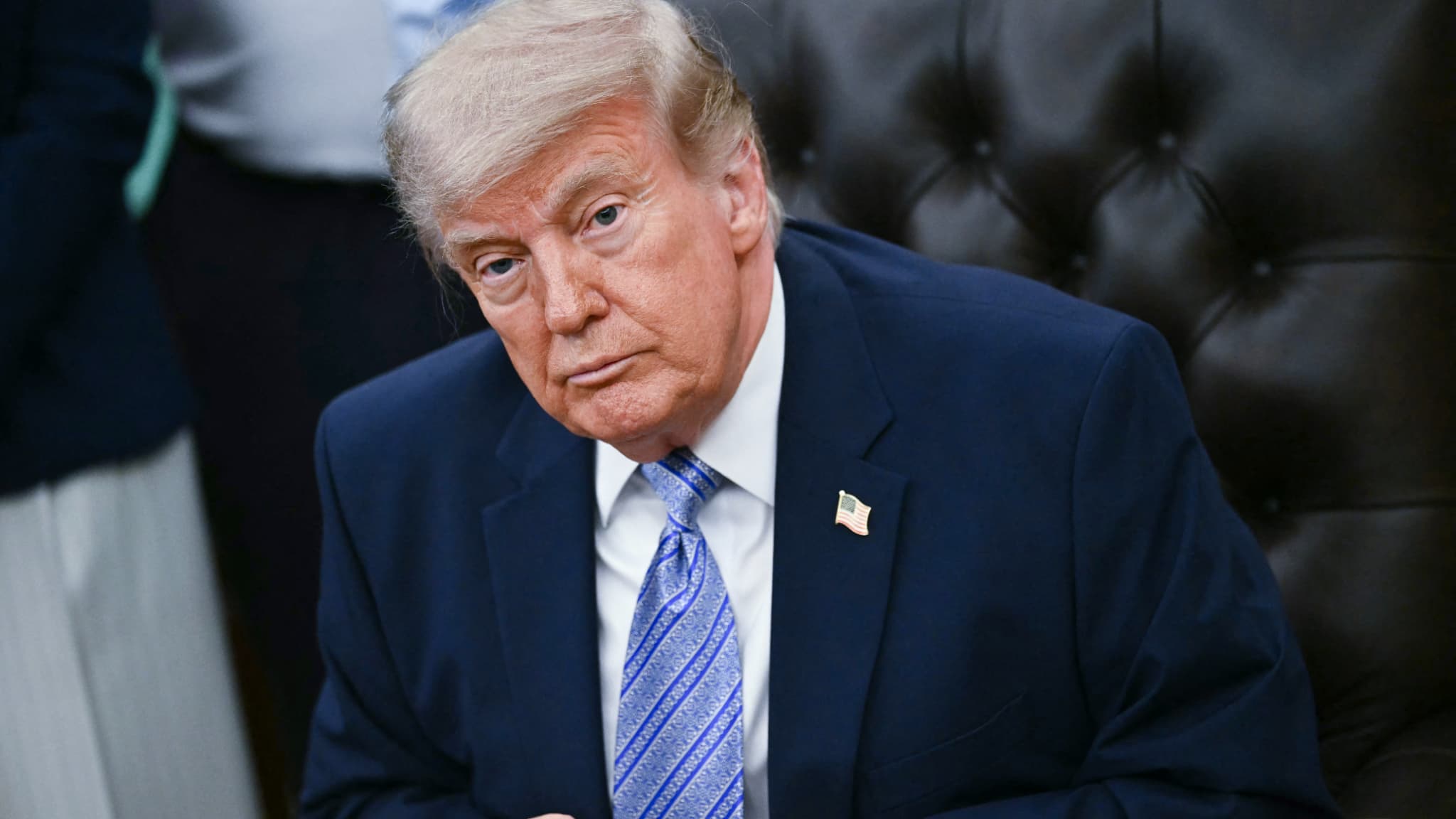
CNN revealed on Monday, citing an Israeli source and a US official, that Israel was planning a large-scale attack on Tehran when President Trump personally convinced Netanyahu to call it off. Trump warned the Israeli prime minister that new strikes against Iran could leave him “isolated,” according to the American channel, and the Israeli ambassador in Washington acknowledged that the allies had “some differences” to resolve. The president reiterated Tuesday his confidence in the conclusion of an agreement with Iran “within a few days” which would lead to the reopening of the Strait of Hormuz.
On the ground, detente is asymmetrical, fragile… and, for the moment, real: as we go to press, the mutual suspension of direct attacks between Israel and Iran is being maintained, and the price of oil is falling accordingly. But the terms of this standoff could not be more explicit. Iran — whose airspace has returned to “normal†— makes any global ceasefire conditional on stopping the Israeli campaign in Lebanon and warns that, if attacks continue, “measures much more severe and devastating than the “previous” will follow; Israeli air force killed two members of an Iranian anti-aircraft defense unit, according to the Tasnim agency. And the Israeli Minister of Defense, Israel Katz, responded with a frontal challenge: the army “will continue to operate in Lebanon against the terrorist organization of Hezbollah”, will strike again Dahiyeh – the southern suburbs of Beirut – in the event of “any attack against the northern localities” and “categorically rejects” Iranian threats.
Actions followed words: On Tuesday, Israel ordered for the first time the evacuation of the whole of Tire – including the Christian quarter of the old city, a small picturesque refuge for thousands of displaced people so far spared by the war – and launched one of the most severe bombings on the city. murderers since the start of the war against Hezbollah terrorists on March 2: at least eight dead, after another attack on Monday near a Red Cross center which left seven victims. Médecins Sans Frontières denounced “forced displacement practices”. Hezbollah terrorists, who categorically rejected the June 3 Israeli-Lebanese ceasefire, publicly welcomed the Iranian attacks against Israel.
In Tehran, the Speaker of Parliament, Mohamed Bagher Ghalibaf, described the American restrictions as a violation of the temporary ceasefire, expressed general distrust towards the American side and formulated the official doctrine of the moment: “The choice is not between war and negotiations: we must fight when it is necessary to fight and negotiate when it is necessary to negotiate. Senior Iranian official Ebrahim Azizi assured CNN that Tehran “has no problem” in moving forward with peace talks as long as it trusts the honesty and sincerity of the US side.
Trump and Netanyahu, according to Israeli sources, have spoken twice by telephone in the past 24 hours – one of which, according to Axios, was punctuated by inappropriate comments from the president – and the president insists the agreement is “in its last gasps” and that there could be something new “within a day or two”, with the reopening of the Strait of Hormuz as the announced reward. In another incident, a US helicopter crashed near the Strait of Hormuz; its two crew members were rescued using a drone.
Implications
CNN’s revelation is the clearest picture yet of who holds the reins of escalation: Washington. The fact that Trump can, with a simple phone call, abort an already planned Israeli attack against Tehran demonstrates that the pressure from the White House on Netanyahu is real and growing — the warning of isolation is unprecedentedly harsh between allies — but also that Israeli and American strategies are no longer the same: Netanyahu continues to believe that only military pressure will bend the dictatorial and mafia oligarchy of Tehran; Trump believes he has a deal within reach and views every Israeli bomb as a threat to his diplomatic trophy.
The problem is that both come up against the same wall: the paradox of decapitation, about which this analyst has been writing since April. The triumvirate of ultraconservatives that replaced Khamenei – Vahidi, Zolghadr and Rezaei – lacks an internal arbiter with the authority to impose on its peers the concessions that real peace would require; Ghalibaf’s doctrine – to fight and negotiate at the same time, without choosing – is not a strategy: it is the institutionalized confession of this paralysis.
A regime that cannot decide between war and peace hurts both and prolongs both indefinitely. And it is Lebanon, once again, which is paying the price: the evacuation of the Christian quarter of Tire – where so many displaced families had sought refuge – adds another page to the ordeal of a country to which this analyst is linked, for reasons which transcend geopolitical analysis, by a personal and painful bond.
Perspectives et scénarios
The most likely scenario – a prolonged low-intensity war punctuated by periodic explosions of high intensity – that this analyst had established a few weeks ago with a probability of 40% remains the most probable, and the day confirms it point by point: mutual suspensions which are not ceasefire, proxy fronts that are activating (the Houthi terrorists), and a negotiation that is progressing in presidential rhetoric while the facts contradict it. The immediate key takeaways: whether Israel maintains or escalates its campaign on Tire and southern Lebanon — the declared trigger for the Iranian recovery – whether Trump’s warning to Netanyahu translates into verifiable Israeli restraint, and whether Gulf mediators — the Emirate of Qatar — manage to re-establish a direct Washington-Tehran channel that the Iranian triad can accept without it seeming like capitulation.​

Ila Berlin: Germany formalizes the abandonment of the FCAS fighter and highlights its national alternative
Facts
The German Council of Ministers adopted the new national aviation strategy today, June 10, and Chancellor Friedrich Merz formalized the end of the common fighter at the opening of the ILA air show in Berlin (June 10-14), according to information provided by La Tribune and the German press. The document enshrines the principle that derailed the FCAS: Airbus will have to co-lead any future German combat aviation program. The historical symmetry is striking: it was precisely at ILA Berlin 2018 that Airbus and Dassault sealed the birth of the joint fighter with a handshake. According to Handelsblatt, Merz himself tried to personally convince Dassault CEO Éric Trappier to accept an equal partnership with Airbus; but this effort also failed. Defense Minister Boris Pistorius admitted that the failure had “painted” him – “I know how important Franco-German cooperation is in Europe, but ultimately we have to draw a line between the head and the heart” – and said that the unmanned components of FCAS would continue into the next phase of development.
Behind the scenes of the rupture, now documented: after the Macron-Merz dinner in Brussels on March 18, industrial mediation was entrusted to a German mediator, who concluded on April 18 that the common piloted fighter was no longer viable. The coup de grace was delivered by Merz to Montenegro on June 6. And the German alternative is taking shape at lightning speed: eight German aerospace and defense companies have already sent Minister Pistorius and the Chancellery a joint position paper on the FCAS and its NGWS weapons system – an exclusive to the Financial Times –, a prelude to the official launch, scheduled for Thursday at the ILA, an industrial alliance called “Team Gen 6” to develop a sixth-generation European fighter; Airbus is also holding discussions with the Swedish Saab, which Berlin considers to be a much more cooperative industrial partner than Dassault. The shock wave has already reached the Franco-German MGCS (Main Ground Combat System) battle tank program, which Paris had politically linked to the fate of the fighter.
Implications
The five orders of consequences that this analyst detailed yesterday – industrial, economic, technological, strategic and political – are beginning to unfold with a rapidity which confirms the darkest diagnosis: fragmentation will not be a future risk but an immediate reality. The fact that eight German companies have already prepared an alternative alliance to announce it 72 hours after the official burial says a lot about the state of death of the FCAS for months – “on life support for three years”, in the happy expression of analyst Francis Tusa – and about Berlin’s determination to no longer depend on a partner with a right of veto. The rapprochement with Saab is particularly significant: Germany is not only looking for technological capacity, it is looking for a docile partner, exactly what Dassault never wanted to be and what France could not afford for it to be.
For Spain, the urgency is now imperative: third partner of a moribund program, with an Airbus-Indra study and the Siagen program as the embryo of a national path, Madrid must decide whether it joins the German project – where Airbus offers it a choice entry – if it bets on the Eurofighter modernized as a transitional solution, or if it explores an unlikely place within the Anglo-Italian-Japanese GCAP (Global Combat Air Program). What it cannot afford is what its current government knows best: not to decide.
Perspectives et scénarios
The next 96 hours will define the industrial map of the next decade: Merz’s speech at the opening of the ILA, the official presentation of “Team Gen 6” on Thursday, the French reaction – Dassault will explore the national route around the Rafale and its Gulf export customers – and Madrid’s position. The fundamental strategic question remains: two competing sixth-generation European programs (the German-Swedish program in gestation and the GCAP), to which is added a solitary French path, constitute the perfect recipe for the irrelevance that the FCAS precisely sought to avoid. Europe will have three half-fighters instead of one full, while the United States deploys the B-21 Raider and China accelerates its J-20 and J-35 programs with a national emergency.
German Chancellor Friedrich Merz talks with the commander of the Operational Command, Alexander Sollfrank, during a visit to the Operational Command of the German Armed Forces in Schwielowsee, near Berlin – PHOTO/ Michael Kappeler via REUTERS
” src=”https://www.atalayar.com/media/atalayar/images/2025/11/07/2025110714423031725.webp”>
​
Pope Leo
Facts
Pope Leo top), the central structure which, crowned with a 17 meter cross, made this expiatory temple the tallest church in the world and the tallest building in Barcelona. Some 8,000 people will attend the ceremony inside and in the arranged outdoor enclosure, with 4,200 invitations distributed by the parishes.
The blessing is the highlight of the commemoration of the centenary of the death of Antoni Gaudà – a program of 31 events with a budget of 3.2 million euros entirely financed by donations – and comes 144 years after the laying of the first stone (March 19, 1882), with completion of the temple scheduled for 2036. This is the first papal visit to Barcelona since Benedict XVI consecrated the basilica in November 2010.
The Supreme Pontiff landed Tuesday at 12:45 p.m. in El Prat from Madrid – where, in addition to his historic speech before the Cortes and the solemn mass in Cibeles, he met victims of abuse committed by members of the clergy – he prayed in the Cathedral of the Holy Cross and Saint Eulalia and chaired a vigil at the Olympic stadium in the evening. During the private audience with the President of the Generalitat, Salvador Illa, he gave him – among other gifts – a facsimile of the Homilies of Organy, one of the first texts written in the Catalan language, as well as a letter in which he urges him to use Catalan in greeting the blessing today.
Implications
The choice of the Sagrada Familia for the central gesture of the Catalan stage reflects considerable symbolic intelligence. Gaudà – the “architect of God”, whose beatification process is progressing – represents exactly what Leo generations. A basilica under construction for 144 years and whose main tower is nearing completion also constitutes an involuntary but striking contrast with political Europe which has just shown itself incapable of supporting a common industrial program for nine years.
In Catalonia, this visit has a double reading: the pope treads the ground of a society fractured by the “trial” and secularized at full speed, and he does so by appealing not to politics, but to the common spiritual heritage. Illa’s gesture – asking the Sovereign Pontiff to greet in Catalan based on the Homilies of Organy – illustrates how all political actors, including those least suspected of clericalism, seek to capitalize on a visit whose social force has surpassed them.
Perspectives et scénarios
It remains to check the closing program of the visit – the Mass of Corpus Christi announced at the Santiago Bernabéu and the final day of June 12 – and, above all, the political fallout that this trip will leave: the drift of the debate on the constitutionalization of abortion after the speech to the Cortes, the government’s management of a visit which was uncomfortable from start to finish, and the mobilizing effect on a Catholic Spain which has rediscovered, in recent days, its own demographic and social strength. This analyst believes that Leo XIV’s trip will be remembered as a turning point in the relationship between official Spain and real Spain.

Ukraine: Putin rejects summit with Zelensky as Ukrainian naval drone explodes in Romanian port
Facts
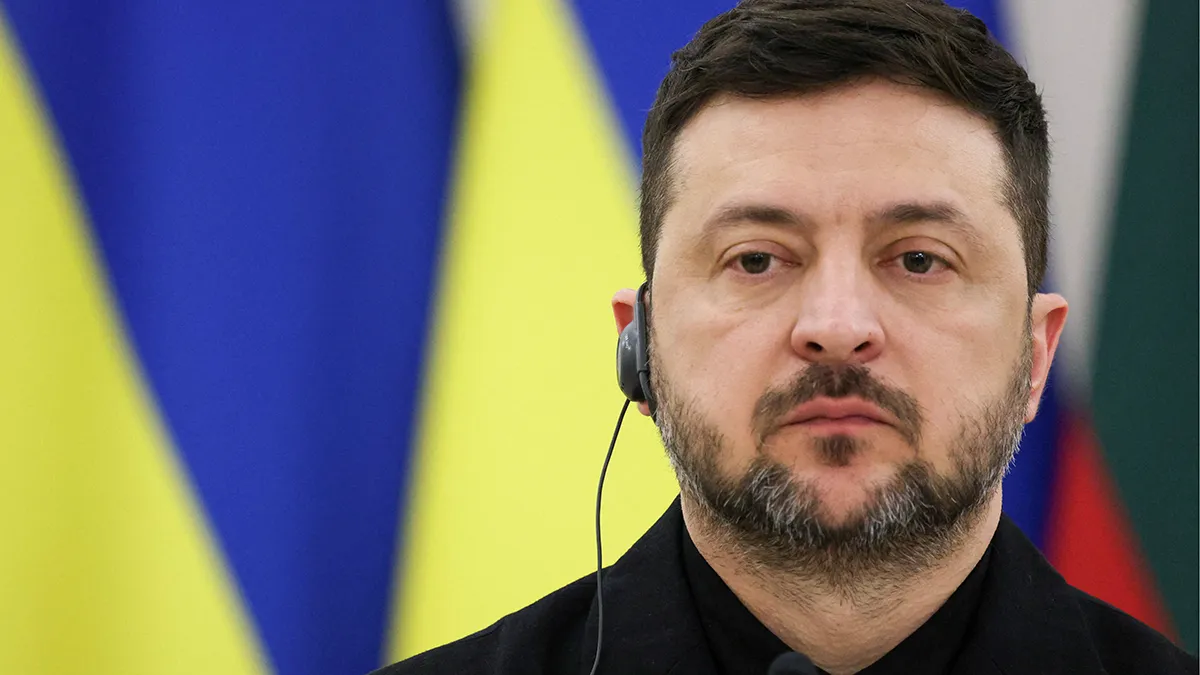
The Russian president formally rejected Zelensky’s offer to organize a direct bilateral meeting – formulated in an open letter on June 4 and transmitted through oligarch Roman Abramovich – and which continues to provoke increasingly aggressive responses from Moscow. Putin responds directly and through his many spokespersons in Russia and abroad, proclaiming that military action will only cease when Moscow has achieved its “goals.” Almost simultaneously, Russia and Ukraine carried out the largest exchange of prisoners in months: 185 on each side, under the mediation of the United Arab Emirates.
On the air front, Moscow warned it was preparing “systematic attacks” on targets in kyiv and urged foreigners to leave the capital, days after one of the most intense bombardments on the city since the invasion began; Zelensky described as “extremely despicable” a drone attack in Zaporizhia which, according to the authorities, did not lead to an increase in radiation levels. And an incident with greater symbolic potential: a malfunctioning Ukrainian naval drone caused an explosion in a key Black Sea port in Romania; the president of the European Commission warned that this event was a “direct consequence” of the war waged by Russia against Ukraine.
Implications
Putin’s refusal to participate in the summit has a diplomatic cost that the Kremlin fully assumes: after Zelensky’s open letter, any future failure of the negotiations will be attributable to Moscow in the eyes of Western public opinion and the White House itself. The fact that this refusal coincides with the largest prisoner exchange in months – and with Abramovich and Abu Dhabi as intermediaries – confirms the thesis that this analyst has been defending for a long time: Russia does not want peace, but it also does not want to close the floodgates through which peace will come when it suits it.
The threat of “systematic attacks” on kyiv, after the first monthly territorial assessment favorable to Ukraine since 2023, is the classic response of the aggressor who loses the tactical initiative: punish the civilian population to break the rearguard. As for the incident at the Romanian port, it should be considered with calm and without alarmism – it was a broken Ukrainian drone, and not a Russian attack – but the lesson to be drawn from it is disturbing: the Black Sea war is now taking place at the physical doors of NATO, and Russian propaganda will exploit every such event to present the Alliance as a belligerent party.
Perspectives et scénarios
This analyst maintains the framework of the two conditions necessary for a real window of negotiation: that the economic and military cost for Russia exceeds the threshold manageable by the Kremlin, and that Ukraine demonstrates its capacity to make the occupation so costly that it becomes unbearable for Russian public opinion. None of these conditions have yet been met. The Franco-Anglo-German proposal to freeze the contact line remains premature – proposing it when kyiv has just regained ground for the first time in three years amounts to offering Moscow what it has not been able to keep – and the crisis in the Middle East continues to monopolize Western political and media attention at the same time where Ukraine most needs the opposite.
Press review
Summary of coverage from major international media outlets over the past 24 hours.
The New York Times : In the news: the entry into the war of the Houthis and the threat on the Red Sea; an exclusive and in-depth report on the pressure exerted by Trump to foil the Israeli attack on Tehran; an analysis of the oil market.
Washington Post : Editorial on the rift between Trump and Netanyahu and the limits of American influence on Israel; report from Tire on the evacuation of the Christian quarter.
Financial Times : Exclusive on the “Team Gen 6” position document sent to Pistorius and the Ministry of Foreign Affairs; analysis of the double risk Hormuz-Bab el-Mandeb and the role of Yanbu as a Saudi valve.
The Times (Londres) : Chronicle of the resurgence of the Houthi threat and the naval response prepared by the United States and the United Kingdom; analysis of GCAP options after the burial of FCAS.
The Guardian : Focus on the humanitarian crisis in southern Lebanon and the denunciation by Médecins Sans Frontières of “forced displacement”; criticism of Israeli evacuation policy.
The World: Severe editorial on the divorce from the FCAS, described as a political failure of Macron and “Defense Europe”; analysis of the French national route concerning the Rafale.
Le Figaro: Defense of Dassault’s position against Airbus; coverage of the papal trip to Barcelona focusing on Gaudà and the European spiritual dimension.
The Tribune: Behind the scenes of the collapse of FCAS: the failed mediation and the divorce timetable; consequences for the French aeronautical supply chain.
FAZ (Frankfurter Allgemeine Zeitung): Presentation of the German national aviation strategy and the driving role of Airbus; analysis of the risk of contagion in the MGCS program.
Handelsblatt: Continuation of his scoop: details on “Team Gen 6” and the Airbus-Saab discussions; reaction from German industry and the IG Metall union.
The world : Editorial in favor of the German national road; arguments in favor of the partnership with Saab as an alternative to “French supervision”.
Corriere della Sera: Coverage of the Pope’s visit to Barcelona and Gaudí’s centenary; analysis of Italian interest in attracting Germany into the GCAP alongside the United Kingdom and Japan.
L’Osservatore Romano: Chronicle of the vigil at the Olympic stadium and preview of the blessing of the tower of Jesus Christ; in-depth article on GaudÃ, beauty and faith.
The Vanguard: Special dispatch on the papal day: the mass at the Sagrada Família and the blessing of the tower in front of 8,000 people; Illa’s request for Catalan in the welcome message; the security system in the Eixample.
The Times of Israel : Explanation of why the Houthi threat is more serious than in 2023-2024: with the Strait of Hormuz closed, Gulf oil is now loaded into the Red Sea itself; assessment of the 19 previous Israeli attacks against the Houthis.
BBC : Direct on the double maritime crisis Hormuz-Red Sea with maps of alternative routes; chronicle of the total evacuation of Tyre.
CNN : His exclusivity dominates the news: Trump slowed down the Israeli attack on Tehran; interviews with senior Iranian officials on the conditions of the negotiation.
Al Jazeera: Extensive coverage from Sanaa, Beirut and Tehran; emphasis on civilian casualties in Tire and interpretation of the Houthis as a “response to aggression”; critical silence on the terrorist character of the organization.
Al Arabiya / Asharq Al-Awsat: Saudi concern over the threat to Yanbu and the Red Sea corridor; calls for restraint and analysis of the cost to Gulf economies.
Reuters : Agency dispatches on the Emirati-mediated prisoner exchange 185 for 185, Putin’s refusal to participate in the summit and the explosion of the naval drone in the Romanian port.
AP : Account of the Houthi attack and the Israeli interception; coverage of the ILA exhibition in Berlin and the presentation of the German strategy.
Bloomberg : Brent falls towards $91-92 as the truce holds, after peaking at $98 on Monday; China reports 500,000 b/d of refining capacity; Saudi price cuts; stock market impact on Airbus, Dassault and Saab.
Haaretz : Criticism of Netanyahu’s strategy: Trump’s warning of “isolation” as a symptom of deteriorating relations with Washington; internal Israeli debate on the campaign in Lebanon.
The Jerusalem Post : Coverage of Houthi missile interception and operations in Tyre; Israeli military sources on the combined Iran-Hezbollah-Houthis threat.
Kyiv Independent / Ukrainian Pravda : In the news: Putin’s refusal of direct negotiations and an exchange of prisoners; alert to the Russian threat of “systematic attacks” on kyiv.
Politico (Europe) : Analysis of “Team Gen 6” and the fragmentation of European defense; Spain’s position in the face of the void left by the FCAS; the Romanian port incident and the debate within NATO.
The Economist : Feature article on maritime bottlenecks as the new global frontline: Hormuz, Bab el-Mandeb and the 1973 precedent.
TASS / Russia Today : Emphasis placed on Putin’s refusal to face Zelensky’s “staging”; propaganda exploitation of the Romanian port incident; interpretation of European chaos in matters of defense as confirmation of “Western decadence”.
Editorial
The belt and the wings: two closed straits and a Europe that cannot fly
Geography once again becomes an inevitability. For three decades, globalization has accustomed us to considering the seas as neutral highways, the invisible infrastructure of a prosperity that we took for granted. June 10, 2026 brings us back to the harsh reality of yesteryear: the straits are weapons, and whoever controls them – or who can close them – holds the jugular of entire continents in his hands. With Hormuz blocked by the dictatorial and mafia oligarchy of Tehran and Bab el-Mandeb under the declared threat of its Houthi terrorists, the oil and gas which supply the European and Asian factories depend today on the will of a regime which cannot win its war, but who has discovered that he can make the world pay the price of not losing it.
It is appropriate to call things by their name. The “security belt of resistance” announced by the Quds Force is not rhetoric: it is the explicit doctrine of energetic blackmail on a planetary scale, carried out by proxy to minimize its own risk, and which counts already its first victim without an Israeli passport: the German freighter Norderney, hit by two missiles while sailing from India to Djibouti. It also demonstrates a perverse surgical precision: it does not punish the United States, self-sufficient in energy, but Europe, Asia and – this is no coincidence – the very Arab neighbors of the regime, from Saudi Arabia which exports via Yanbu to Egypt which lives from the canal of Sweat. It’s the war of variable temperature transposed at sea: no one declares anything, no one wins anything, and everyone pays.
And why is Tehran resorting to its last pawn? Because he can’t do anything else. The paradox of decapitation continues to operate with the precision of a clock: a triumvirate of equals without arbiter can neither win the war nor sign the peace, and the doctrine that the speaker of the Iranian Parliament formulated this week — fight when it is necessary to fight and negotiate when it is necessary to negotiate — is the institutional confession of this paralysis elevated to the rank of strategy. A regime that does not choose between war and peace is condemned to do both badly, indefinitely, and to externalize the cost: on the Iranian people, on the Yemeni people, and on this martyred Lebanon including the Christian quarter of Tire – refuge of refugees, living stone of two thousand years of oriental Christianity — fled yesterday along the coast road, the mattresses attached to the roofs of the cars. This analyst, for reasons that transcend geopolitical analysis, cannot and does not want to write about Tire with professional perspective: what is happening there has a name, and it is the recurring martyrdom of a country used as a battlefield for wars that are not its own.
The other side of the day is American, and it is important: the revelation that Trump canceled with a single phone call a major Israeli attack on Tehran – with the warning, in unprecedented harshness, that Netanyahu could find himself “isolated” — clearly establishes who holds the reins of climbing. This is good news for restraint and very bad news for coherence: because the same president who slows down his ally proclaims imminent agreements that the facts deny every 48 hours. The diplomacy of the triumphant announcement has a cumulative cost: each “total victory” that does not materialize erodes the credibility of the next one.
And while the world plays its energy arteries in two straits, Europe celebrates the funeral of its wings in Berlin. Today, in the same hall of the ILA where Airbus and Dassault shook hands in 2018, Chancellor Merz formalizes the burial of the sixth generation European fighter and presents a national strategy which enshrines what the FCAS claimed to overcome: every man for himself. The speed with which “Team Gen 6” came into being – eight German companies with an alliance already ready, advanced discussions with Saab – shows that Berlin had been preparing for months for the post-crisis, and the phrase of Minister Pistorius on the head and heart will remain as the perfect epitaph of defense Europe: when the German head and the French heart come into conflict, there is no European body capable of reconciling them. Three competing hunter projects – the German-Swedish project in progress, the Anglo-Italian-Japanese GCAP and the French solo route – do not make three times as much Europe: they make three thirds of insignificance.
The conjunction of these two crises is the real lesson of the day. The Europe whose energy arteries can be cut from Sanaa and from Tehran is the same which shows itself incapable of jointly building the most elementary instrument of its strategic autonomy. The response to the first crisis would require a serious European naval mission in the Red Sea and coordinated strategic reserves; the response to the second would require an industrial humility that neither Paris nor Berlin has demonstrated. This analyst does not expect either of these two things in the short term, and that is exactly the bet that Tehran, Moscow and Beijing have made.
Faced with so many erroneous calculations, two images of the day are sufficient in themselves. In Barcelona, this afternoon, a pope blessed the tower which crowns a basilica under construction for one hundred and forty-four years: proof that civilizations which believe in something build on a scale of centuries. And in kyiv, a capital threatened by “systematic attacks” is resisting its fourth year of war without asking permission to exist. Between the faith that builds cathedrals and the courage that defends cities, the Europe of committees and crossed vetoes would do well to ask itself which of these two Europes it wishes to belong to. This analyst believes that the answer to this question – and not the summit communiqués – will determine whether the continent will arrive in 2040 as an actor or as a spectator setting the scene.






:fill(black)/2026/06/11/6a2aa64935dc6169122545.jpg "Voici le QG des Bleus pour la Coupe du Monde")