Guest of L’Édition du Soir Tuesday on i24NEWS, professor of geopolitics Michel Fayad estimated that the French sanctions targeting several Israeli officials are part of a diplomatic orientation that is now well established. According to him, French foreign policy is moving closer and closer to the positions defended by certain Gulf monarchies, notably Saudi Arabia and Qatar.
He emphasizes that these countries represent a significant part of the opportunities for the French military-industrial complex, which, according to him, would contribute to influencing France’s diplomatic choices in the Middle East.
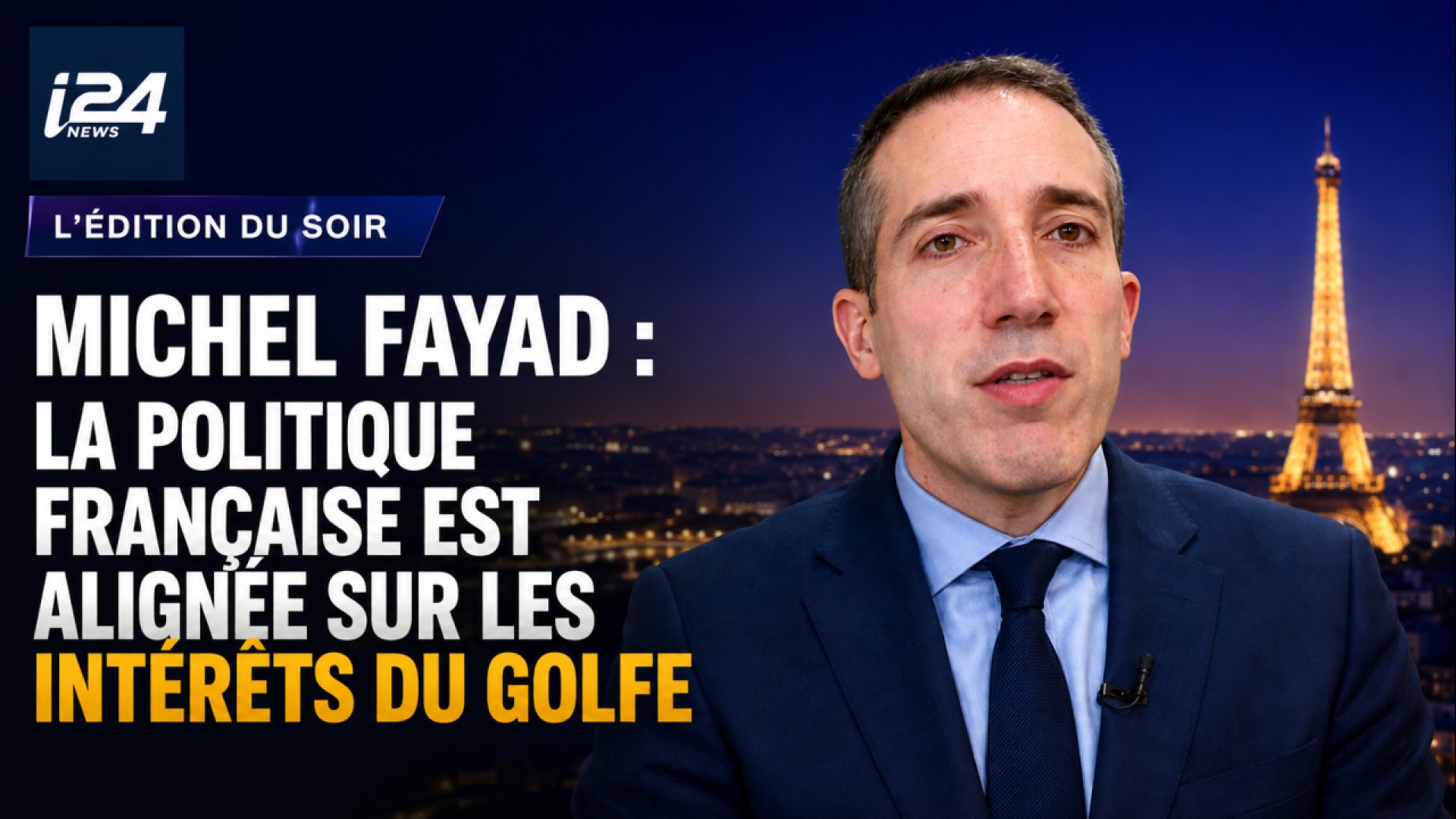
Michel Fayad sees in this development the continuity of a policy initiated for several decades. It recalls in particular the historical disagreements between Paris and Jerusalem after the Six-Day War, as well as the differences that emerged during the Lebanese War.
The analyst also commented on the visit to Lebanon of a delegation of deputies from La France insoumise, including Rima Hassan. According to him, this initiative is part of a political reading of the conflict which does not reflect the reality of the balance of power on the ground. He accuses the elected officials concerned of presenting the conflict from an ideological angle rather than a geopolitical one.
Finally, Michel Fayad was particularly harsh towards UNIFIL. He considers that the UN force did not fulfill its primary mission, which consisted of enforcing Security Council resolution 1701 and preventing the rearmament of Hezbollah in southern Lebanon. According to him, UNIFIL’s mission is today reaching its limits and its future appears increasingly uncertain.
Through this analysis, Michel Fayad paints a portrait of a Middle East where diplomatic balances remain largely determined by regional power relations and the strategic interests of the great powers.