At the invitation of Prime Minister Le Minh Hung of the Socialist Republic of Vietnam, Prime Minister Sonexay Siphandone of the Lao People’s Democratic Republic will pay an official visit to Vietnam and participate in the third ASEAN Future Forum from June 7 to 9, 2026.
On this occasion, a reporter from VNA Laos spoke with Vietnamese Ambassador to the Lao People’s Democratic Republic Nguyen Minh Tam about the importance of the visit and participation in the Forum for the Vietnam-Laos special relationship.
Mr. Ambassador, what is the significance of Lao Prime Minister Sonexay Siphandone’s official visit to Vietnam and his participation in the ASEAN Future Forum 2026, as the two countries actively implement their development goals for the new legislature? What message does this visit convey regarding the great friendship, special solidarity, global cooperation and strategic alignment that unite Vietnam and Laos?
Ambassador Nguyen Minh Tam : At the invitation of Prime Minister Le Minh Hung of the Socialist Republic of Vietnam, Prime Minister Sonexay Siphandone of the Lao People’s Democratic Republic will lead a high-level Laotian delegation on an official visit to Vietnam and participate in the 3rd ASEAN Future Forum from June 7 to 9.
This visit is of particular importance, coming in a context where the two countries have successfully held their respective national congresses, elected their respective parliaments, finalized their nominations of senior leaders for the new term and are actively implementing the resolutions of their respective congresses, as well as their development plans socio-economic.
This visit is part of the continuity of the historic state visits made by Party General Secretary and Laotian President Thongloun Sisoulith to Vietnam in January and by Party General Secretary and Vietnamese President To Lam to Laos in February.
This visit once again confirms the steadfastness of the high-level leaders of the two countries in the continuous development of Vietnam-Laos relations, in order to make them deeper, more concrete and more effective in all areas; and, at the same time, it concretizes the meaning of the “strategic commitment” between the two countries.
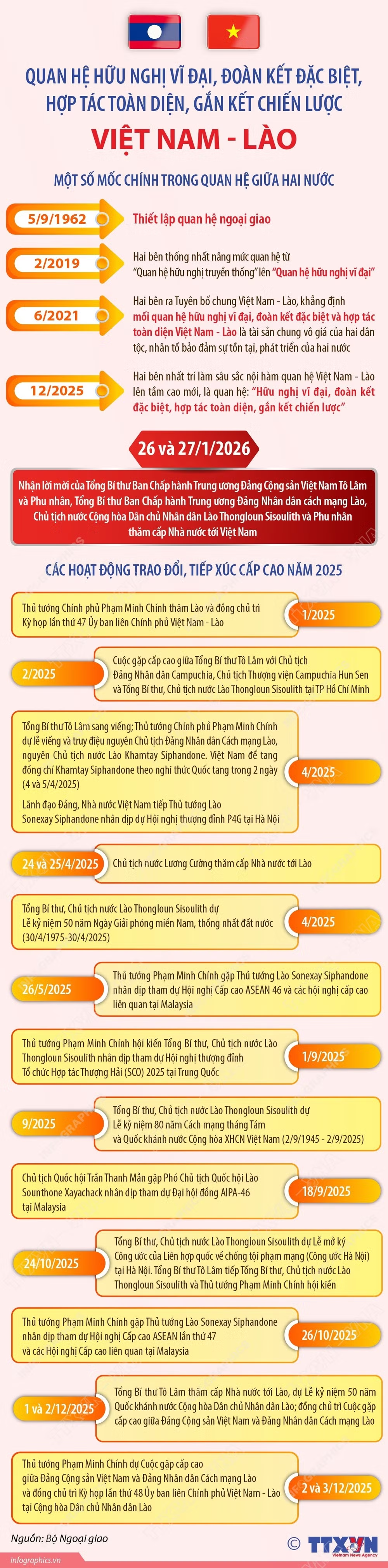
First of all, this is Prime Minister Sonexay Siphandone’s first official visit to Vietnam since his re-election to this post by the 12th Congress of the Lao People’s Revolutionary Party and the 10th National Assembly.
The fact that Vietnam is among the priority destinations in Prime Minister Sonexay Siphandone’s foreign policy agenda clearly confirms that Vietnam-Laos relations always occupy a prominent place in each country’s foreign policy, thus demonstrating the close ties and uniqueness of the relationship between the two parties, the two states and the people of the two countries.
Secondly, this visit provides an opportunity for high-level leaders of the two countries to review in detail the implementation of past agreements, including the results of the annual meeting between the Politburo of Vietnam and Laos, the 48th session of the Intergovernmental Committee on Bilateral Cooperation between Vietnam and Laos. Laos, and other high-level agreements; thereby formulating new policies to move Vietnam-Laos cooperation to a deeper, more substantial and more effective stage of development.
One of the main highlights of the current phase is that the two sides are not only promoting broad cooperation, but also focusing on improving the quality of deep cooperation, aligning the strategic interests of the two countries more closely.
The notion of “strategic engagement” is gradually taking shape in key areas such as the connectivity of strategic infrastructure, economic ties, energy cooperation, digital transformation, finance and monetary policy, human resources training and coordination within multilateral mechanisms.
Third, Prime Minister Sonexay Siphandone’s participation in two of the three ASEAN Future Forums (2024 and 2026) once again demonstrates Laos’ unwavering support for the initiative launched by Vietnam to promote a strategic dialogue on the future of ASEAN.
Laos’ active participation not only reflects the increasingly close coordination between the two countries on regional issues, but also demonstrates the common determination of Vietnam and Laos to contribute to building a united, resilient, innovative and people-centered ASEAN, and maintain its central role in the evolving regional structure.
In the context of profound geopolitical, geoeconomic and technological changes occurring on a global and regional scale, this visit sends a very clear message: Vietnam and Laos will continue to work together, share strategic interests, support each other in their national development and coordinate closely their efforts to effectively address common challenges.
The relationship between Vietnam and Laos is not only an invaluable asset meticulously cultivated by generations of leaders and people of the two countries, but it is also becoming a unique model of international relations and cooperative development in the new era.
I am convinced that Prime Minister Sonexay Siphandone’s official visit to Vietnam and his participation in the ASEAN Future Forum 2026 will be a great success, creating new dynamics for the effective implementation of the high-level agreements, thus strengthening the substance of the Vietnam-Laos strategic bond and contributing to the deepening of the great friendship, special solidarity, global cooperation and strategic link between the two countries, for the good of the people of the two countries and for peace, stability, cooperation and development in the region and in the world.
— According to the ambassador, what are the key areas or projects of economic cooperation that the two sides prioritize to give new impetus to economic cooperation between Vietnam and Laos?
Ambassador Nguyen Minh Tam : In the context of the two countries’ rigorous implementation of the resolutions of their respective congresses and the realization of the common understanding of high-level leaders on building Vietnam-Laos relations in the sense of “strategic engagement”, economic cooperation is identified as one of the important pillars, playing a decisive role in transforming the cooperation potential and the special political bond into concrete benefits for the development of the populations and businesses of both countries.
One of the main highlights of the current phase is that Vietnam-Laos economic cooperation is moving from a traditional support-oriented mentality to a long-term development-oriented approach, focusing on three major pillars: strategic infrastructure connectivity, energy connectivity and institutional and commercial connectivity.
The top priority is to connect transport and logistics infrastructure. Both sides are committed to promoting strategic projects such as the Hanoi-Vientiane highway, the Vientiane-Vung Ang railway line, smart border crossing systems and the East-West economic corridors.
These are not just transportation projects, but also projects that open up new development prospects for both countries, helping Laos play its role as a link nation in the region, while creating conditions for Vietnam to expand its supply chain and strengthen its ties with the Mekong sub-region and ASEAN.
Second, energy cooperation occupies a prominent place in economic relations between Vietnam and Laos. To date, Vietnam has authorized the import of electricity from Laos with a total capacity of more than 4,250 MW; numerous hydroelectric and wind power plants have come into operation and supply the Vietnamese market.
You may like

Projects such as Xekaman 3, Laos.
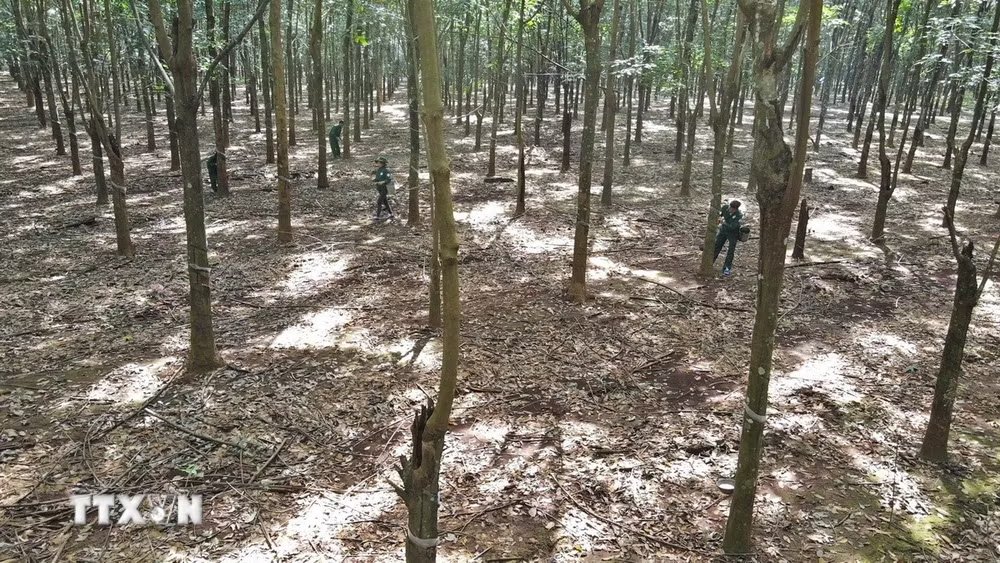
Third, cooperation extends to investment and trade. Vietnam currently has around 289 active investment projects in Laos, representing a total registered capital of nearly US$7 billion, making it one of the leading investors in the country. It is worth noting that Vietnamese investments are increasingly focused on high value-added sectors such as advanced agriculture, renewable energy, mining and advanced processing, telecommunications, finance and banking, logistics and digital transformation.
Many projects carried out by Vietnamese companies have become successful models of cooperation, contributing to job creation, increased budget revenues and technology transfer to Laos.
Currently, the governments of the two countries are creating favorable conditions for large Vietnamese companies, such as Viettel Group (Vietnam Military Telecommunications Group), Vietnam Rubber Group, Truong Hai Group, Phu Dien Company, T&T, TH True Milk, Sun Group and many others, to continue investing in the energy, agriculture, mining and processing sectors. minerals; in particular, they are implementing investment procedures for a potassium salt mining and processing project, a fertilizer factory and high-tech agriculture over an area of 90 km² in Savannakhet province.
On the commercial front, the volume of bilateral trade has almost tripled in a decade, from around $1.1 billion in 2015 to nearly $3 billion in 2025. This clearly demonstrates the strengthening of ties between the two economies.
Both sides are striving to increase bilateral trade to $5 billion in the near future, while aiming for more ambitious goals through improving the legal framework, promoting local currency payments, digitalizing customs procedures and creating a more favorable business environment for businesses in both countries.
It can be said that the above-mentioned key areas and cooperation projects not only create new growth dynamics for each country, but also contribute to the formation of a common development space between Vietnam and Laos, gradually realizing the meaning of “strategic engagement”, and making the economic cooperation one of the most important drivers of the Vietnam-Laos special relationship in this new phase of development.
These priorities stem from the strong political will of the leaders of both parties and the two states, as well as the active support of the business communities of both countries.
The Vietnamese Embassy in Laos always considers supporting and supporting Vietnamese businesses as an important task; at the same time, it works in close collaboration with Laotian agencies to resolve difficulties and create an investment environment favorable to the realization of business projects.
Economic cooperation between Vietnam and Laos not only brings concrete economic benefits, but also contributes to strengthening socio-political foundations, increasing trust and building close ties between the people of the two countries.
In an unstable regional and global context, deepening economic ties will help build a strong, stable and prosperous ASEAN community.
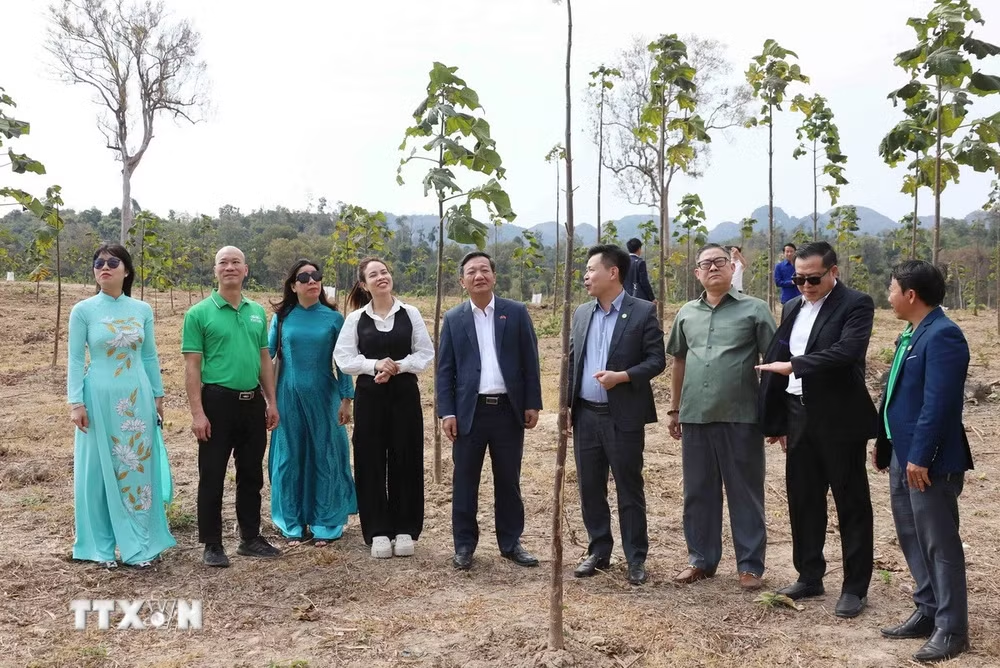
With the tradition of “sharing joys and sorrows together”, the resolute will of high-level leaders of the two parties and two countries, and the constant support of the business community, we have every reason to believe that Vietnam-Laos economic cooperation will see even more remarkable progress, thereby broadening the prospects of development, strengthening economic ties and breathing new dynamics into the sustainable development of each country. This cooperation is based on trust, sharing and a common vision, helping to deepen the privileged Vietnam-Laos relationship and serving as a model for the prosperity of the people of the two countries and for a stable and prosperous ASEAN Community.
Mr. Ambassador, in the context of a constantly evolving, complex and unpredictable regional and global situation, how will Vietnam and Laos continue to play their role in strengthening coordination within multilateral mechanisms, notably ASEAN, in order to make a concrete contribution to maintaining a peaceful and stable environment and promoting sustainable development in the region?
Ambassador Nguyen Minh Tam : As we have observed, the current global and regional situation is experiencing profound changes unprecedented in decades. Strategic competition between the great powers is intensifying; Non-traditional security challenges, such as climate change, epidemics, water security, cyber security and energy security, continue to impose new demands on countries in the region. In this context, solidarity, consensus and the central role of ASEAN are more important than ever.
Therefore, core initiatives that enable all stakeholders to share ideas and engage in strategic dialogue, such as the ASEAN Futures Forum, are essential mechanisms that help promote strategic dialogue on megatrends shaping the future of the region.
Building on their privileged and strategically close relationship, Vietnam and Laos actively contribute to ASEAN activities, mechanisms and initiatives, regularly coordinating their actions in a close, reliable and effective manner. This coordination has made it possible to strengthen the role and position of ASEAN on the regional and international scene. This is not only a common strategic interest, but also the shared responsibility of the two countries for peace, stability, cooperation and sustainable development in the region and in the world.
Building on strong friendship, special solidarity, comprehensive cooperation and strategic alignment, Vietnam and Laos have always been active and responsible members of ASEAN, coordinating, consulting and supporting each other on a regular basis under the ASEAN mechanisms. regional and international cooperation.
The effective cooperation between the two countries over the years has contributed significantly to strengthening internal solidarity, protecting ASEAN’s fundamental principles, and strengthening ASEAN’s role and position in regional and international affairs.
It is worth pointing out that at present, Vietnam and Laos are not only coordinating efforts to adapt to changes in the international environment, but also proactively working with ASEAN to shape the region’s future development trends.
This is the importance of the ASEAN Future Forum – an initiative launched by Vietnam, which is gradually establishing itself as a prestigious forum for strategic dialogue in the region.
In fact, the implementation of the initiatives and commitments made during the ASEAN Future Forums in 2024 and 2025 initially yielded positive results, helping to confirm the practical value of this strategic dialogue mechanism.
At the ASEAN Future Forum 2024, ideas to strengthen ASEAN’s strategic autonomy and resilience, promote digital connectivity and improve its adaptability to global changes were adopted by many member states and gradually integrated into the ASEAN cooperation program.
At the ASEAN Future Forum 2025, these questions were explored further through increased exchanges on the ecological transition, energy security, governance of emerging technologies and closing development gaps between sub-regions within ASEAN.
You may like

On this basis, Vietnam clearly demonstrated its role as initiator, coordinator and promoter in guiding the content of the ASEAN Future Forum towards a substantive, open and highly strategic, forward-looking approach.
Beyond the simple organization of a dialogue forum, Vietnam is actively seeking to translate the political recommendations resulting from this forum into concrete directions for cooperation within ASEAN, particularly in the areas of digital transformation, the green economy, strengthening regional resilience and human-centered development. This approach contributes to consolidating Vietnam’s position and leading role within ASEAN, while strengthening the confidence of member states in the initiatives it proposes.
Laotian Prime Minister Sonexay Siphandone’s participation in the ASEAN Future Forums demonstrates Laos’ deep appreciation and support for the Vietnamese initiative, and reflects the increasingly close coordination between the two countries in promoting strategic discussions on the future of ASEAN.
The ASEAN Future Forum 2026, themed “Shaping a Shared Future Together: Peace, Prosperity and a People-Centered Approach,” is a key strategic dialogue forum for ASEAN member states and their partners to exchange ideas, initiatives and solutions to strategic problems facing the region.
Discussions are expected to focus on fundamental pillars and panel themes such as resilience and solidarity in a changing world; building a regional fintech ecosystem: from policy to action; promoting ASEAN initiatives in conflict prevention; the application of artificial intelligence in ASEAN: leaving no one behind; strengthening energy security in the new context; and new development models in the context of global changes.
The forum once again reaffirmed ASEAN’s resolve to seek innovative solutions and build a prosperous, inclusive and people-centered future.
In the coming period, Vietnam and Laos will continue to closely coordinate efforts to protect and strengthen the fundamental principles of ASEAN, such as solidarity, consensus, respect for international law, the United Nations Charter, peaceful settlement of disputes and upholding ASEAN’s central role in development. of the regional structure.
At the same time, the two countries will continue to promote ASEAN’s new development priorities, such as digital transformation, ecological transition, sustainable development, improving the quality of human resources, reducing development inequalities and strengthening resilience to external impacts. These are not only development requirements for each country, but also essential conditions for ASEAN to maintain and develop, and strengthen its autonomy and adaptation capacity in an unstable world.
It can be said that the close coordination between Vietnam and Laos within multilateral mechanisms not only serves the interests of each country, but also actively contributes to the construction of a more united and autonomous ASEAN, with a stronger voice on regional and global issues.
This also contributes to deepening the special relationship between Vietnam and Laos, both bilaterally and multilaterally, thus making a concrete contribution to peace, stability, cooperation and sustainable development in the region and the world.
– Thank you very much, Mr. Ambassador.
Source : https://www.vietnamplus.vn/quan-he-viet-nam-lao-giu-vi-tri-uu-tien-trong-chinh-sach-doi-ngoai-cua-moi-nuoc-post1114773.vnp