1. Technology companies see their market capitalization increase by several billion dollars: As of May 2026, most major global technology companies (except Alphabet) have recorded significant increases in their stock market capitalization thanks to favorable profit prospects and strong demand for artificial intelligence (AI) chips. Apple, Micron Technology, Samsung Electronics and SK hynix posted the biggest gains, with gains of $598 billion, $512 billion, $481 billion and $377 billion, respectively. Microsoft and Nvidia are also among the companies with the largest increases, with market capitalization gains of $315 billion and $276 billion.
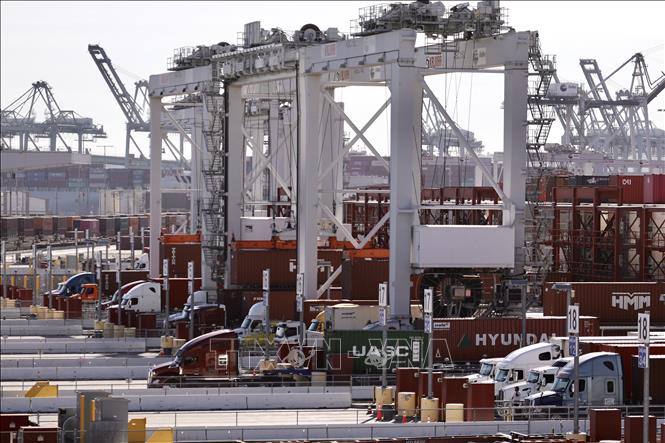
2. Appeal from the US government regarding the refund of import customs duties: On June 2, the administration of President Donald Trump officially appealed a court decision demanding reimbursement of international customs duties imposed by the American president, after their invalidation by the Supreme Court earlier this year. This dispute concerns customs revenue estimated at $166 billion. The refund system administered by U.S. Customs and Border Protection (CBP) has currently begun processing these payments.
3. The US president signs an executive order requiring the sharing of AI models with the government: In order to strengthen technological regulation, the American president signed a decree requiring companies specializing in AI to provide their models to the federal government for evaluation before their distribution. Business participation in this cybersecurity assessment will be voluntary, and the government will have access to the model 30 days before its launch. This time frame allows the government and its trusted partners to test the model and ensure security standards are met for users.
4. Canada and Mexico urge the United States to extend CUSMA for 16 years: On June 2, the governments of Canada and Mexico urged the United States to extend the Canada–United States–Mexico Agreement (CUSMA) for 16 years. The move comes as US President Donald Trump openly displays skepticism about the value of the deal, forcing the two neighboring countries to act quickly to strengthen their trilateral trade commitments. CUSMA is essential to the economies of Canada and Mexico. The United States is currently its main trading partner, representing 75% and 80% of its total exports respectively. The CUSMA parties have until July 1 to decide whether to extend the agreement or begin renegotiations.
5. Goldman Sachs: US diesel stocks at lowest since 2003: Goldman Sachs reports that U.S. diesel inventories have reached their lowest level since 2003. If this trend continues, the world’s largest economy’s fuel supply may only be enough for 20 days by August 2026. The main cause of this situation is the conflict in Iran, which has significantly reduced oil deliveries through the Strait of Hormuz, disrupting global supplies. Daan Struyven, co-head of global commodities research at Goldman Sachs, warns that the United States is currently experiencing the largest inventory decline in its history and will be heavily impacted by this supply crunch.

6. Asian central banks under pressure to tighten their monetary policy: Asian central banks are facing pressure to tighten monetary policy due to the combined impact of the energy crisis and the rise of artificial intelligence (AI). Persistent inflation is forcing many countries to consider raising interest rates in order to stabilize their economies. India and Japan are expected to raise their borrowing costs as early as this month, while South Korea is expected to do so in July. Previously, Indonesia and Sri Lanka had made significant interest rate hikes, and Australia has also seen three rate hikes since the start of the year to stabilize its economy.
7. Conflict in the Middle East is slowing global economic growth and driving up inflation: In a report released on June 3, the Organization for Economic Cooperation and Development (OECD) said that the global economic outlook depends heavily on the evolution and duration of the conflict in the Middle East. The OECD has warned that if the conflict continues next year, some countries risk experiencing a recession and inflation could rise sharply. In the baseline scenario, if the conflict is short-lived, energy supply could gradually stabilize, while global economic growth is expected to increase from 3.4% in 2025 to 2.8% in 2026 before rebounding to 3.1% in 2027.
Source : https://baotintuc.vn/kinh-te/diem-tin-kinh-te-the-gioi-noi-bat-ngay-362026-20260603211420448.htm