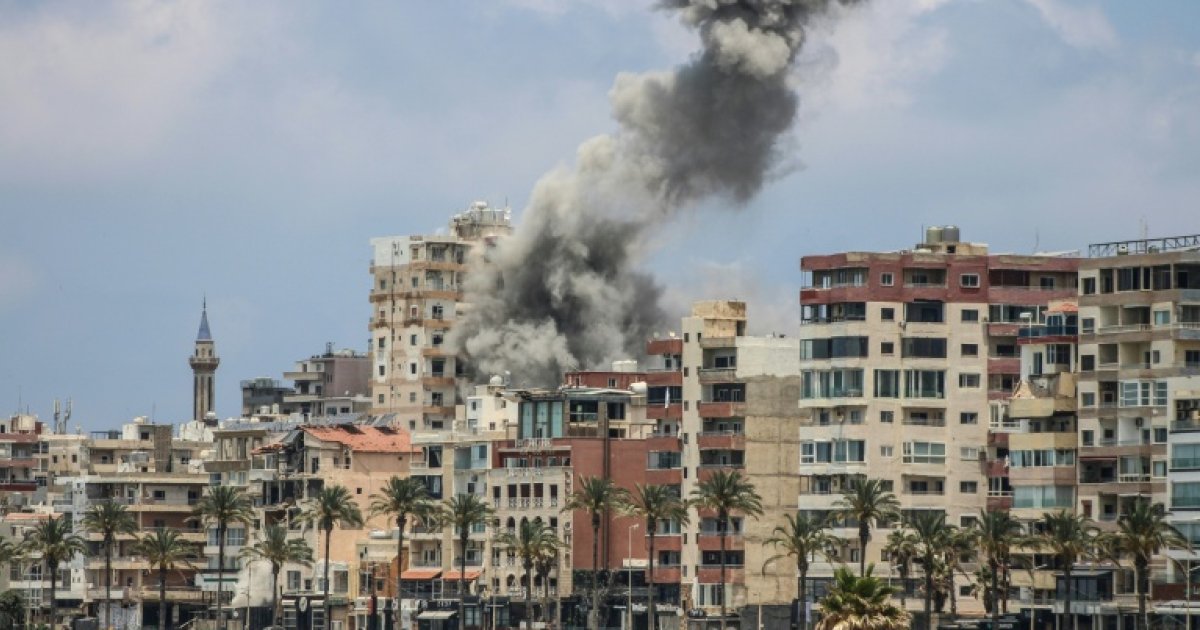
The United States and Iran are close to an agreement to end the war in the Middle East and reopen the Strait of Hormuz. After threatening to resume hostilities and break the ceasefire in force since April 7, Donald Trump now seems to favor the path of diplomacy, while leaving the risk of an escalation looming if Iran does not accept a negotiated solution. The American president says that negotiations with Iran are “constructive”, but that “both parties must take their time and find the right agreement”.
Tehran and Washington today have a common interest in putting an end to the war started on February 28. Even if the regime has not collapsed, Iran risks being strangled by the maritime blockade which prevents it from continuing to sell its oil, its main financial resource. The coffers of the Iranian state will soon be empty, although the country has the equivalent of three months of exports aboard tankers already at sea. Donald Trump was indeed slow to cut off Iran’s supplies by letting Iranian oil flow onto the market for fear of seeing the price of barrel fly away even more.
Risk of sanction at the polls
For his part, the American president is also cornered with less than six months before the mid-term elections in the United States. The war in the Middle East is unpopular, including among Republicans. The blockage of the Strait of Hormuz, through which a fifth of the world’s crude oil and liquefied natural gas transits, is leading to a surge in fuel prices in the United States, raising the risk of a sanction at the ballot box.
“The Iranians have demonstrated that Trump obtains less results through threats and coercion than through diplomacy,” explains to New York Times Omid Memarian, analyst at Dawn, an American think tank. “For both camps, negotiations are becoming inevitable due to the exorbitant cost of continuing the conflict,” he adds. According to the American site Axios, the United States and Iran are finalizing a 60-day memorandum of understanding providing for the reopening of the Strait of Hormuz. The semi-official Iranian press agency Tasnim, close to the Revolutionary Guards, announces a possible restoration of traffic in the strait to its pre-war level within a month.
The thaw of Iranian assets?
In return, the United States would lift the naval blockade imposed on ships entering and leaving Iranian ports. Iran would also obtain a relaxation of sanctions to sell its oil. According to US Secretary of State Marco Rubio, the memorandum of understanding postpones the delicate issue of Iran’s nuclear program until later. Discussions will subsequently open on Iran’s commitment not to enrich uranium to a level enabling it to acquire the atomic bomb and to get rid of its 400 kilos of uranium enriched to 60%.
The United States would be ready to release $25 billion in Iranian assets frozen abroad if Iran shows good will. The future of Iranian nuclear power is one of the points which risks derailing the agreement because Tehran demands to be able to maintain enrichment capacities for civilian purposes. In 2015, the Tehran regime transferred almost all of its stock of enriched uranium to Russia, as part of the Vienna agreement which was signed under Barack Obama before being denounced by Donald Trump in 2018. In recent days, the Russian President Vladimir Putin has declared himself ready to recover the nuclear fuel which Iran would agree to get rid of.