While negotiations between Washington and Tehran are slow to lead to lasting peace, the United States is maintaining strong pressure. They indeed affirmed on Saturday that they had the means to return to war against Iran, after having assured that a peace agreement would only be possible if their “red lines” were respected.
American Defense Minister Pete Hegseth thus affirmed that the United States was “fully capable” of resuming hostilities against Iran “if necessary”. “Our stocks are largely fit for purpose,” he told a defense forum in Singapore.
An extremely precarious ceasefire
Tehran and Washington have been engaged in indirect discussions for weeks. But their outcome is uncertain, particularly after this week’s clashes, the most serious since the truce came into force on April 8.
“Iran must accept that they will never have a nuclear weapon,” Donald Trump wrote on Friday on his Truth Social network, after sources in Washington mentioned the day before a framework agreement providing for a 60-day extension of the ceasefire. He also demanded that Iran’s stockpile of highly enriched uranium be “DESTROYED.”
The United States and Israel, whose attack on Iran on February 28 triggered the war, accuse Tehran of wanting to acquire atomic weapons, which it refutes. Iran, for its part, insists on tackling the nuclear issue later, after signing the memorandum of understanding currently under discussion.
Standoff on the Strait of Hormuz
Another point of dispute: the Strait of Hormuz, a strategic passage for global hydrocarbon trade, almost blocked by Iran since the start of the war. It “must be opened immediately” and Tehran must commit to demining it, Donald Trump insisted on Friday, whose country is imposing a blockade on Iranian ports. The American military command for the Middle East (Centcom) confirmed on Saturday that it had stopped a cargo ship sailing under the Gambian flag and trying to reach an Iranian port, using a missile fired at its engine room.
The spokesperson for the Iranian Ministry of Foreign Affairs, Esmaïl Baghaï, for his part indicated that “exchanges were continuing” with Washington. Among its demands, Tehran wants the release of billions of dollars in Iranian assets frozen by the United States. Iranian state television said on Saturday, citing an unofficial transcription of the text, that the memorandum of understanding discussed provides for the release within 60 days of 12 billion dollars.
Our file on the War in the Middle East
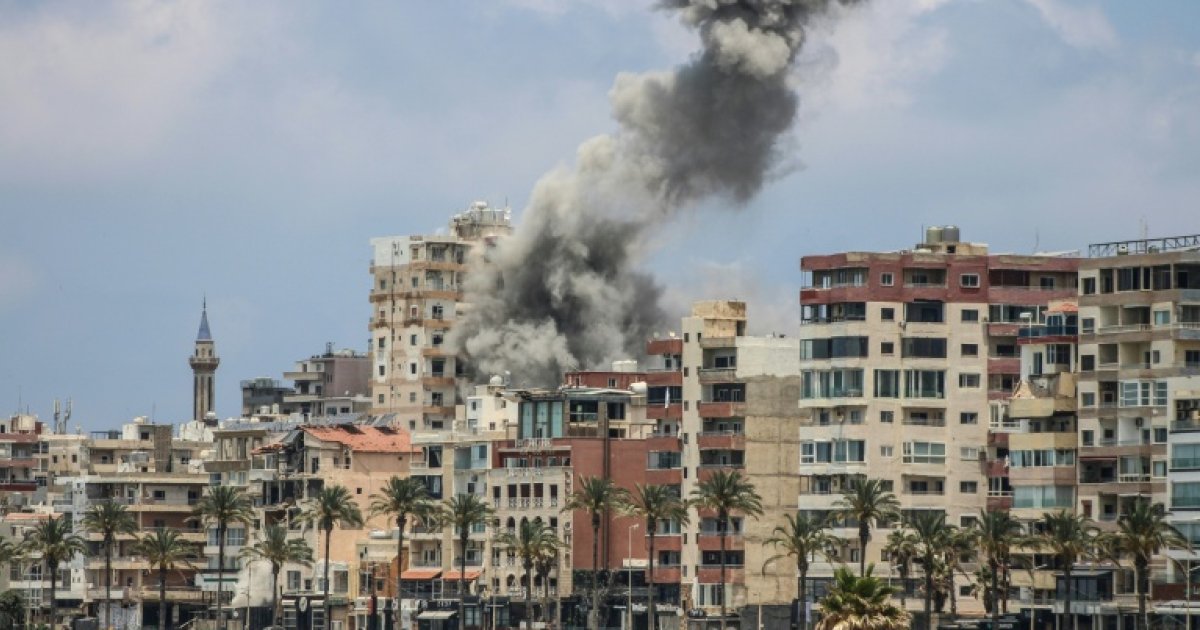
Iran is also demanding an end to the fighting in Lebanon where its ally, Hezbollah, and Israel have been clashing since March 2, despite a truce in force since April 17, but not respected. According to the latest official Lebanese report, Israeli strikes have killed 3,371 people in Lebanon since the start of the war.