Facing large American firms, the French start-up Mistral continues to establish itself in the world of AI. Between significant investments and key partnerships in the industrial sector, the company also intends to put European sovereignty at the center of the issues. BFM met one of its founders, Timothée Lacroix.
A short reprieve, a narrow window. During a highly commented hearing at the National Assembly, devoted to digital sovereignty and AI, on May 12, Arthur Mensch, director of the French start-up Mistral AI, estimated that Europe had only two years before becoming permanently dependent on American technology giants.
“The decision will be taken in the next two years,” he declared, emphasizing the need to react quickly in order to avoid Europe becoming a “colony” of the United States in the field of digital technology and artificial intelligence.
Arthur Mensch, aged 33, whose company is among the most advanced in Europe in terms of AI and is a competitor to OpenAI and Anthropic, also warned of the risk of loss of control, not only of AI models, but also of the energy and IT infrastructures that support them. support.
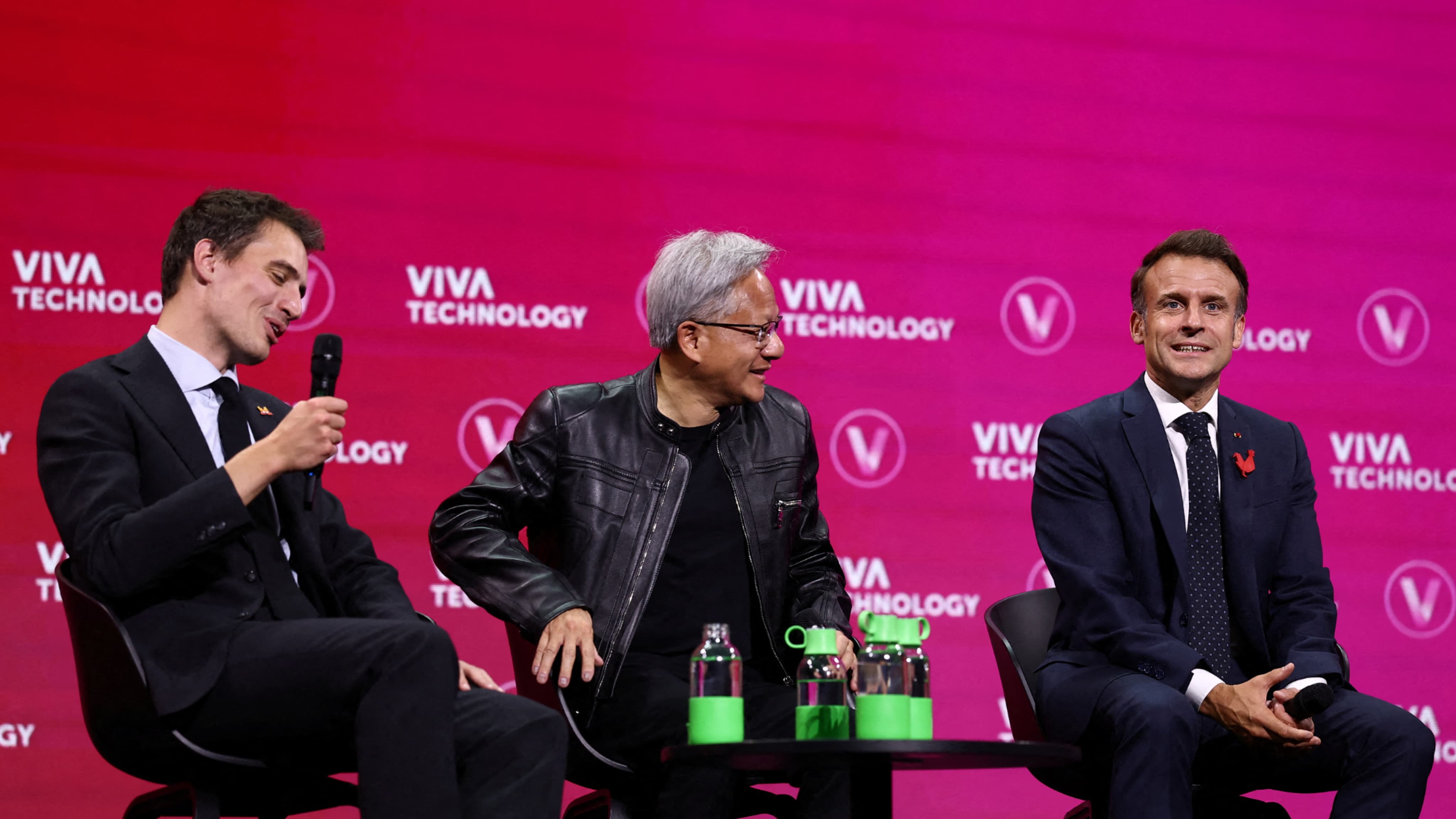
“As soon as the supply is monopolized by American players, we no longer have supply and we can no longer transform electrons into tokens,” he added, in reference to the conversion of electricity into computing power necessary for the operation of AI. These concerns are far from being isolated in Europe. Politicians, experts and industrialists fear that, in the technological field, the Old Continent will soon be “vassalized” by the United States and China.
In a context of changing historical alliances and conflicts transformed by technology and in particular AI, technological sovereignty is central and even the key to military sovereignty. In this spirit, Mistral announced a framework agreement with the French Ministry of the Armed Forces last January to “strengthen the technological sovereignty of national defence”. Yesterday, Thursday May 28, on the occasion of the inauguration of a data center, Arthur Mensch defended the military uses of AI, as reported by Reuters.
“We are all for peace, but if you look at our rivals and adversaries around the world, they are using artificial intelligence,” he explained, before continuing: “As long as we have threatening adversaries, and they are, we have to have our own capabilities.”
Faced with this balancing act, Europe is now forced to fully engage in this fight, at the crossroads of technological, economic… and above all political issues. In this complex equation, Mistral therefore intends to position itself as leader of a European response, by embodying the ambition of a digital sovereignty that has yet to be built.
Keeping Europe on the global technology map
Mistral AI thus aims to become a “full-stack” player, capable of mastering the entire chain, from models to infrastructures to applications, in order to ultimately compete with giants like Google, Microsoft and Amazon. The objective is massive: to achieve 1 gigawatt of computing power by 2030, relying on several data centers spread across Europe, for an investment estimated between 4 and 5 billion euros.
Data centers are today essential to the development of artificial intelligence. “It’s the key resource for us,” explains Timothée Lacroix, co-founder of Mistral AI and today technical director of the start-up, on the Tech&Co daily show. “This is not the only key resource, but there is therefore a whole value chain to arrive at computing capacity.”
But faced with American hyperscalers who now control more than 70% of the European market, exposing sensitive data (health, defense, artificial intelligence) to extraterritorial laws like the Cloud Act, and the colossal financial weight of the Silicon Valley giants, whose investments number in the hundreds of billions, is Europe still playing in the same league?
“The ladders are gigantic, they always have been,” recognizes Timothée Lacroix. However, the technical director of Mistral is not fatalistic. “I think we have done an excellent job and continue to do an excellent job. With the resources we have, we are progressing at a different speed because we are also addressing a different world,” he comments.
“We are really addressing the business world, these are partnerships that take time to set up, which are much more stable, and so we follow this growth. Today, I don’t feel limited or worried by the American players: they do what they do, they do things very well, but we do our own things. There are plenty of places where we can innovate,” he analyzes.
Enter the flea wars
This all-out strategy is therefore based on a central idea: building a complete value chain on the continent in order to reduce dependence on clouds and American models, and assert true European technological sovereignty. But no complete chain without electronic chips. And here too, Mistral AI wants to pull out all the stops.
To supply itself with essential components, the start-up has joined forces since June 2025 with Nvidia, the undisputed leader in chips for artificial intelligence, while claiming to follow European initiatives in the design of processors. It has also established a partnership with its new investor, ASML, which it helps in particular to detect defects in its industrial processes.
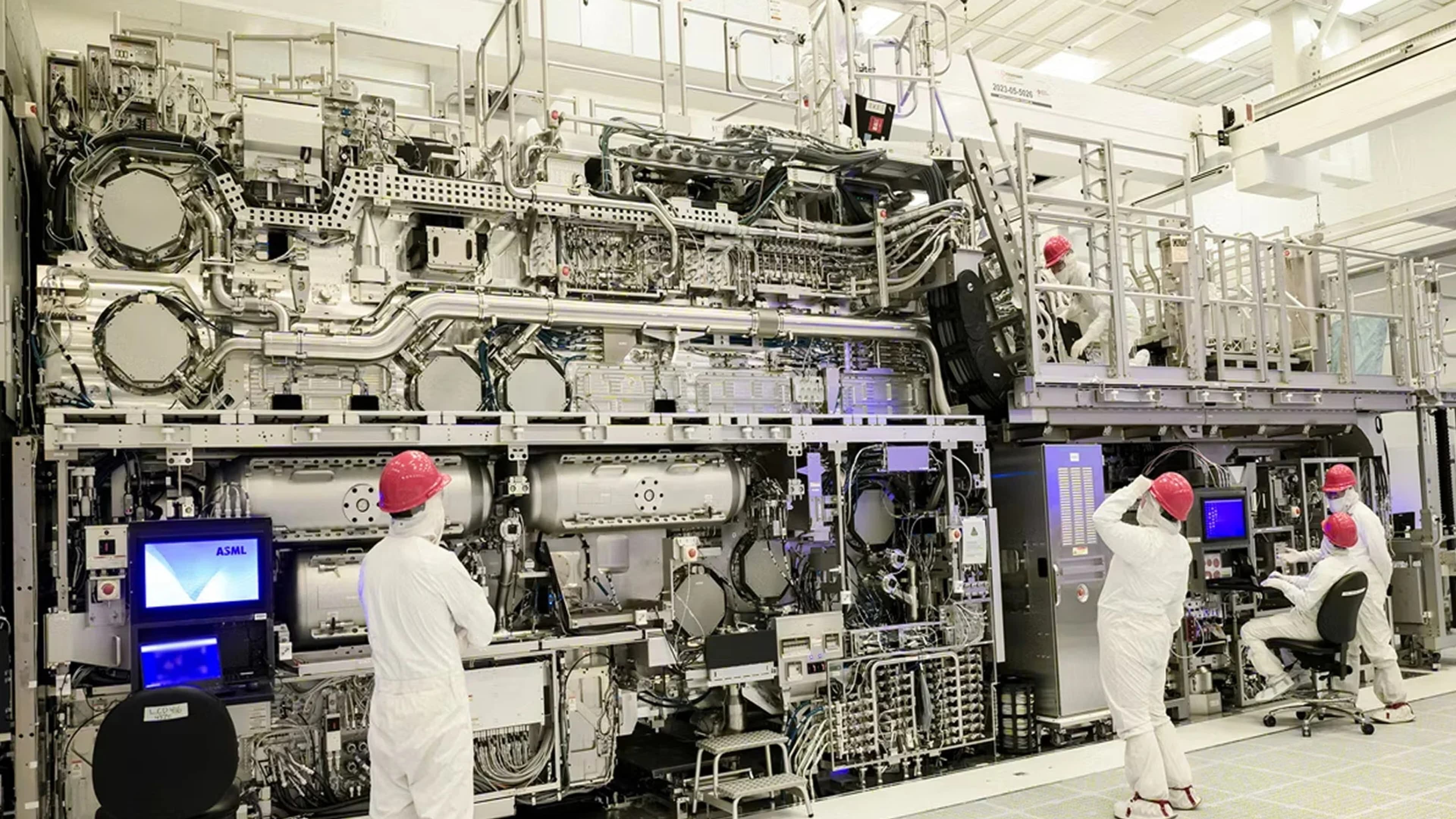
In this strategic race, the question of semiconductor autonomy arises more and more. “Of course, it’s interesting,” Arthur Mensch told CNBC, discussing the hypothesis of developing its own chips in order to “significantly reduce the cost of deploying tokens”, these data units used by AI models.
However, he qualified this perspective: “We could end up developing our own chips, I think that should happen at some point. But for the moment, we are counting on Nvidia, which is an excellent partner for us”, while recognizing that tests are already carried out occasionally.
“What was important for us was to give the choice. And the choice, when we think about the entire AI value chain, so from the data center to the final application, is effectively: can we be on a sovereign infrastructure? Can we be in the cloud? Can we be ‘on-prem’, on our own machines?”, concludes Timothée Lacroix.