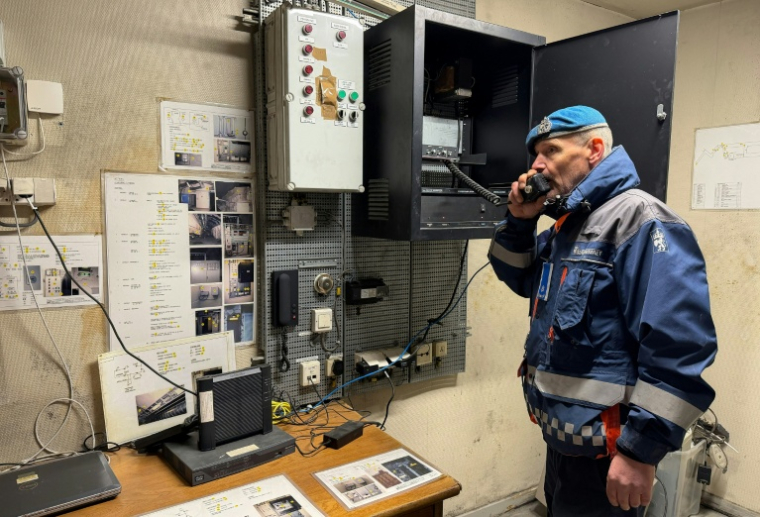
Rune Larsen, non-commissioned officer of the Norwegian Civil Security, on the telephone during a press visit to the St. Hanshaugen air raid shelter, one of the largest in Oslo, on May 18, 2026 (AFP / Jonathan KLEIN)
War is now a possibility, by the Prime Minister’s own admission. Russia’s neighbor in the far north, Norway is going into “total defense” mode, preparing its population for the worst in light of the conflict in Ukraine.
Dug under a peaceful park, the St. Hanshaugen air raid shelter, one of the largest in Oslo, will accommodate 1,100 people behind its heavy metal doors, on the day…
The air is chilly, the light pale, the toilets rudimentary: the lair is not a three-star hotel, but it is designed to protect against possible bombings and NRBC (nuclear, radiological, biological or chemical) threats.
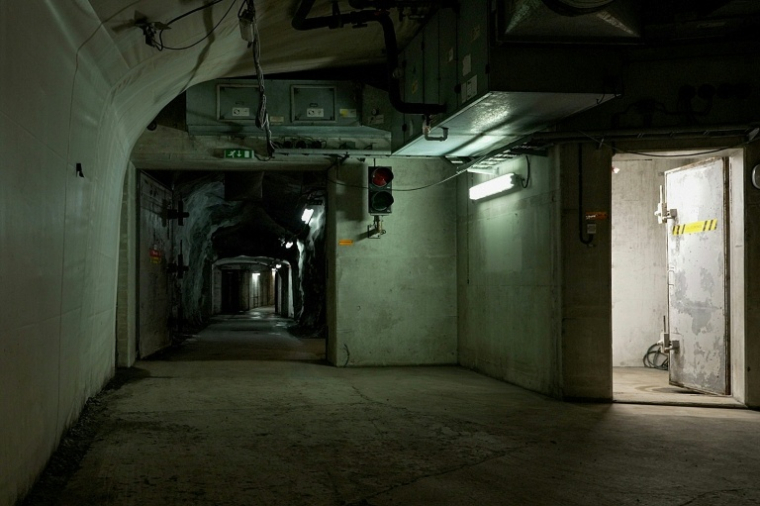
A tunnel of the St. Hanshaugen air raid shelter, one of the largest in Oslo, May 18, 2026 (AFP / Jonathan KLEIN)
“Today, we have around 18,600 shelters, enough to cover a little less than 50% of the population” of the country (5.6 million inhabitants), Øistein Knudsen, head of the Norwegian Civil Defense, explains to AFP.
“Many need to be modernized: they were built during the Cold War, they are damp, old…”.
Member of NATO, the Scandinavian kingdom wants to reestablish the obligation to equip new large buildings with air-raid shelters, a requirement which was lifted in 1998, a “peace dividend” generated by the implosion of the USSR.
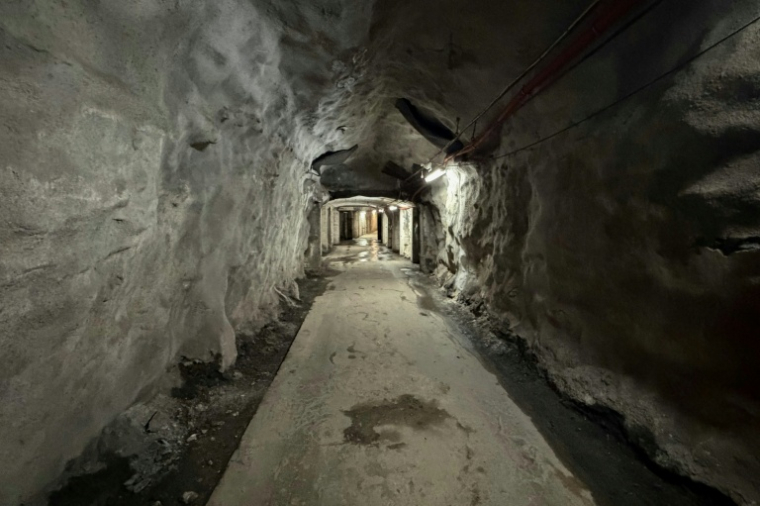
A tunnel of the St. Hanshaugen air raid shelter, one of the largest in Oslo, May 18, 2026 (AFP / Jonathan KLEIN)
The idea is not to build expensive shelters, but to offer basic protection against threats like drones, now omnipresent on battlefields.
“My Ukrainian colleagues are waging an existential war on their own territory, and yet they still find time to share their experiences,” emphasizes Øistein Knudsen.
“Just listening to them talk about what they experience, the attacks on the civilian population, what it means to operate as a civil defense force in times of war, those experiences are invaluable.”
– No more carelessness –
The construction of shelters is one of 100 proposals made last year in a White Paper.
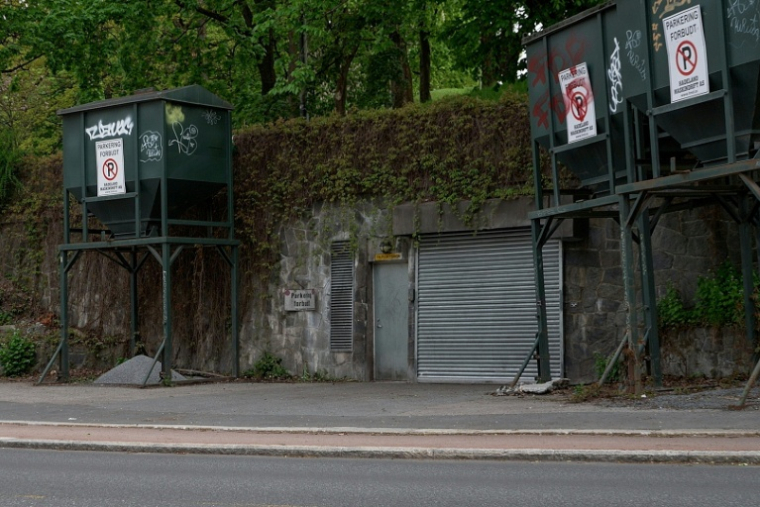
One of the accesses to the St. Hanshaugen air raid shelter, one of the largest in Oslo, May 18, 2026 (AFP / Jonathan KLEIN)
The government also wants to increase the number of Civil Defense personnel by 50%, to 12,000 men and women, require all municipalities to have a “local preparation council” or even increase the rate of food self-sufficiency to 50% by 2030.
Households are also invited to stockpile enough to last for seven days.
“For many decades in Norway we have had the luxury of being able to devote our resources to other things,” says Kristine Kallset, state secretary at the Ministry of Justice and Public Security.
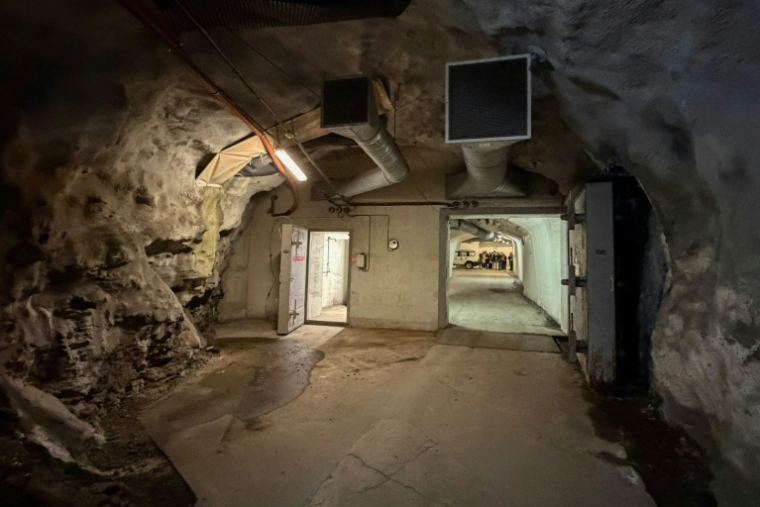
A tunnel of the St. Hanshaugen air raid shelter, one of the largest in Oslo, May 18, 2026 (AFP / Jonathan KLEIN)
“But since the security situation has deteriorated, we have understood that there are a certain number of things to do to ensure that our preparation also includes war in the worst-case scenario,” she told AFP in the new government premises.
Mischief of the calendar, these buildings rebuilt after having been devastated in 2011 by the attack of the extremist Anders Behring Breivik do not have an air raid shelter.

Øistein Knudsen, head of the Norwegian Civil Defense, during a press tour of the St. Hanshaugen air raid shelter, one of the largest in Oslo, on May 18, 2026 (AFP / Jonathan KLEIN)
In his New Year’s greetings, Prime Minister Jonas Gahr Støre warned his fellow citizens that “war could return to Norway”.
The year 2026 has been declared that of “total defense”, a concept which aims to prepare all links in society – army, administrations, businesses… – for a major crisis or war.
– Grains of sand –
“The current threat picture, whether it is the climate crisis, great power rivalry, the war in Ukraine, the Middle East or pandemics, is much more interdisciplinary than 20 years ago,” analyzes Jarle Løwe Sørensen, specialist in crisis management at the University of Southern Norway.
“We are on the right track in the preparations (…) but there are bureaucratic, legal and organizational mechanisms which often hinder the proper functioning of the system and prevent everything from fitting together in a truly optimal way,” he says.
The areas of responsibility between police, firefighters, health services or even the national guard do not always coincide.
On the streets of Oslo, the level of awareness varies.

Rune Larsen, non-commissioned officer of the Norwegian Civil Security, during a press visit to the St. Hanshaugen air raid shelter, one of the largest in Oslo, on May 18, 2026 (AFP / Jonathan KLEIN)
“I don’t think about it on a daily basis, but I have my little emergency kit,” says Øystein Ringen Vatnedalen, a 51-year-old business manager.
“I put some cash aside, thought about a few scenarios – where I would go, who I would look after – and I have a radio, water, everything the authorities recommend.”
A 48-year-old sustainable development consultant, Käthe Hermstad, has not made any special preparations. “The most important thing is to have a network and a community around you” to help each other.
According to a Civil Defense study, 37% of Norwegians say they have increased their preparation over the past year, but only 21% fear a war on national territory within five years.

/2026/05/23/6a115f6bdab8c548005963.jpg "Iran accuses the United States of sabotaging peace negotiations")