In Toulouse, the Gesù church will soon host twelve uninterrupted hours of concerts, from noon to midnight. Ambient, alternative pop, electronic pop, pop soul, modular electro, folk, experimental music or even “vocal ritual”: the programming resembles that of a trendy festival more than that of a place devoted to prayer and the adoration of God. In Orne, same logic. To finance the restoration of a small Romanesque church, an association is organizing a concert mixing folk pop, piano, guitar and electronic textures. Here again, the stated objective is noble: safeguard the heritage, raise funds, bring the building to life.
Who could be opposed to saving churches? Certainly not Catholics. But behind these initiatives lies a fundamental question: what remains of a church when its primary vocation disappears?
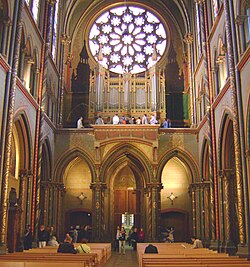
interior of the church of Gesu, its rose window and its prestigious Cavaillé-Coll organ

Built between 1854 and 1861 by the Jesuits, richly decorated and dedicated to Catholic worship in 1869, this imposing neo-Gothic church was for more than a century a place of prayer, preaching and sacramental life. Today, the building mainly hosts cultural and musical events. The vaults are still there, the stained glass windows too, the bell towers still dominate the Toulouse sky and the crosses are still on the bell towers. However, this permanence of symbols should not mask the reality: when a church ceases to be a place consecrated to God to become a space of spectacle, it perfectly illustrates this great diversion of the churches which is too often presented as a rebirth when it above all testifies to the decline of faith.
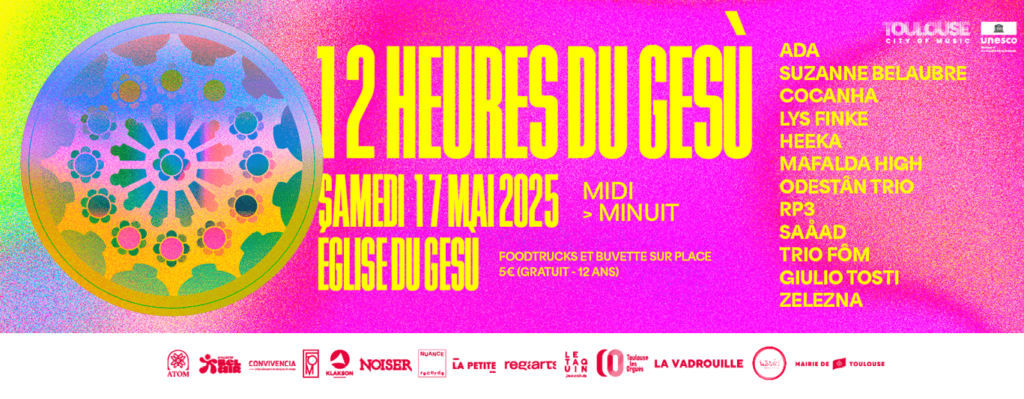
The organizers explain that it is necessary to save the buildings, restore them, make them known to the public and raise funds. They invoke culture, local activity and the preservation of heritage. But this cultural agitation gives the feeling of an immense headlong rush. We restore the roofs, we consolidate the walls, we renovate the electrical installations, we organize shows. However, who still talks about mass, confession, adoration or conversion?
By transforming churches into multipurpose cultural spaces, we end up maintaining the illusion that Christianity survives because its buildings are still standing. However, a church is not primarily a historical monument. It is the house of God, the place of the Eucharistic sacrifice and the spiritual heart of a community. When this reality fades, the stones become nothing more than the decoration of something else. The noise and agitation around these representations are symptomatic of a void: the Essential is no longer there, and heritage without faith is only a shell empty.
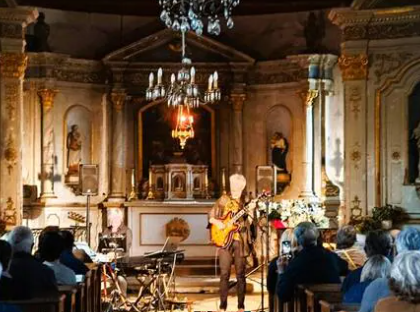
The observation is harsh, but you have to have the courage to face it. Some prefer to see a nave filled for a rock concert rather than empty for a mass. However, this cultural attendance should not mask the de-Christianization which continues. We welcome a full church to listen to pop, folk or electro, while Sunday celebrations bring together ever fewer faithful. We applaud the rebirth of the building even as the spiritual life that gave birth to it continues to die out.
In a certain way, it would still be better to see the stones degrade than to be lulled into illusions about the real state of our religious heritage. Because the danger is not the collapse of the vaults. The real drama lies in the collapse of faith.
Of course, churches deserve to be preserved. They are among the most beautiful testimonies of our Christian civilization. But their conservation only makes sense if it remains ordered to their primary vocation, even when they are desecrated. However, many mayors pretend to ignore this and justify everything in the name of financial logic alone: a church should be made profitable in the same way as a room in which work has been carried out is made profitable. Some mayors thus authorize all initiatives, while certain priests or bishops appear too timid to prevent anything and everything from being done, including in deconsecrated churches.
Respect for these places, marked by centuries of prayer and Christian life, should however never be totally erased by considerations of profitability. The problem is therefore not only the organization of a concert or a cultural event. The problem is priority inversion. We mobilize with admirable energy to save the stones while we accept with resignation the disappearance of what gave them life. In Toulouse as in L’Hermitière, the walls are still there. The bell towers still dominate the landscapes. But the essential is no longer assured. And a civilization that no longer knows why it built its churches will sooner or later end up no longer knowing why it keeps them.