1. The UN lowers its global economic growth forecast for 2026 to 2.5%: According to the Mid-Year World Economic Outlook 2026 report, released on May 19, the United Nations (UN) revised its global economic growth forecast for 2026 downward from 2.7% (January forecast) to 2.5%. The UN also warns of a possible sharp rise in inflation, exacerbated by the growing complexity of conflicts in the Middle East and the continued rise in oil prices. Even more worrying, in the worst-case scenario, this rate could drop to just 2.1%, one of the lowest in this century, excluding periods of the COVID-19 pandemic and the 2008 global financial crisis.

2. The decline in global oil reserves has a considerable impact on the global economy: UBS bank’s latest warning says global oil reserves are falling to their lowest level in almost a decade, raising fears of supply shortages and serious knock-on effects for the global economy, amid ongoing conflicts in the Gulf and continued disruptions to oil transport across the Strait of Hormuz. Forecasts indicate that by the end of May 2026, total global oil reserves could fall to around 7.6 billion barrels, their lowest level since 2016, from around 8.2 billion barrels in February.
3. The EU concludes a trade agreement with the United States: In the early hours of May 20, parliamentarians from the European Union (EU) and its member states reached an agreement to implement a trade deal with the United States, despite threats from President Donald Trump to impose new tariffs if the deal was not reached. applied before July 4 This information was confirmed on May 20 by Zeljana Zovko, head of the European People’s Party (EPP) negotiating team in the European Parliament, following discussions between representatives of the EU and the United States. on the legal framework of the trade agreement.

4. The United States is “in no rush” to extend the trade truce with China: US Treasury Secretary Scott Bessent said on May 19 that the Trump administration had not yet extended the agreement to temporarily suspend tariffs on essential minerals imported from China. Bessent said the two sides still had time to examine the issue in meetings planned for later this year, before the deal officially expires in November. Treasury Secretary Scott Bessent believes that China would agree to the United States reinstating previous tariffs through new tariffs under Section 301, provided those tariffs are not increased significantly.
5. China is implementing a policy to promote on-site clean energy consumption: The National Development and Reform Commission, in coordination with the National Energy Administration of China, issued a circular on promoting the gradual implementation of a direct green electricity connection model for multiple households. This model, which expands the individual connection device existing, aims to increase the consumption of renewable energy near production sites, to support the transition to green and low-carbon energy, and to promote the achievement of carbon neutrality and the limitation of carbon emissions.
6. China’s housing stock is falling for the first time in years: Efforts by China’s real estate industry to address the housing glut appear to be paying off, analysts say, as the value of completed housing units – that is, homes that are fully built and ready for sale – has fallen on an annual basis for the first time in years. years. According to real estate information provider CRIC, the 50 largest listed real estate developers reported a cumulative inventory with a book value of 7.1 trillion yuan (US$1.04 trillion) at the end of 2025, a drop of 14.7% compared to the previous year.
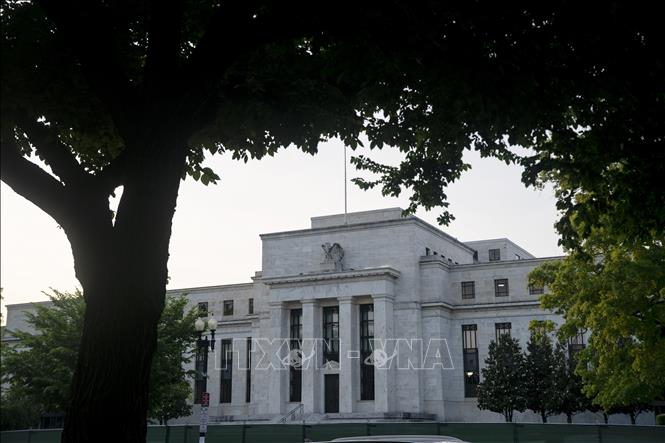
7. The US president urges the Fed to open the payment system to the fintech sector: On May 19, US President Donald Trump signed an executive order asking regulators and the Federal Reserve (Fed) to review regulations that could hinder innovation in the financial sector. This decree concerns the opportunity for the central bank to expand the access of fintech companies to the interbank payment system.
8. The price of gold reaches its lowest level in a month under double pressure: On May 20, gold prices reversed course and fell to their lowest level in a month and a half, driven by high yields on US government bonds and a strong dollar, overshadowing optimistic signals about the possibility of a peace deal between the United States and Iran. At 1:15 p.m. Vietnam time, the spot gold price fell 0.2% to $4,472.09 per ounce, after briefly touching its lowest level since March 30. At the same time, gold futures contracts for June 2026 expiry also lost 0.8%, falling to $4,475 per ounce.
Source : https://baotintuc.vn/kinh-te/diem-tin-kinh-te-the-gioi-noi-bat-ngay-2052026-20260520202526254.htm