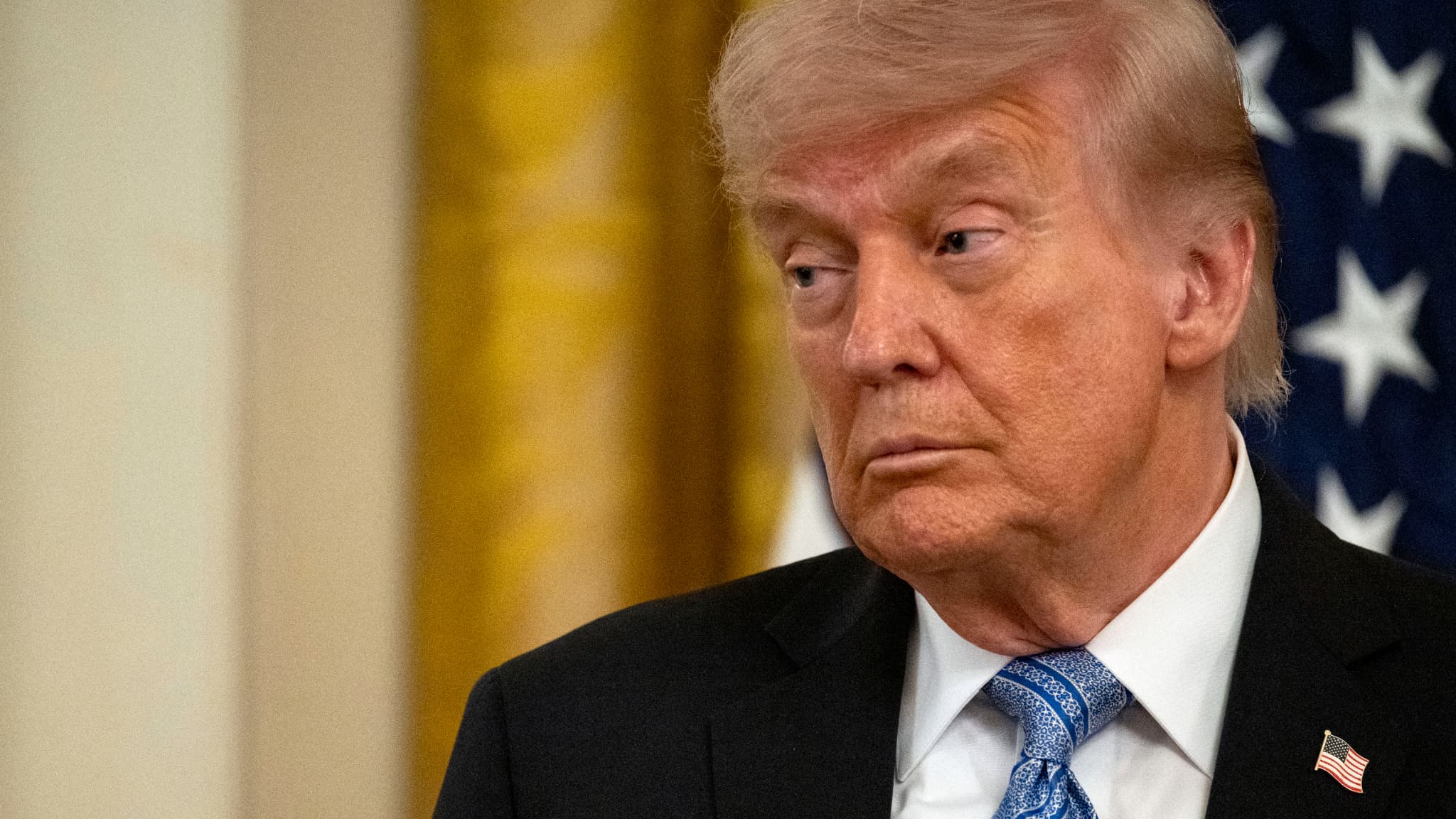
The 2026 World Cup promises to be a strategic challenge, especially for the United States under Donald Trump. With strict immigration policies, fragile cooperation with neighboring countries, and the threat of a European boycott, the World Cup could put American diplomacy to the test.
In less than a month, the United States will host the largest football World Cup in history. Organized with Canada and Mexico, this 2026 edition will bring together 48 national teams and millions of visitors.
For President Donald Trump, the event represents an exceptional opportunity to showcase American power. However, behind the sports spectacle that countries are vying for, the competition could also become a diplomatic headache.
A World Cup is not just about football: it is a demonstration of economic, security, and political strength. With declining popularity, Donald Trump wants to ensure that this event is a way to shine internationally. But in the current global context, many elements that are usually trivial can become extremely sensitive. And this is where the challenge begins for Donald Trump.
First difficulty: migration issues
Global football involves the arrival of hundreds of thousands of foreign supporters, journalists, and official delegations. However, Donald Trump is associated with a very strict immigration policy. Visa procedures, enhanced controls, or certain entry restrictions could quickly create tensions with several participating countries, especially with the Iranian team, whose participation in the competition was controversial at one point.
The subject is even more sensitive as the competition is co-organized with Canada and Mexico. Relations between Washington and Mexico have often been contentious under the Trump presidency, especially regarding borders, immigration, and a trade war initiated by the American president. Likewise, the atmosphere has been tense with Canada following Trump’s threats to impose punitive tariffs and the proposal to make Canada the 51st state of the United States. The logistical cooperation necessary for a tournament spread across three countries could become complicated with any political incident.
Amid tensions related to the U.S.’ desire to acquire Greenland and threats of tariffs against European countries opposing it, Germany had raised the possibility of boycotting the competition. In France, Sports Minister Marina Ferrari had dismissed any intentions of boycotting in response to these calls against Donald Trump’s international policies.
A symbol of America’s ability to host
A World Cup is always a highly monitored event, and U.S. authorities will need to manage massive crowds in a context of heightened global geopolitical tensions in recent months. Each potential incident could have immediate diplomatic consequences. The co-chairman of the organizing committee, Rodney Barreto, sought to reassure the population about potential disturbances, not only from spectators but also from the U.S. Immigration and Customs Enforcement (ICE), a highly criticized police force following numerous incidents and controversies in recent months.
With enormous stadiums, XXL organization, and massive tourist influx, the World Cup is supposed to illustrate America’s ability to host the world. This contrasts with some of Donald Trump’s stances on immigration, minorities, or public freedoms. What about the players, teams, or supporters who could use the World Cup as a political platform?
Between a show of power and the risk of diplomatic tensions, the 2026 World Cup presents itself as a real test for the Trump presidency. A global celebration capable of either enhancing the image of the United States or exposing fractures across the entire planet.