Open to all
Image
Practical information
À l’Ifri — 27 rue de la Procession, 75015 Paris
Accessibilité
In English, without translation.
Related centers and programs
Registration required. Create an account or log in to register for the event.
Image
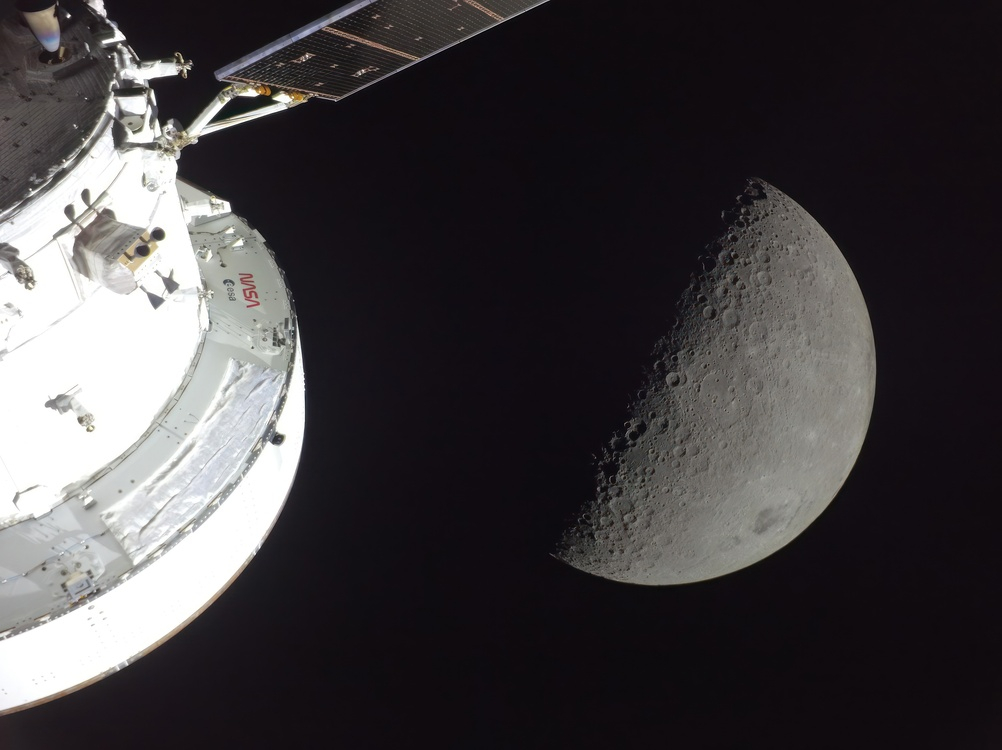
While the United States, China and India realize their lunar ambitions, Europe is still seeking to define its position: should it be a reliable partner or an autonomous strategic actor? This conference will examine the challenges of this new race to the Moon and the interest for Europe in asserting itself as a lunar power through its partnerships and its industrial ambitions. The speakers will also wonder whether participation in this new race to the Moon constitutes for Europe a lever for its strategic autonomy and internal cohesion, or an extension of its dependencies.
body
16h30 – 17h | Ouverture :Â
- TBC
Modération : Paul WohrerHead of the Space program, Ifri
5 p.m. – 6:30 p.m. | Round table: European perspectives on the new race to the Moon
- Alessandro BrownHead of Defense, Security and Space, Istituto Affari Internazionali (IAI)
- Andrea Rotter, Head of the Foreign Policy and Security Division, Hans Seidel Foundation
- Dr. Tanja Masson-ZwaanDeputy Director and Professor at the International Air and Space Institute, Leiden University
Modération : Claude-France ArnouldSenior researcher at the Brussels Institute for Geopolitics (BIGS)
6:30 p.m. – 7 p.m. | Conclusion: the role of Europe in the Artemis program
- Scott Pace, Director of the Space Policy Institute, George Washington University
Modération : Paul WohrerHead of the Space program, Ifri
Learn more
Main image

Spatial narratives. Strategic issues and European perspective
Publication date
December 10, 2025
Hook
The narratives that powers construct around space today play a determining role in their strategy. In the United States, the reference to the frontier and manifest destiny continues to structure a narrative of expansion, where space exploration embodies the national vocation to push the limits and maintain technological excellence. In Russia, space remains a central instrument of power and prestige, inherited from the Soviet era but now reoriented by a narrative favoring militarization. China is making its “space dream” part of a project of national rebirth: its technological and scientific successes are becoming the vectors of its new international status. Other actors, such as India, Japan or the United Arab Emirates, are mobilizing space to assert their modernity, strengthen their autonomy or project regional leadership.
Main image
Other events
Wednesday May 20, 2026
20:00
–
22:30

By invitation
Thursday May 21, 2026
12:30
–
14:00
By invitation
Friday May 22, 2026
09:00
–
09:30
By invitation
Page image credits
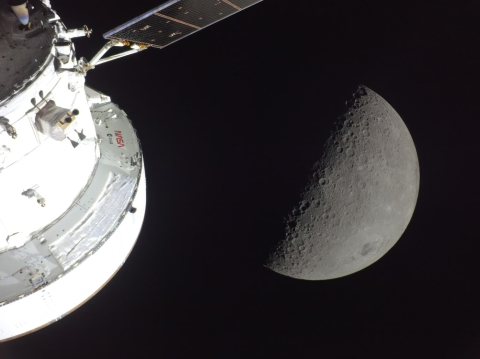
Artemis II
NASA/Rawpixel.com/Shutterstock.com
Artemis II
NASA/Rawpixel.com/Shutterstock.com