Event  
The 6th edition of the World Scientific Francophonie Week will be held in Agadir on October 13, 14 and 15, 2026. An event placed under the High Patronage of His Majesty King Mohammed VI, co-organized by the Ibnou Zohr University and the Francophonie University Agency. A historic meeting for Morocco and the Souss Massa region.
The capital of Souss is preparing to take a step forward in its international academic trajectory. The metropolis and famous seaside resort facing the Atlantic is getting ready to play in the big leagues. On October 13, 14 and 15, 2026, the city will host the 6th edition of the World Scientific Francophonie Week, co-organized by the Ibnou Zohr University and the Agence universitaire de la Francophonie. An event that other capitals have carried before it – Bucharest, Cairo, Quebec, Toulouse, Dakar – and which Agadir will now carry with a clearly stated ambition: that of a Morocco which is no longer content to attend the great conversations of the world, but which organizes them, guides them, animates them.
The theme chosen for this edition says a lot about the times: “Faced with global geopolitical issues: what role for French-speaking scientific diplomacy? “We are no longer in the purely academic register, but rather in something more urgent, more political, more necessary. In a world where alliances are being recomposed, where science is becoming a tool of power as much as a common good, the question of the role of the Francophonie – this space of 300 million speakers spread across five continents – is far from being rhetorical. She is strategic.
The event will be placed under the high patronage of His Majesty King Mohammed VI. A strong signal. That of a Morocco which has made scientific diplomacy an explicit lever of its foreign policy, which invests in its universities as others invest in their military fleets, and which looks towards Africa and the Mediterranean with a long-term vision. That Agadir – and not Rabat, not Casablanca – is chosen to host this high mass says something about the academic maturity of the Souss-Massa region, too often reduced in the collective imagination to its beaches and its citrus fruits.
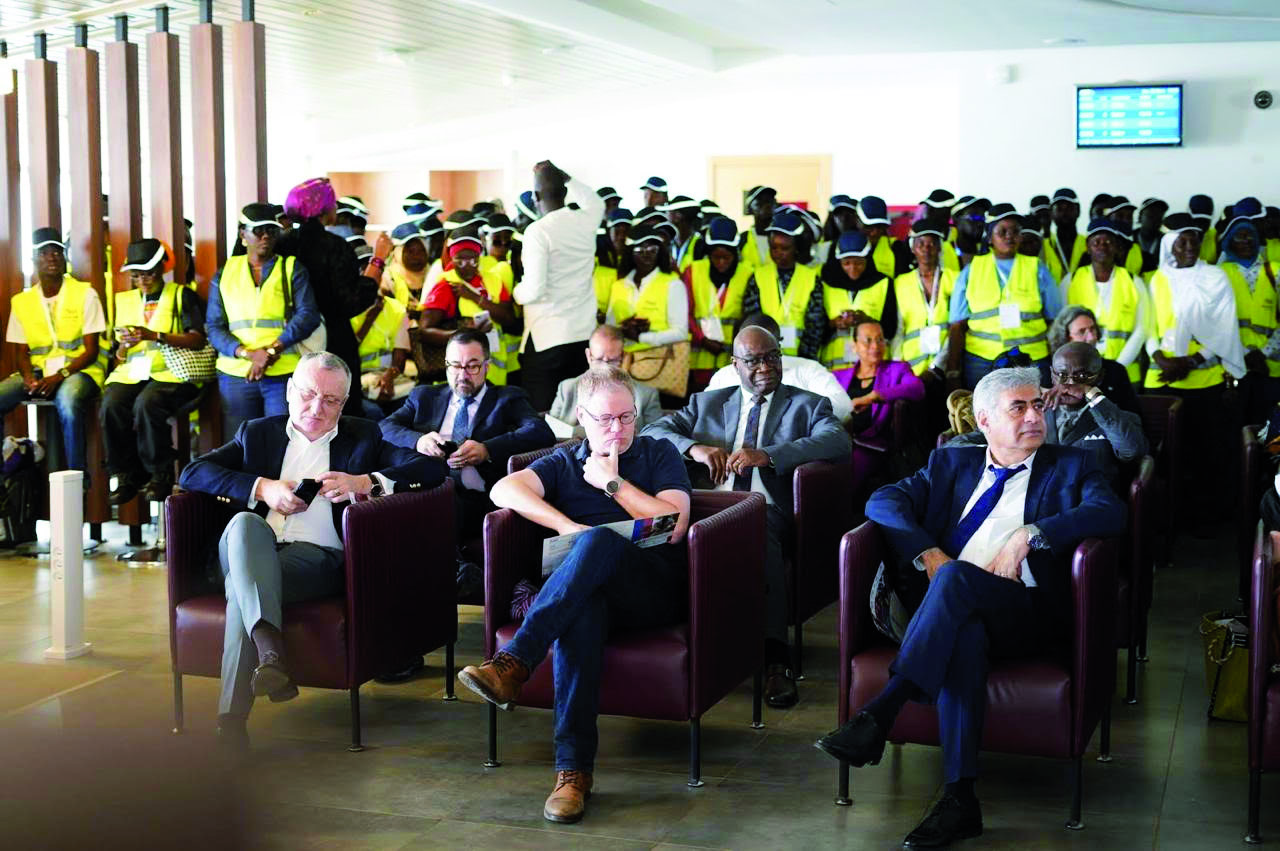
For several years, Ibnou Zohr University has positioned itself as a credible research player, building partnerships across borders, training generations of students. The SMFS 2026 will be an opportunity for her to show this shadow work, to project it on the world stage, to compare it with the best practices from Europe, Africa and the Americas.
The program promises to be dense. Ministerial conference, scientific meetings, French-speaking youth student congress, thematic workshops, bilateral meetings – three days which will not give participants time to breathe. More than 900 international speakers are expected, representatives of more than 50 countries, ministers in charge of education higher education, university presidents, field researchers and students who come to speak in turn.
In five editions, the event has brought together more than 21,000 participants. And for this new meeting of its kind, the SMFS 2026 poses a question that Morocco, precisely, is in a good position to address: how can a country in the French-speaking South influence the production and circulation of knowledge? How can we ensure that scientific cooperation is not an asymmetrical relationship – where the North produces, the South consumes – but a dialogue of peers? How can the French language, often perceived as a cumbersome colonial heritage, become on the contrary a space of intellectual emancipation and solidarity between researchers who share the same challenges, the same emergencies, the same hopes?
Agadir will receive these questions next October with awareness of what they imply. For Ibnou Zohr University and its partners, the event will be an opportunity to accelerate sustainable partnerships, joint research projects, student mobility and cooperation.
There is certainly still a lot to do between now and then. Mobilize economic and institutional stakeholders in the region. Involve Moroccan researchers in the construction of the program. Prepare young students to take their full place in debates. Ensure media coverage that meets the challenge.
But the main thing is already there: for the first time, it is a city in southern Morocco which will host this global high mass of the scientific Francophonie. And that changes everything.