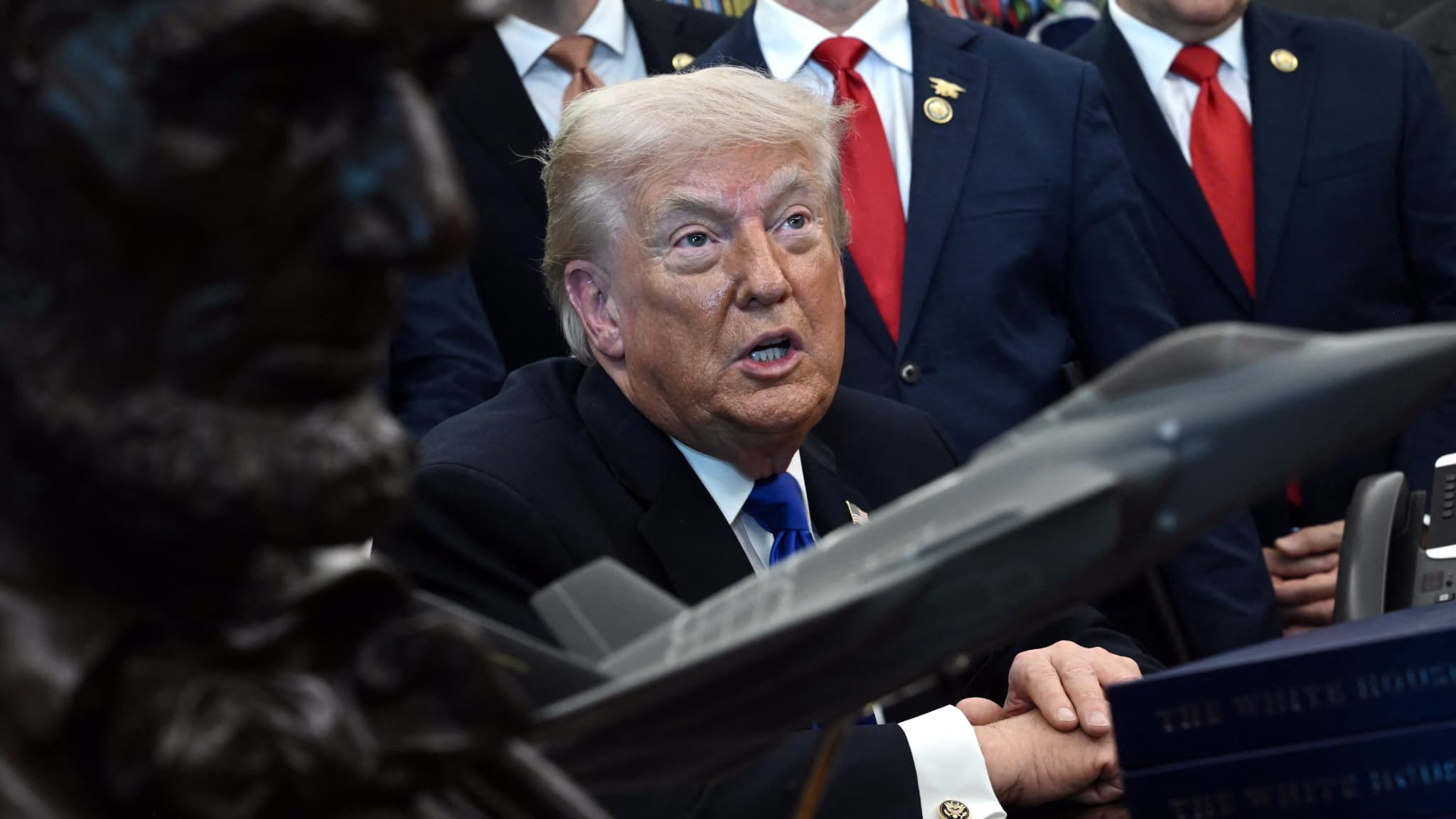
The Iranian plan demands a withdrawal of American forces near Iranian influence zones, as well as the lifting of the blockade on Iranian ports and a “mechanism” to release the Strait of Hormuz. American President Donald Trump announced on Saturday, May 2, that he would study a 14-point plan proposed by Tehran to resolve the conflict in the Middle East, after rejecting a previous offer from Iran that he threatened to “crush”. “I will study a plan that Iran has just submitted to us,” he wrote on his Truth Social platform. According to Iranian news agencies, Iran has transmitted a 14-point plan to Washington, via Pakistan, aimed at ending the conflict within 30 days.
A lifting of the blockade and a withdrawal of American forces demanded Tasmin states that Tehran demands in this plan a withdrawal of American forces from areas close to Iran, the lifting of the blockade on Iranian ports, the release of frozen Iranian assets, the payment of reparations, the lifting of sanctions, a “mechanism” regarding the Strait of Hormuz, and “the end of the war on all fronts including in Lebanon”. The agency does not mention the nuclear issue, a central question for the United States and Israel, who accuse Iran of seeking nuclear weapons, a claim Iran denies. Iran had already submitted a new text via Pakistan earlier in the week, details of which have not been disclosed. Donald Trump had expressed on Friday that he was “not satisfied” with the proposal. While he had previously threatened to “annihilate” the Iranian “civilization,” he also mentioned that he would prefer not to “crush Iran once and for all,” but that a return to war remained “an option”.
An Iranian military official deemed a resumption of war with the United States “probable” on Saturday, following unsuccessful direct talks in Islamabad on April 11, as strong disagreements persisted from the Strait of Hormuz to the nuclear aspect. “A resumption of the conflict between Iran and the United States is likely, and the facts have shown that the United States did not respect any promises or agreements,” reacted Mohammad Jafar Asadi, deputy inspector of the Iranian armed forces’ command of Khatam Al-Anbiya.