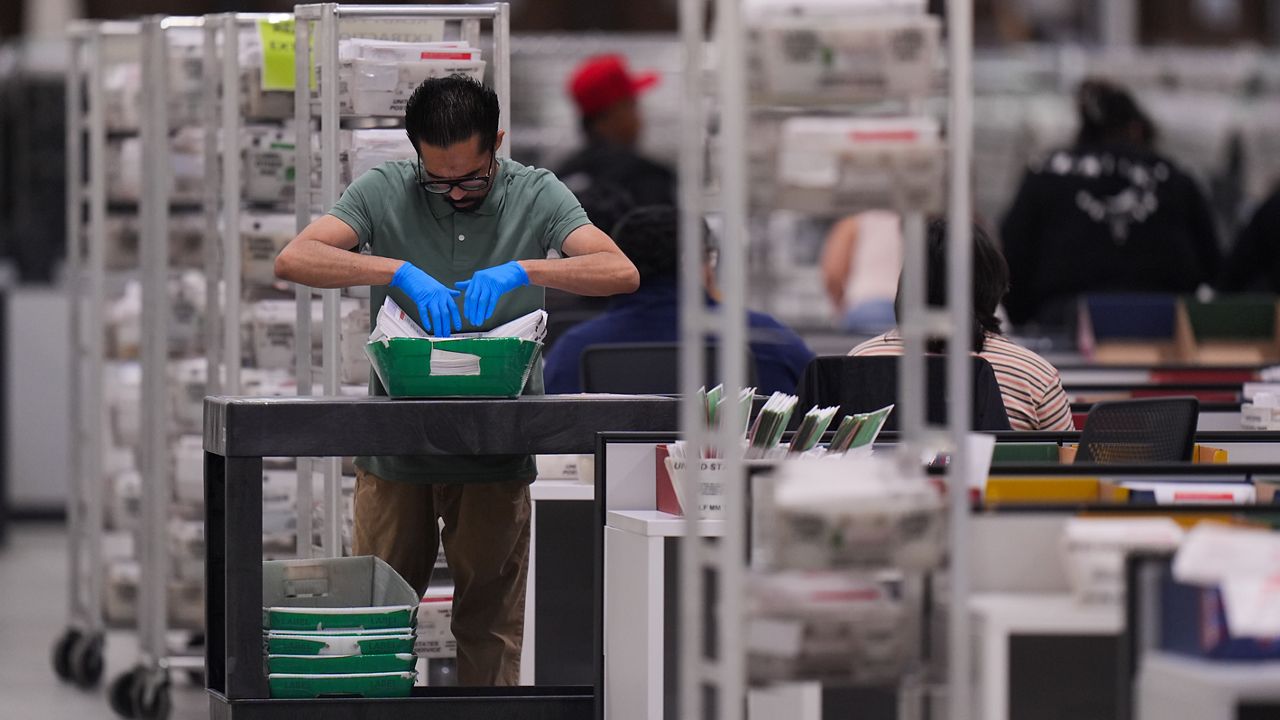
Today marks the beginning of the official campaign for the first round of municipal elections, which will take place on March 15. The Ministry of the Interior has registered just over 904,000 candidates for 514,000 municipal council positions to be filled. For the first time, there are equal numbers of men and women candidates.
This is a significant change from before, when the law required alternating male and female candidates on electoral lists, but only in municipalities with more than 1000 inhabitants. In smaller municipalities, with fewer than 1000 inhabitants, the lists varied in size and composition without any constraints.
In the past, voters could strike out certain candidates and even add non-candidates to the list, a practice known as “panachage.” This tradition often reinforced the idea that political power was primarily a male affair.
The election results have historically sent more men than women to municipal councils. In the latest election in 2020, only 37% of women were elected in small municipalities with less than 1000 inhabitants, compared to 63% of men – a ratio of about one-third to two-thirds.
However, starting from March 22, there will be equal representation of men and women in municipal councils. Despite this progress, the gender balance in local politics still has room for improvement. Only about 20% of mayors are women, indicating a significant disparity that remains to be addressed.
The feminization of local politics is advancing, in part due to laws promoting gender parity and legislative changes that encourage women’s participation in public life. For example, a law was passed in 2019 to support childcare costs, enabling mothers to attend evening meetings or municipal sessions, a common occurrence in many municipalities.
Recent legislation further safeguards the status of elected officials, guaranteeing an elected official’s function fees during maternity leave. This amendment arose from the case of Poitiers Mayor Leonor Moncond’huy, who faced challenges during her pregnancy as no provision existed for her situation. This recent law ensures support for elected officials transitioning into motherhood during their term.
Progress has been steady over the years. In 1965, a mere 1% of mayors were women, but by 2021, the figure had increased to 20%, indicating ongoing advancements in gender balance.
Despite progress, there are lingering resistances within the political landscape, both locally and nationally. Many women still face barriers to engagement and encounter sexism in political environments, which can impede their involvement. Furthermore, collective resistance is evident, as France has yet to elect a female president, despite having had 25 male presidents since 1848.
Overall, while strides have been made towards gender equality in local politics, challenges and disparities persist that require ongoing efforts for greater inclusivity and representation.