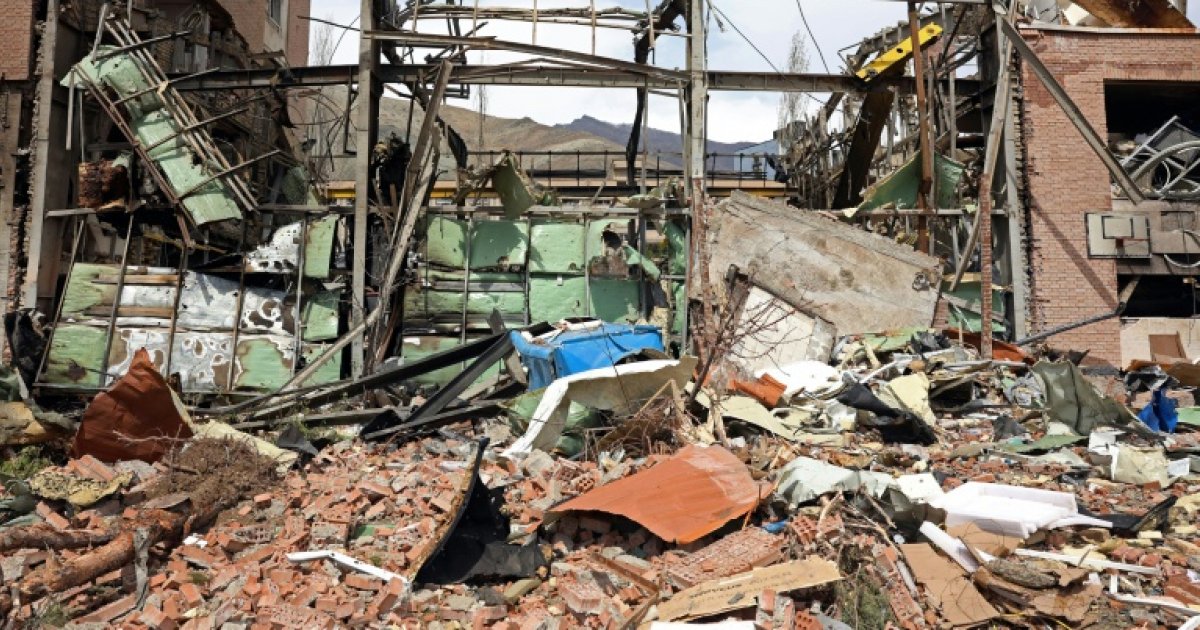
On February 24, 2022, Russia launched what the Kremlin continues to call a “special military operation” against Ukraine. Four years later, the war has become prolonged, with front lines solidifying in some areas, hardening in others, and the conflict becoming a defining factor in the international order.
This war is not just fought on the military front. It is also fought on the battleground of words, images, and narratives. Two radically opposite narratives clash.
According to Kiev, it is a war of aggression, colonial, imperial, aiming to deny the existence of the Ukrainian nation. For Moscow, it is an offensive war, existential, provoked by NATO’s expansion, intended to “protect” Russian-speaking populations and correct what Vladimir Putin sees as a major historical error: Ukraine’s independence.
Behind these narratives are worldviews. Behind these worldviews is a reading of history. And behind this reading is a political project. What conception of Russia, of its identity, of its relationship to the Empire and the West, led Vladimir Putin to trigger this war? What is the dominant narrative produced by the Kremlin to justify and support its continuation? How do these narratives vary across audiences: Russian opinion, Western countries, the Global South, BRICS members? And most importantly: how can we distinguish a political narrative – every war produces one – from a structured disinformation campaign?
In this conflict, the absurd sometimes seems to prevail over the fatal. But nothing is left to chance: the production of the narrative is organized, institutionalized, strategic. Because it is in the name of a political and historical vision that Vladimir Putin and a few others initiated this war.
For this second edition in partnership with INALCO, the National Institute of Oriental Languages and Civilizations, and its DECRIPT program focusing on the transformations of the international system and the political and institutional effects of these civilizational narratives that have emerged on the world stage,
Guests:
- Ioulia Podoroga, philosopher and specialist in Russian literature, accredited lecturer at INALCO. She co-directs “Routledge Companion to Concepts in Russian Contemporary Politics” due out at the end of the year. Ioulia Podoroga, who recently co-edited a collective volume on Russian Nihilism.
- Pierre-Louis Six, historian and political scientist. Postdoctoral researcher of the DECRIPT program at the Interdisciplinary Center on Strategic Issues at ENS and at the Maurice Halbwachs Research Center. Former deputy director of the Franco-Russian Studies Center in Moscow. Author of many works and articles including “Do Russian diplomats believe in their myths?” published in the journal Critique Internationale, Volume 108, 2025.
- Maxime Audinet, junior professor and holder of the “Influence Strategy” chair at INALCO, Researcher at the Europes-Eurasie Research Center (CREE) and GEODE, University of Paris 8, and specialist in Russia’s foreign policy.