The day had been one of the most tense since the beginning of the conflict. On Tuesday, April 7, as his ultimatum to Iran neared expiration, Donald Trump threatened to make the Iranian civilization “disappear” if Tehran did not comply with his demands. The world held its breath for many hours before, in a twist typical of him, the American president announced a two-week ceasefire with Iran. Since then, the war between the United States and the Islamic Republic has indeed entered a sort of pause as Iran has not been subjected to bombings. However, this observation does not apply to other countries in the Middle East such as the United Arab Emirates, Kuwait, and Bahrain, all of which were hit by Iranian strikes on Wednesday, April 8. But it is Lebanon that is facing the most serious situation.
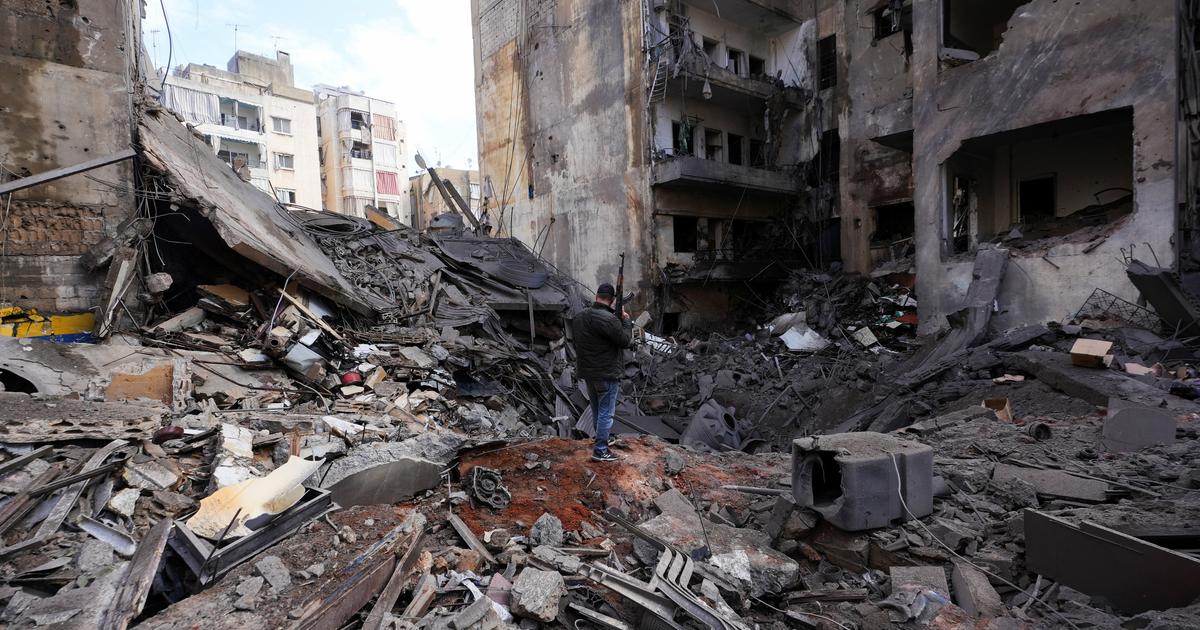
Israel made it clear after Trump’s ceasefire announcement that the truce only concerns Iran, not Lebanon, where the Israeli Defense Forces are waging an increasingly intense war against Hezbollah. The bombings carried out by Israel on April 8 resulted in over 200 deaths and a thousand injuries in the country in just ten minutes. By far the deadliest day in Lebanon since the beginning of the conflict.
The continuation of the Israeli war against Hezbollah may have serious repercussions on the direct negotiations that are supposed to be initiated between Tehran and Washington. Indeed, according to L’Orient-Le Jour, “Iranian President Masoud Pezeshkian stated that Israeli strikes on Lebanon constitute violations of the ceasefire agreement between Tehran and Washington.” He added that ceasefire negotiations with the United States “would make no sense” as long as these attacks continue and that “Iran will not abandon the Lebanese people.” Many countries have called for the ceasefire to explicitly include Lebanon. Under international pressure, Benjamin Netanyahu announced that “Israel will engage in negotiations with Lebanon as soon as possible” in response to Lebanon’s calls for direct talks with Israel, as reported by The Times of Israel. According to Axios, this outcome may be the result of pressure exerted by the United States on Israel, even though American media believes “Israel will not impose a ceasefire in Lebanon.”
This is one of the key areas of this war, notably due to its significant role in the global economy. The Strait of Hormuz, in the Arabian-Persian Gulf, through which 20% of the world’s oil used to circulate before the start of the conflict, has been almost completely closed by Iran, causing serious repercussions on the global economy. Donald Trump was adamant about its reopening, but it is not yet fully operational, despite the ceasefire, as noted by the Financial Times. Only a few ships have been allowed to pass through this crucial maritime route since the announcement of the ceasefire between Iran and the United States. The Revolutionary Guard of Iran stated that navigation in the strait had ceased due to the Israeli attack on Lebanon, which Tehran considered a violation of the ceasefire. Tehran now demands a payment of “1 dollar per barrel of transported oil, to be paid in cryptocurrencies,” according to Corriere della Sera.
While the ceasefire has halted American bombings on Iran, it does not mean that U.S. military forces will leave the Middle East. This was firmly reiterated by Donald Trump on the evening of April 8 when he posted a very explicit message on Truth Social from Atlanta, reported by CNN. He wrote, “All American ships, aircraft, and military personnel, as well as ammunition, weapons, and any other equipment deemed appropriate and necessary for the pursuit and destruction of a considerably weakened enemy, will remain in place.” The U.S. President promised the resumption of hostilities if a satisfactory final agreement with Iran is not found.
For the first time since the start of this war, Iranian and American negotiators are expected to meet in Pakistan. Al-Jazeera reported that these direct negotiations will begin on Saturday, April 11 (Friday, April 10, according to other sources). High-ranking officials from both countries will be present, with Vice President J.D. Vance leading the U.S. delegation, accompanied by Steve Witkoff, Donald Trump’s chief emissary, and Jared Kushner, the President’s son-in-law. As for Iran, the delegation will be led by Parliament President Mohammad Bagher Ghalibaf and Foreign Minister Abbas Araghchi. This meeting once again confirms Pakistan’s essential role as a mediator since the beginning of the conflict.



:fill(black)/2026/04/10/69d8ac1b23afc437884078.jpg "We answer: what impact does war have on Iran?")