An interceptor of drones P1-Sun before test flights, in an undisclosed location in Ukraine, on March 19, 2026 (AFP / Genya SAVILOV)
“There are hundreds, even thousands of messages”: since the start of the war in Iran, Ukrainian drone interceptor manufacturers say they are inundated with requests from the Middle East and are waiting for Kiev’s approval to export.
The Russian invasion of Ukraine launched in 2022 has left the country in chaos. It has also made the country one of the most advanced in the world in terms of military drones.
Ukraine now has hundreds of manufacturers producing these devices in millions and claims to have an army with unprecedented experience.
The war in the Middle East has brought attention to a new branch of this industry, interceptors designed for the mid-air destruction of combat drones.
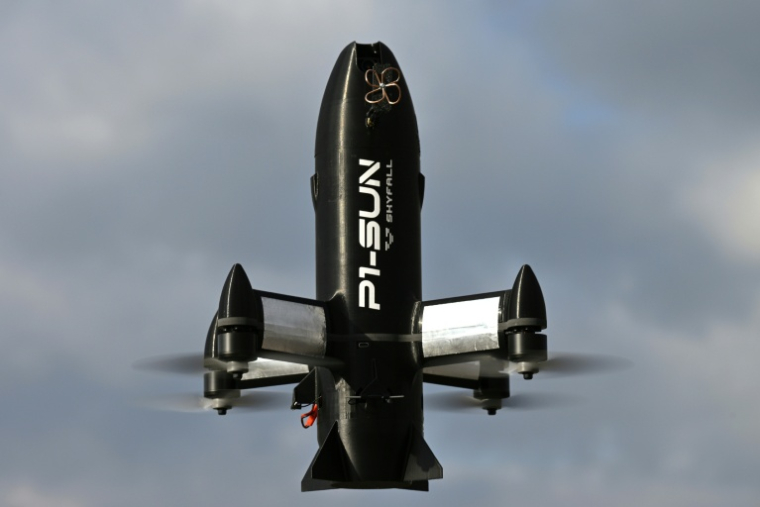
An interceptor drone P1-Sun during a test flight, in an undisclosed location in Ukraine, on March 19, 2026 (AFP / Genya SAVILOV)
Almost daily attacked by hundreds of Shahed drones, first of Iranian design, then mass-produced by Moscow – Ukraine has developed a range of low-cost and fairly effective defense systems, including interceptors.
Expertise highly sought after by Gulf countries, targets of the same drone model in retaliation to Israeli-American strikes since late February.
– Export Bans –
Representatives of these countries knock on every door in Kiev, say Ukrainian manufacturers and officials.
The General Cherry group, a major private producer that manufactures anti-Shahed interceptors called “Bullet,” has received “hundreds, even thousands” of messages from “almost all Middle Eastern countries attacked by Iran,” according to its spokesperson Marko Kuchnir.
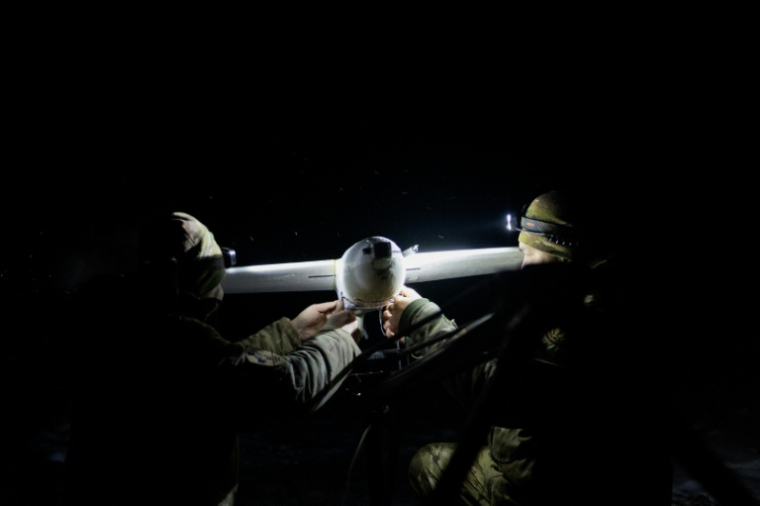
Members of the 18th brigade of the Ukrainian National Guard in Sloviansk preparing to launch a drone interceptor in the eastern Ukrainian region of Donetsk, on January 22, 2026 (AFP / Tetiana DZHAFAROVA)
Government officials, private companies, intermediaries… “The demand is huge,” especially for interceptors, he adds.
Frailty sometimes leads to awkward situations: a country managed to acquire eight interceptors—without explosive charges, so they are useless, amusingly tells a top Ukrainian official speaking anonymously.
However, military equipment exports remain largely prohibited in Ukraine since the start of the war, despite promises of imminent opening from authorities.
President Volodymyr Zelensky has offered Kiev’s help to Gulf countries and the United States, hoping for their support against Russia in return.
While his American counterpart Donald Trump stated not needing it, Kiev has sent over 200 military experts to Middle Eastern countries to share their experience and demonstrate capabilities.
Volodymyr Zelensky aims to secure long-term drone agreements with the relevant capitals, especially to finance production in Ukraine, where capacities, according to estimates, are only utilized half due to lack of funds.
– “Ready to help” –
Meanwhile, he criticizes countries trying to buy Ukrainian drones bypassing the government and national manufacturers in search of “easy money.”
“Our companies are not poor, they make a lot of money” supplying drones to the Ukrainian army, he said in mid-March, threatening producers with “unpleasant measures.”
Manufacturers promise to comply. They also assure that supplies destined for the army will not be affected and the risk of Russia utilizing their technologies will not increase.
“We are ready to help but only once we receive government approval,” assures Ares, spokesperson for the major Ukrainian producer Skyfall.
The young man, hooded and using a pseudonym due to the sensitivity of this industry targeted by Russian attacks, demonstrates the P1-Sun interceptor in front of AFP journalists.
Deployed on the front four months ago, the drone, whose name is a pun meaning “zizi” in Ukrainian, is considered among the most effective against the Shahed.
– “Like oil” –
Skyfall also presents it as the “cheapest interceptor in the world”: $1,000 (870 euros) per unit for the Ukrainian army.
The group claims they can manufacture “up to 50,000 interceptors per month,” enough to export some, Ares assures.
Drones, “for us it’s like oil,” recently enthused President Zelensky.
Especially as the devices alone are not enough: it’s the combat expertise and their integration within the armed forces that constitute Kiev’s major advantage.
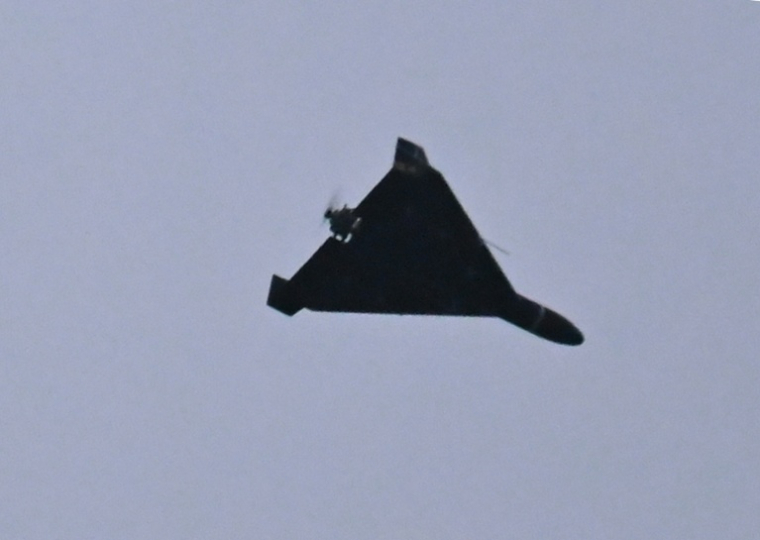
An Iranian-designed Shahed drone used by the Russians flying over Kiev during a Russian attack on December 27, 2025 (AFP / Sergei SUPINSKY)
Will drone production become a cash cow for Kiev? Not necessarily, says Sergui Zgourets, a Ukrainian military expert interviewed by AFP.
According to him, Gulf countries with significantly more financial means than Kiev will likely revert to classic air defense.
Some mention an ethical issue between the booming industry and soldiers on the front lines.
“One becomes a millionaire, the other ends up dead or amputated. Yet, they seem to serve the same cause,” observes the commander of a Ukrainian drone unit.