Tehran and Washington have reached a two-week ceasefire agreement, including the reopening of the Strait of Hormuz. Israel supports this agreement but claims Lebanon is not part of it. This is clearly stated in our ten-point plan, asserts Mohammad Amin-Nejad to Radio France International’s international desk on Wednesday.
Published: April 8, 2026, 12:03 Updated: April 8, 2026, 13:54 Reading time: 2min
Mohammad Amin Nejad, Iran’s ambassador to France, on October 3, 2024, at Franceinfo. (FRANCEINFO / RADIO FRANCE)
The United States and Iran have agreed to a two-week ceasefire in exchange for the Strait of Hormuz reopening, just over one hour before Donald Trump’s ultimatum expired, threatening to destroy the Islamic Republic.
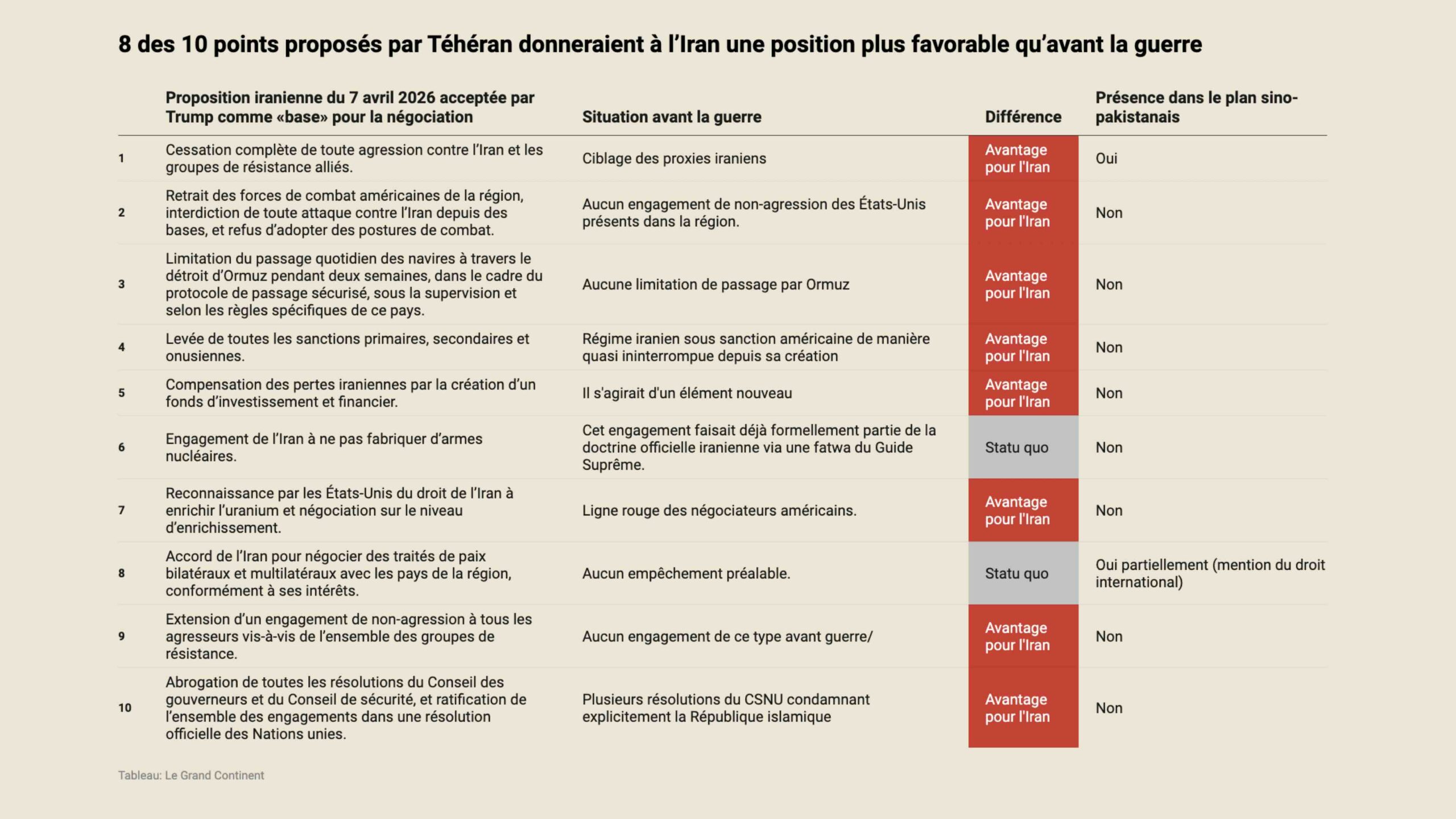
This ceasefire covers all battlefronts, including Lebanon, according to Mohammad Amin-Nejad, Iran’s ambassador to France, interviewed by Radio France International on April 8. “This was what we announced, and it is clearly outlined in our ten-point plan,” he emphasizes. However, Israel continues its strikes on Lebanon, claiming the country is not part of the truce.
Before a Defense Council meeting Wednesday morning, Emmanuel Macron stated that France’s wish was “to ensure that the ceasefire fully includes Lebanon.” “Before Friday,” the start of talks between the US and Iran in Pakistan, “clarifications” will be provided on the negotiations and their content, Mohammad Amin-Nejad affirms. “The basis of the negotiations is already defined, as the ten-point plan proposed by Tehran to Washington was already announced and circulated,” he points out.
Iran’s ambassador to France applauds the ceasefire agreement reached with the United States on Tuesday night to Wednesday “because it puts an end to killing, a bloodbath triggered by the illegal invasion and aggression by the American-Israeli alliance on the Iranian nation.” As a “guarantor of stability and peace” in the Strait of Hormuz, Iran “will strengthen its role” for peaceful and sustained vessel navigation in the region, as specified by Mohammad Amin-Nejad.
The Iranian ambassador adds that it is “perfectly normal” for “those who imposed and caused this damage to be responsible [for compensating] it,” after mentioning the significant damage in Iran due to the Israeli-American bombings since the beginning of the war on February 28.