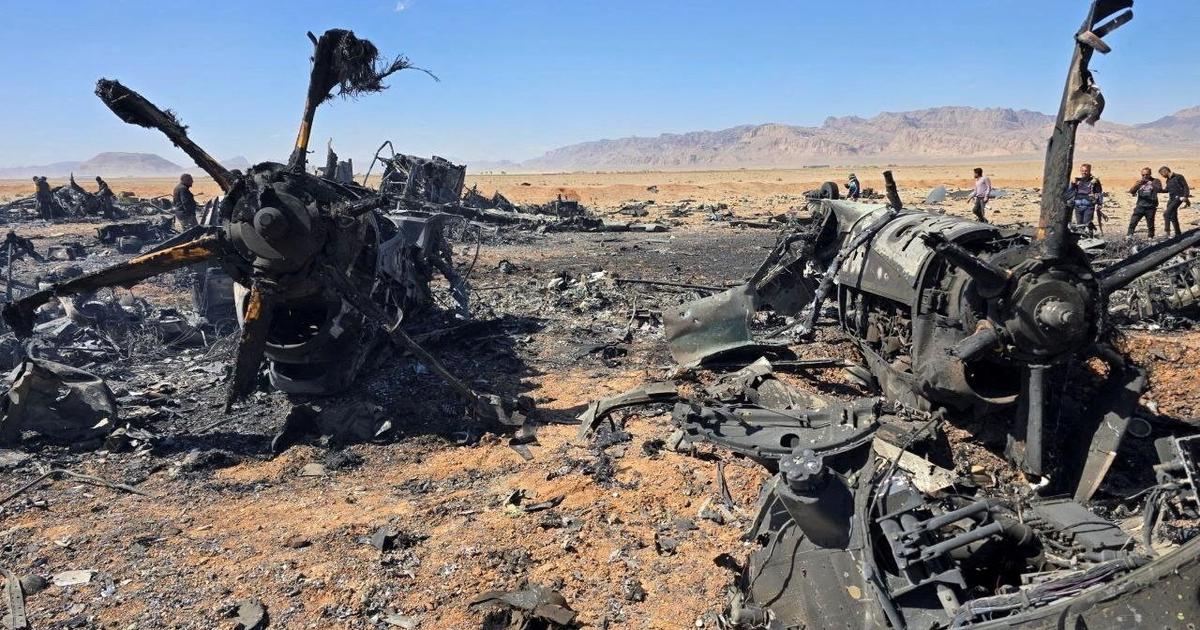
Iran has warned Monday about possible “war crimes” following threats from U.S. President Donald Trump to target civilian infrastructure in the country.
Published
Reading time: 3min
/2026/04/06/69d3c2a40ae57399421318.jpg "War in the Middle East: Striking Civilian Sites, as Donald Trump Threatens to do in Iran, Can It Be")
Donald Trump threatened on Sunday, April 5, to destroy power plants and bridges in Iran if the country does not reopen the Strait of Hormuz, setting an ultimatum for Tuesday night. According to Iranians, these attacks would be “war crimes” and international law may just support that claim.
According to the fourth text of one of the Geneva Conventions, which serve as a guide for international humanitarian law, “the destruction and seizure of property not justified by military necessity and carried out on a large scale unlawfully and arbitrarily” constitutes a war crime. Therefore, the threats made by the American President fall under this indictment.
However, it could be argued that Iranian bombings of desalination plants in Gulf countries or energy infrastructure like refineries or oil depots in Kuwait, Bahrain, Qatar, and the United Arab Emirates also fall under the characterization of “war crimes” as they involve the destruction of property not justified by military necessity.
The issue becomes more complex when targeting properties or areas used for both civilian and military purposes. Destroying a bridge may have a legitimate military purpose, such as preventing the transit of enemy troops, for example. But destroying infrastructure still under construction, as was the case a few days ago for the Karaj bridge in Iran – the country’s largest – is much more debatable.
International humanitarian law aims primarily to spare civilians, considering losses justified only when the military objective behind a deadly operation was of certain value. This is known as the principle of proportionality: an army allows for civilian casualties – collateral damage – as long as the target is of high military value.
Since the early 2000s, Americans, and subsequently most Western armies, have developed a very complex measurement system of cost-benefit in terms of civilian lives sacrificed, called NCV for “non-combattant casualty cut-off value” – or the “threshold value of non-combatant casualties“. In essence, it is the number of civilians one allows oneself to kill to achieve a military objective. The highest NCV set by the American military was 30 civilians, sacrificed for a very specific goal: killing Osama bin Laden, the leader of the Al-Qaeda network.
In their war against Gaza, the Israeli army had raised this NCV to 300 for the most seasoned Hamas commanders. In other words, in a densely populated urban area like Gaza, the military were authorized to raze an entire neighborhood – and the people who lived there – to kill a single commander.