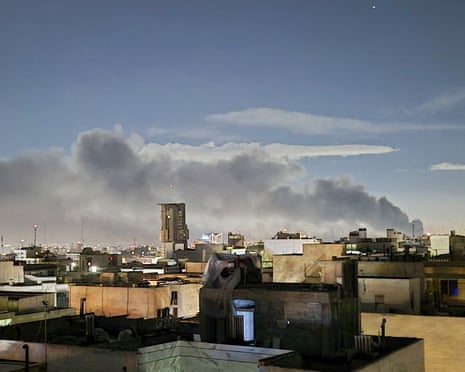
In the usually lively alleys of Jerusalem’s Old City, silence reigns on this Easter Sunday, a major festival for Christians, overshadowed this year by war and strict access restrictions to the Holy Sepulchre.
Near the basilica, where Christians believe Jesus was crucified, entombed, and resurrected, Israeli police barriers filter the few authorized believers. Only a few silhouettes cross the wet cobblestones.
“Wishing you a Happy Easter,” says the Latin patriarch of Jerusalem, Cardinal Pierbattista Pizzaballa, as he enters the Holy Sepulchre early in the morning surrounded by a small group of religious figures. During his Mass, he spoke of being “truly facing an empty reality.”
Security has been heightened in the narrow streets of the ancient fortified city, sacred to Jews, Christians, and Muslims, located in East Jerusalem, the Palestinian part occupied by Israel since 1967 and then annexed.
“Sorry, but it’s closed,” says an Israeli policeman to some pilgrims attempting to approach.
“How can you tell me I can’t go to church? It’s unacceptable,” protests Otmar Wassermann, a Catholic from Tel Aviv.
Israeli authorities cite security imperatives in the Middle East war context, triggered by an Israeli-American offensive against Iran at the end of February. But for many believers, these measures empty the celebration of its essence.
“It’s very difficult for all of us, as it’s our feast…It’s really tough to want to pray, to come here and find nothing. Everything is closed,” laments Christina Toderas, a 44-year-old Romanian who will resign herself to following the Mass on television.
– Deep Faith –
“I was expecting to be able to enter,” admits Mr. Wassermann, feeling “a little frustrated.”
He explains that he goes to the basilica almost every year to celebrate Easter. “The atmosphere is incredible. The people who go there have deep faith. And the Franciscan chants, the Latin chants, create a really special atmosphere.”
Despite his disappointment, this 65-year-old man acknowledges that if the authorities “say there is a danger, then there may indeed be a danger.”
Since the start of the war, debris from Iranian missiles or interceptors have fallen in the Old City, particularly near the Holy Sepulchre, the Al-Aqsa mosque – also closed – and in the Jewish quarter.
Israeli Prime Minister Benjamin Netanyahu said on Sunday that he “continues to protect with determination the freedom of worship for all religions, especially during this sacred period.”
“We understand (the security measures),” said Father Bernard Poggi, preparing to celebrate Mass in a church near the Holy Sepulchre. “But we are increasingly finding that they are not being enforced uniformly,” he deplores.
Cardinal Pierbattista Pizzaballa was prevented by Israeli police from accessing the holy site for Palm Sunday Mass last week, prompting outraged reactions abroad before Benjamin Netanyahu ordered his entry.
For 60-year-old Palestinian Huda al-Imam, a secular Muslim who still goes to church, being “deprived” of celebrating Easter at the Holy Sepulchre “is a pain difficult to express in words.”
“It’s the mourning of our right to mourn and celebrate both the death and resurrection of Christ,” she told AFP.
“Even my Muslim friends were unable to go to Al-Aqsa during Ramadan,” the Muslim fasting month, points out Julio Makhalfeh, a 25-year-old restaurant manager.
For the Orthodox, who make up the majority of Palestinian Christians, Easter will be celebrated on April 12.