Here are the latest global economic developments around 2:00 PM GMT on Wednesday, the 33rd day of the Middle East conflict:
Wall Street opens higher, betting on de-escalation in the Middle East
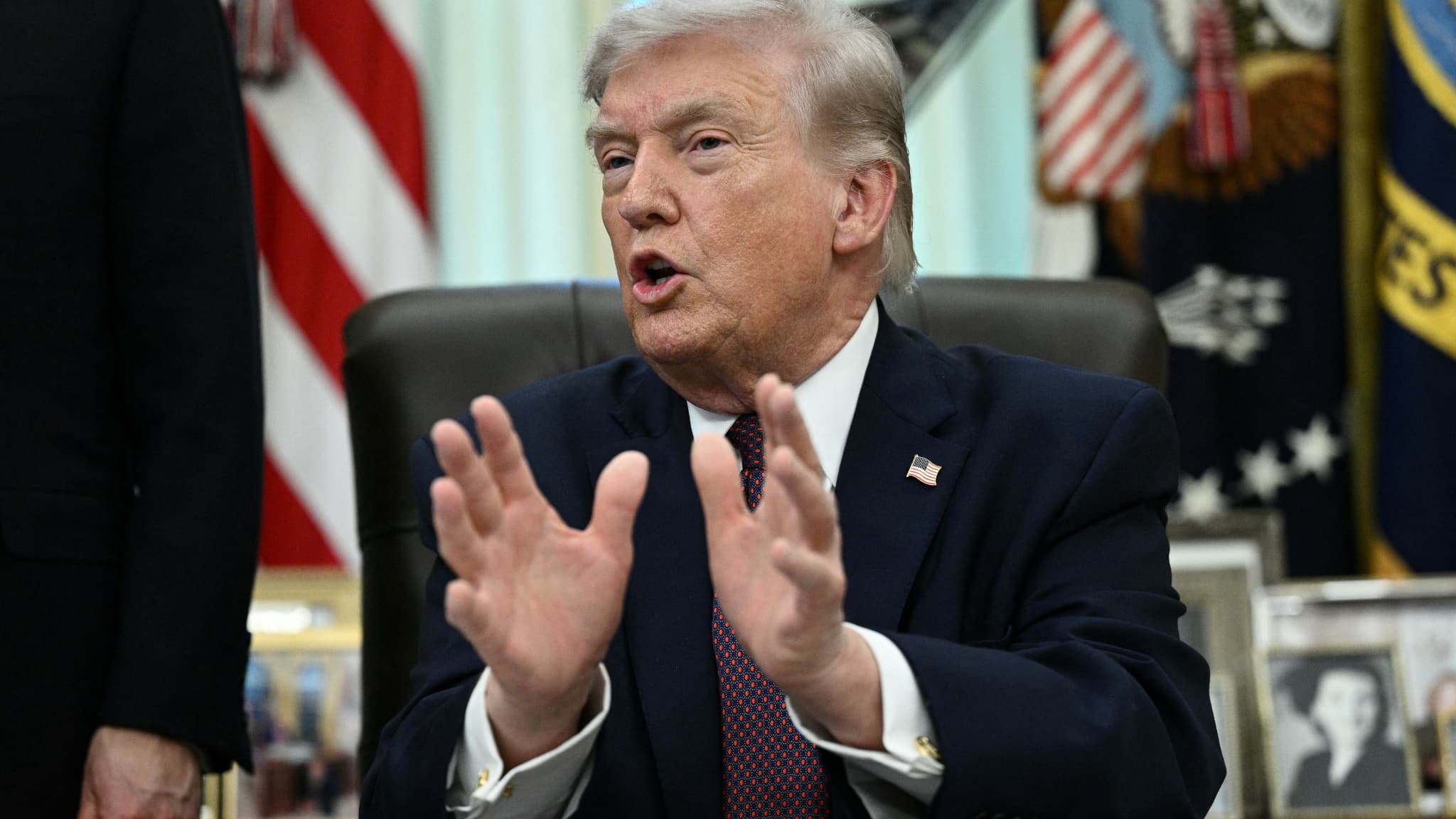
An air of optimism blows over the stock markets on Thursday, sticking to the latest remarks from US President Donald Trump considering a US withdrawal from the war in Iran within two to three weeks.
In early trading, the Dow Jones was up 0.69%, the Nasdaq rose 0.70%, and the S&P 500 gained 0.56%.
Shortly before 12:00 PM GMT, major European indices were all up by over 2%: London (+2.04%), Paris (+2.08%), Frankfurt (+2.82%), and Milan (+3.33%).
France’s Energy Situation: Government to implement energy-saving measures in case of supply issues
The French government will be required to take energy-saving measures in case of fuel supply difficulties, said spokesperson Maud Bregeon on Wednesday, without specifying these measures.
SP95-E10 reached the symbolic €2 per liter mark in France on Wednesday, based on data from 7,289 fuel stations transmitted to the French government.
Since February 27, the day before the first Israeli-American strikes on Iran that led to a surge in oil prices, SP95-E10 increased by 28 cents per liter in mainland France, a 16.26% jump.
Fuel prices also soar at the pump in the UAE
With over a 30% increase for gasoline and a 72% increase for diesel, fuel prices at the pump in the United Arab Emirates, a major hydrocarbon producer, have also surged a month after the Middle East conflict began.
While still lower compared to European prices, these prices stand at 3.39 dirhams (0.92 USD) per liter of gasoline and 4.69 dirhams (1.28 USD) per liter of diesel, as decided by the public commission responsible for setting them monthly
The Middle East conflict threatens financial stability, warns Bank of England
The economic shock from the Middle East war poses risks to the stability of the British financial system, warned the Bank of England (BoE) on Wednesday.
The conflict “constitutes a negative supply shock for the global economy, and increases the likelihood of inflationary pressures, higher interest rates, and weaker growth worldwide,” the BoE stated in the summary published Wednesday from its quarterly meeting of the Financial Policy Committee (FPC) held on March 27.
Germany: Middle East war hampers expected economic recovery
The energy shock triggered by the Middle East war will “slow down” the recovery of the German economy, dependent on additional public investments, warned major German economic institutes on Wednesday.
According to these institutes, the German gross domestic product (GDP) will grow by 0.6% in 2026 and 0.9% in 2027. These forecasts are respectively down by 0.6 and 0.5 percentage points compared to the autumn ones.
French manufacturing industry impacted by Middle East war in March
French manufacturing production declined in March due to the Middle East war, intensifying price and supply chain pressures, according to the PMI index published Wednesday by S&P Global.
“The results of the latest PMI survey highlight the immediate impact of the Middle East war on the French manufacturing sector,” emphasized Joe Hayes, chief economist at S&P Global. Data collected from March 12-24 “indicate a rapid tightening of supply conditions,” he added.
UK to host international meeting this week to secure the Strait of Hormuz
The UK will host a meeting of around thirty countries this week to mobilize efforts to restore and ensure maritime security in the Strait of Hormuz, announced British Prime Minister Keir Starmer on Wednesday.
Recall
Context and Fact Check notes in brackets:
- SP95-E10 refers to a type of gasoline with a specific ethanol content.
- The US dollar price and oil market are influenced by geopolitical tensions in the Middle East.
- The impact of the Middle East conflict extends beyond the region, affecting global financial stability and economic forecasts.