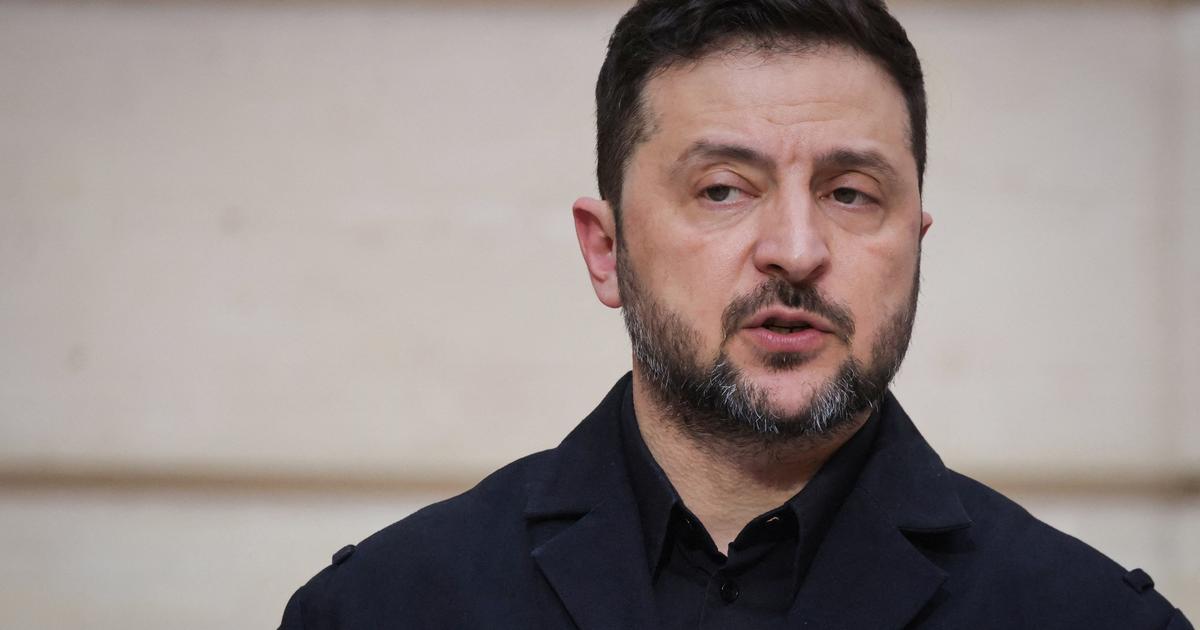
Electronic warfare tools, interception technology, maritime drones… Ukraine has agreed to provide Gulf states with the complete range of its air defense system against Iranian drones. This was indicated on Monday by President Volodymyr Zelensky upon his return from a tour of Saudi Arabia, the United Arab Emirates, Qatar, and Jordan.
“It’s not just interceptors, but also defense lines, software, electronic warfare systems, etc. In other words, we’re taking a systemic approach,” said Mr. Zelensky.
During a WhatsApp chat with journalists, he also confirmed that Ukrainian maritime drones were part of the agreements reached with Saudi Arabia, the United Arab Emirates, and Qatar.
Kyiv’s fleet of naval drones has grown in recent years, and Ukrainian maritime drones have proven effective in inflicting heavy losses on Russian military sites and ships in the Black Sea, such as the Magura-V5 drones used to target the Russian fleet.
Mr. Zelensky also stated that Ukraine was willing to share its expertise in blocking maritime commercial routes with naval drones.
“We’ve shared our experience of the Black Sea corridor and how it operates. They understand that our armed forces have been very effective in blocking the Black Sea corridor. We’re sharing these details.”
In an interview with Euronews last Friday, the EU’s special envoy to the Gulf region, Luigi Di Maio, stated that the European Union advocates for the agreement between Russia and Ukraine to allow the passage of grain exports through the Black Sea to serve as a diplomatic model to unblock the Strait of Hormuz.
Initially signed in summer 2022, the Black Sea grain initiative is an agreement between Russia, Ukraine, Turkey, and the United Nations that enabled the safe export of grains from Ukrainian ports to global markets, reducing food prices worldwide.
The initiative established a maritime humanitarian corridor, but it ended a year later after Russia withdrew its participation and stated that any ship bound for Ukraine would be considered a potential military target. However, Ukraine has since established new export routes.
Mr. Zelensky mentioned that this issue was raised during his visit to the Gulf, but it was “triggered by the United States.” “We are, of course, always ready to help our partners,” added the Ukrainian president.
What does Ukraine get in return?
For Ukraine, the agreements with Gulf states present an opportunity to open up its arms exports globally.
In September, Zelensky announced that Kyiv was ready to take this long-awaited step, which would transform the country’s defense industry and allow Kyiv’s partners to access the rarest weapons, those tested on the battlefield.
Hence the importance of signing these ten-year contracts, as stated by Mr. Zelensky. “This is about exports and opening exports. But it’s about the right kind of opening, where we understand that we’re not selling our experience for nothing.”
Kyiv’s top priority is air defense against Russian ballistic missiles. Zelensky mentioned that his country was experiencing a shortage of PAC-3 missiles for Patriot air defense systems.
Only about sixty units are produced worldwide each month, and many of them are supplied to the Middle East.
“We can see that our partners are directing anti-ballistic systems as much as possible to regions where the situation is most intense today, namely the Middle East.” He confirmed that the issue was raised during his visit to the Gulf but declined to provide further details.
“Of course, this issue was raised in Middle Eastern countries. I won’t go into the details. We will continue to work to ensure that Ukraine is supplied in this area.”
Meanwhile, Ukraine will continue “to do everything in its power to have its own anti-ballistic systems,” stated the Ukrainian president.