In the edition of this Saturday, February 28, in our newsletter Le Point du Jour, which featured the testimony of the artist in exile Jinoos Taghizadeh, I proposed three edifying readings from the site IranWire, founded in 2013 in London by a friend, Maziar Bahari. I did not know that a few hours later, Israel and then the United States were going to launch strikes on Iran. Read also Jinoos Taghizadeh’s testimony: Iran: the moral collapse of silence
Premonitory articles I did not imagine how prophetic these articles in English from IranWire were. “Boom boom Tel-Aviv” is the refrain of the latest religious hit in Tehran.
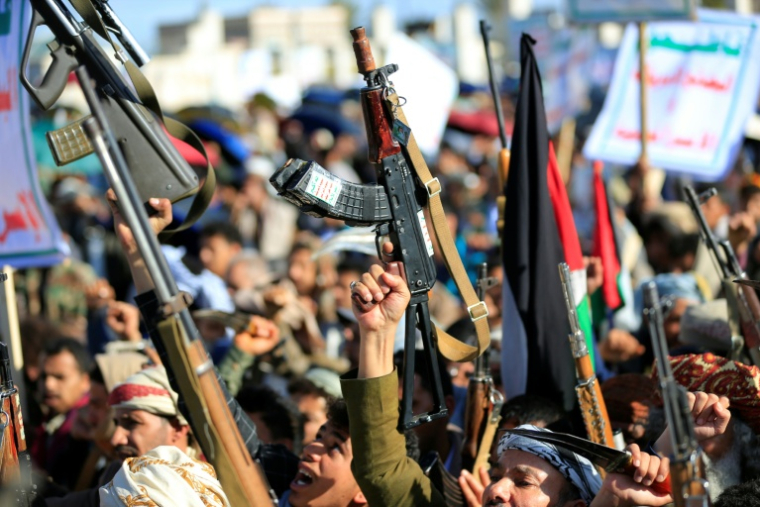
The first article, written by journalist and researcher Ata Mohamed Tabriz, in exile in Barcelona, describes how extreme religious Iranians are preparing for war – even to the point of death. “If Iranians have to choose between death and humiliation, they will never choose humiliation,” recently declared Abdollah Ganji, an ideologue close to the Revolutionary Guards. He reflects a theme cherished by Shiite Muslims: the battle of Karbala, in 680 AD: Hussein, the beloved grandson of the Prophet Mohammed and son of Ali (the first Shiite imam), died there with his entire family and men for refusing to submit to the Sunnis of the caliph of Baghdad.
“War? A divine promise” This martyrdom is central in Iranian religious thought, celebrated every year in Moharram by processions of men who whip themselves until they bleed. Like many in their camp, Abdollah Ganji, who believed that Israel had used “occult forces and jinns” during the 12-day War in June 2025, rejoiced at an American and/or Israeli attack, in unison with religious leaders who see war as a divine promise, a possibility of purification. They are convinced that they will emerge strengthened from the battle. The attack on Saturday, February 28, was certainly not a surprise in Tehran. On January 22, Yahya Rahim Safavi, the Supreme Leader’s principal military adviser, announced that Iran was preparing for the “final battle with Israel,” emphasizing that “We are not in a state of ceasefire, but rather in a war phase. No protocol, regulation, or agreement has been signed between us and the United States or Israel; the future war will determine the end of the conflict.” He presented the impending war as an existential struggle.
Iranian Missiles on Israel and Bahrain The journalist also quotes a recently appeared song on Iranian airwaves: “Hit the root of Jewish oppression, hit everything that exists, hit their existence and non-existence, Boom Boom Tel Aviv. Hit everything Zulfiqar desires” (this is the legendary double-edged sword of Imam Ali, used here as a metaphor for Iran’s ballistic power, editor’s note). Another singer, Mohammad Asadollahi, in a song titled “Commander in Chief”, sings: “Keep your eyes away from Iran, I hate America,” depicting the Islamic Republic as ready for combat and to destroy Israel. [Context: The article discusses the tensions between Iran, Israel, and the United States, highlighting the religious beliefs and preparations for war in Iran.]
“The war does not bring democracy” Another article is authored by the editor-in-chief of the Persian version of IranWire, Shima Shahrabi, whose brother was arrested in 2023 to pressure her. This article features an interview with Iranian photojournalist Yalda Moayeri. At 43, she has covered conflicts in Iraq, Afghanistan, Lebanon, Georgia, as well as all the uprising movements in her country since 1999. She has experienced prison and interrogations. On February 6, Le Monde published her images of the massive January protests. Shortly after, security forces searched her home. Yet, she candidly answers IranWire’s questions. She is against war but admits that the majority of people around her are hoping for war as a way out of the quagmire of the regime. “I know that war does not bring democracy,” she says. “But yes, people want an attack.” She summarizes the remarks heard in the crowd during the January protests before the brutal crackdown, emphasizing that a majority of demonstrators were calling for the return of Reza Pahlavi, the son of the deposed Shah of the 1979 Islamic Revolution. Comparing the uprising movements that have multiplied over the past 27 years, she says:
Pressure at a point of no return “Today, it is very clear that people’s patience is running out and they may have become more violent, to some extent. This can be analyzed from a sociological perspective, but the level of pressure has reached a point where such behavior is justifiable and understandable. Despite this, people have empty hands. If they used sticks or bricks, I did not see anyone using them to attack the agents; they were used to block the streets and alleys.” [Fact Check: The article describes the evolving political and social landscape in Iran, where tensions are increasing among the population, leading to a desire for change and resistance against the oppressive regime.]
Dancing on graves to defy the regime The third article, which I recommended reading, is more anecdotal. Or is it? Entitled “Iranians defy the regime by dancing on graves.” Since the massacres of January 8 and 9, Iranians have been dancing. They dance at the funerals of their loved ones, especially on the 40th day after the loss. The “mourning dance” is an ancient tradition that has recently turned into an act of defiance against the regime. The message is clear: they are no longer afraid of the oppressor. [Context: The article highlights the symbolic acts of resistance and defiance by the Iranian people against the regime through cultural traditions.]