At the heart of the war shaking the Middle East, Washington fears a strategy as simple as it is formidable: Iran mining the Strait of Hormuz. A scenario that could paralyze a vital artery of global oil trade and trigger a planetary economic shock.
Iran has intensified missile salvos and drone deployments in recent days, in response to the Israeli-American attack on its territory and that of its allies. However, Tehran seems to have surprised and shaken the American giant on another front: the seas.
Specifically in the Strait of Hormuz, this narrow passage through which about 20% of global oil, coming from Saudi Arabia, the United Arab Emirates, or Kuwait, transits to reach Asia, Europe, or the United States.
In the strait, Iran seems to have embarked on a risky but profitable operation: ships reportedly attempted to lay mines that would have made all traffic impossible. On Tuesday evening, the American military announced that 16 Iranian ships capable of laying mines in the vicinity of the strait had been struck.
A video released by the US military shows ammunition raining down on nine vessels, most of them moored at the time of the attack. According to a US official, Washington believed that Iran was preparing to mine the area, but had not yet launched the operation.
The Trump administration is on high alert
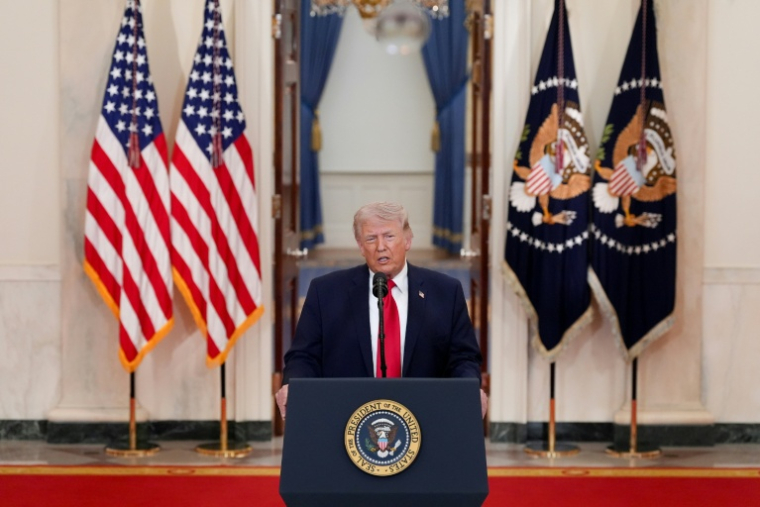
This simple preparation was enough to alarm the Trump administration, which ordered military strikes against these means before they could be used. “If, for one reason or another, mines have been placed and are not removed promptly, the military implications for Iran will be of unprecedented scale,” Donald Trump threatened on his social networks.
The mere fear of a closure of the passage is already having economic effects. Since the beginning of American and Israeli strikes against Iran on February 28, several shipping companies have suspended or delayed their crossings. As a result, oil prices have surged on international markets.
In this context, naval mines appear as a formidable option for Tehran. Inexpensive and difficult to detect, they can turn a maritime route into a forbidden zone within hours. Iran has long possessed significant stocks of these devices.
This scenario is not theoretical. In the 1980s, at the height of the Iran-Iraq war, Iranian forces had already laid mines in the Persian Gulf. In April 1988, one of them severely damaged the American frigate USS Samuel B. Roberts, triggering a military response from Washington.
Today, if mines were detected, the mission to neutralize them would fall to the US Navy’s Task Force 56, based in Manama, Bahrain. This specialized unit uses autonomous underwater vehicles equipped with side-scanning sonar to locate suspicious objects on the seabed. Once located, these devices can be inspected by remotely operated vehicles or divers capable of intervening up to about 90 meters deep.
Escorts sent by the Pentagon?
The threat is being taken seriously enough for Washington to also consider direct military protection for commercial ships. Last week, Donald Trump mentioned the possibility of sending naval vessels to escort tankers through the strait, as was done in the late 1980s during similar tensions with Iran.
For now, the Pentagon says no escort mission has been officially launched. General Dan Caine stated during a briefing that the US military had not received orders to carry out such an operation.
This situation is causing concern beyond the Republican administration. Democratic Senator from Connecticut Chris Murphy took to his social networks to voice his concerns about the way this war is being conducted. “I just came out of a two-hour briefing on the war in Iran,” he wrote. “I can’t disclose any classified information, but you deserve to know how incoherent and ill-prepared this war is.”
The senator pointed out the lack of objective, other than the destruction of the fleet of missiles, drones, and boats, which he deemed very costly and paying off only in the short term. He also expressed concern about the situation in the Strait of Hormuz: “As for the Strait of Hormuz, they have no plan,” he wrote. “I can’t go into details about how Iran is blocking the strait, but let’s just say that at this point, they (Note: the Trump administration) don’t know how to reopen it safely. Which is unforgivable, as this part of the catastrophe was 100% foreseeable.”