Laurent Mazaury, Deputy of Yvelines, member of the Foreign Affairs Commission of the National Assembly and Municipal Councilor of Elancourt (78)
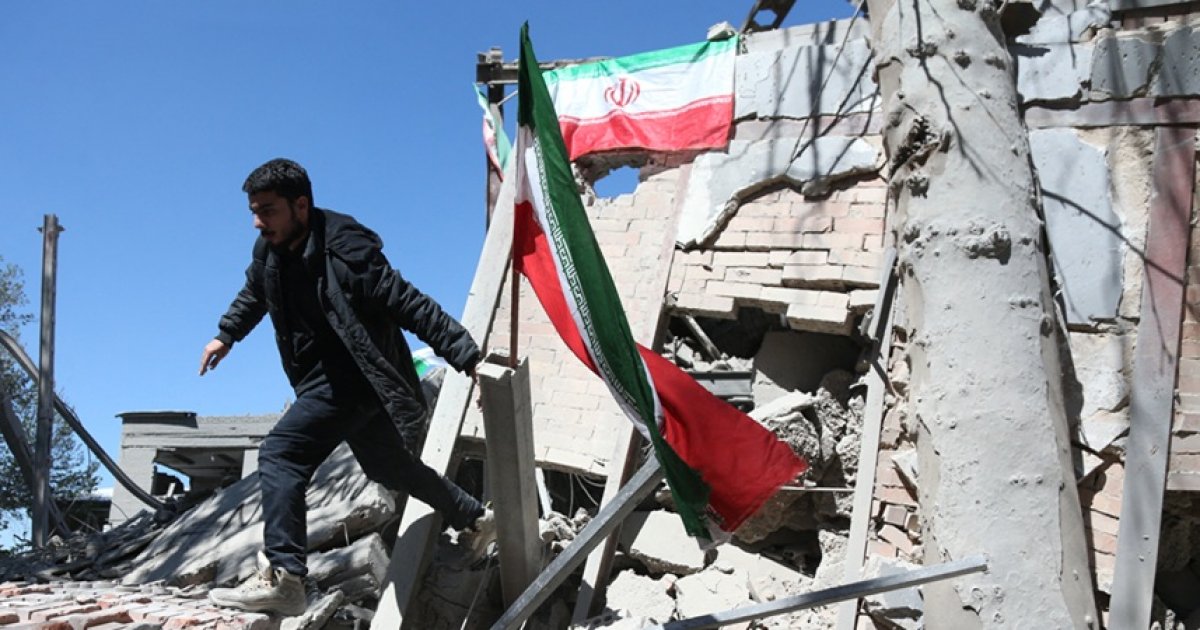
Forty days of war, then silence. Not the silence of victory, but a more ambiguous one of mutual exhaustion. The ceasefire between Washington and Tehran appears less as a conclusion than as a pause imposed by circumstances.
Before drawing conclusions, we must first face what this conflict has actually produced.
Neither winner nor loser, strictly speaking. The United States demonstrated the extent of their firepower, but in an asymmetric war, a show of force is not enough to define victory. A drone passing through American defenses weighs as heavily in the media as a rain of missiles on the Revolutionary Guard’s infrastructure. Worse, with the poorly managed maritime blockade and the rise in oil prices, it is Donald Trump himself who appears to be yielding to market pressure.
Iran, for its part, emerges transformed but not triumphant. The regime has radicalized, the Revolutionary Guard has consolidated its hold, sweeping away what little remained of voices in favor of negotiation or eliminated by American strikes. The human and material cost of these forty days remains to be assessed, and it will be heavy. However, two certainties emerge. Tehran has crossed a threshold by blocking the Strait of Hormuz. It is no longer a threat brandished for decades, but a right of passage now exercised. The maritime and commercial world is structurally changed, and Gulf countries as well as Western public opinions are the first hostages. The other certainty, counterintuitive but relentless, is that mastery of nuclear weapons is now the only assurance of the regime’s long-term survival. This ceasefire does not resolve this fundamental point, it only shifts it.
The real winners are not where they were expected. Israel emerges with strengthened regional dominance, effectively becoming the structuring power of a reconfigured Middle East. Surprisingly silent throughout the hostilities, China maintained its strategic ties with Tehran without exposing itself, and its analyses on the limits of American power are now worth more than its temporary economic losses. As for Russia, it has found a breath of fresh air. By supporting Iranian strikes in the final days of the conflict without drawing Washington’s wrath, Moscow took the opportunity to massively restart its energy exports, loosening the grip of Western sanctions.
The losers, on the other hand, are unequivocal. The Iranian civilian society, after years of oppression and tens of thousands of deaths in January, finds itself confronted with an even more closed regime, emboldened by its resistance to its historical enemy, with no prospect of opening. Gulf countries have revealed, through their passivity, a deep fragility. The American military presence on their soil, supposed to guarantee their protection against the Iranian threat, is now perceived as a target as much as a shield. This is a significant strategic shift. The Europeans, as powerless spectators, once again realize the cost of their strategic absence.
This assessment may only be temporary, but for now it is overwhelming. Forty thousand Iranian deaths in January and February, a regime passing from the hands of the mullahs to those of the Revolutionary Guard, the possibility of uranium enrichment resuming, the ballistic program continuing unimpeded, and the Strait of Hormuz under Iranian control, positioned, now, as an instrument of pressure on global trade. And what about tomorrow, the Strait of Malacca, the main supply route for China and Japan’s hydrocarbons?
Not to mention that the Gulf states, our main allies, emerge weakened.
The volatility of the three belligerents, the uncertainties of the Iranian nuclear issue, and the reorganization of global balances ensure that this ceasefire is not the end. It is, at best, a respite. For this still provisional assessment, the American-Israeli intervention looks like what we still dare not fully name: a strategic failure.