The French Minister of Foreign Affairs stated on Thursday that this tax would violate the principle of free navigation of ships, guaranteed by the United Nations Convention. However, neither Iran nor the United States have ratified this convention. They can therefore avoid it.
Published
Reading Time: 4min
/2026/04/09/69d7bbe5b148b360515891.jpg "TRUE OR FALSE. Does the toll project in the Strait of Hormuz mentioned by Iran and Donald Trump violate the law")
Soon a toll to cross the Strait of Hormuz? This project is “illegal” because “international waters are free for ship navigation,” the Minister of Foreign Affairs stated on France Inter on Thursday, April 9. Jean-Noël Barrot reacted to Iran’s initiative to establish a secure passage through this strategic strait during the two-week truce concluded with the United States.
This proposal was of interest to Donald Trump. When asked about it by ABC News on Wednesday, April 8, the American President called the toll project a “good thing.” On his Truth Social network, he also stated that “the United States of America will help streamline traffic in the Strait of Hormuz” and “a lot of money will be made.” Voices, including that of the European Union, are rising to call for respect for freedom of navigation. So, do Iran and the United States have the right to implement a toll on the Strait of Hormuz? Franceinfo separates fact from fiction.
In theory, the freedom of navigation is guaranteed by the United Nations Convention on the Law of the Sea of 1982. This principle applies to all seas and all international and territorial waters. Ships also have a right of passage, called “innocent.” This means they have the right to pass “unhindered” through international waters, and even the territorial waters of Iran in the strait, as long as they do not threaten the peace or security of the coastal state. Iran does not have the right to prohibit them or charge them for this passage.
This is the specificity of the natural strait, “where the cardinal principle of international maritime law, which is freedom of navigation, applies,” explained Nicolas Mazzucchi, a research director at the Center for Strategic Studies of the Navy. The only areas subject to tolls are artificial canals, like those of Suez or Panama.
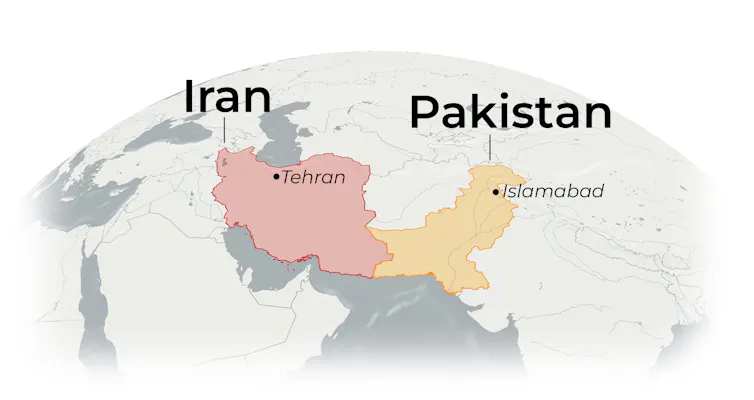
However, Iran and the United States do not recognize this United Nations Convention. These two countries signed it, but did not ratify it. Therefore, they can avoid it as non-members and are not legally bound to respect it. However, “in international law, if a state indicates its intention to be part of a treaty” [by signing it], “it should not take actions contrary to its purpose,” noted Leslie-Anne Duvic-Paoli, a lecturer in law at King’s College London, an expert in international law and ocean governance.
Furthermore, “it is generally considered that freedom of navigation in international straits is a customary rule of law,” meaning unwritten rules commonly accepted by states. In case the toll is effectively put in place, some recourse is possible for other states. Legal recourse is not an option since neither Iran nor the United States are parties to the Law of the Sea Convention. “For states party to the Convention, there is a mechanism for resolving disputes. Without this Convention, it becomes very difficult,” Leslie-Anne Duvic-Paoli believes. The other possible course of action remains diplomatic and economic pressure on Iran, and even on the United States, since Donald Trump mentioned a partnership with Iran on this toll.
/2026/04/09/69d79dce94502980940400.jpg "I know it worries you, but everything will be fine: how Donald Trump led the United States into war.")