Initially planned for 2030, the future American 6th generation fighter F-47 sees its delivery delayed. Designed as a flying command center piloted by AI, this ultra-technological aircraft is intended to give the United States an edge over China in the race for aerial domination. BFM Business provides an overview of what is known about this aircraft.
It was expected by 2030. One year after the contract was officially announced with Boeing to build the next generation of American fighters, the delivery of the F-47 has been delayed, according to Congressman Rob Wittman. “So the question becomes, what do we do in the meantime?” He asked on March 17th.
For this Republican, Vice President of the House Armed Services Committee, the Pentagon should “keep a fleet of F-18s in service” and “maintain the F-22s … This is the only way for us to create that bridge to the sixth-generation fighter jet.”
F-18, F-22, F-35—How do you navigate the myriad of aircraft in the U.S. fleet? We explain why the U.S. has so many fighters and what purpose this new model in development will serve.
F22, F35—What are all these planes for?
Each branch of the American military has its own fleet of aircraft tailored to its needs. The Navy, Marines, and US Air Force each deploy fighters in their missions. Historically, the U.S. has developed both small and large fighters. The former, like the F-16 built in the 1970s and still the most widely used in the world today, allow for defense in war zones and are known for their maneuverability. But their size limits their fuel capacity and, therefore, their range.
The aging F-15 Eagle, from 1976, remains in use today because it is a reliable and versatile fighter capable of carrying a large number of weapons and engaging at long distances. In the current context of tensions with Iran, it is especially useful for intercepting drones and missiles to ensure aerial superiority.
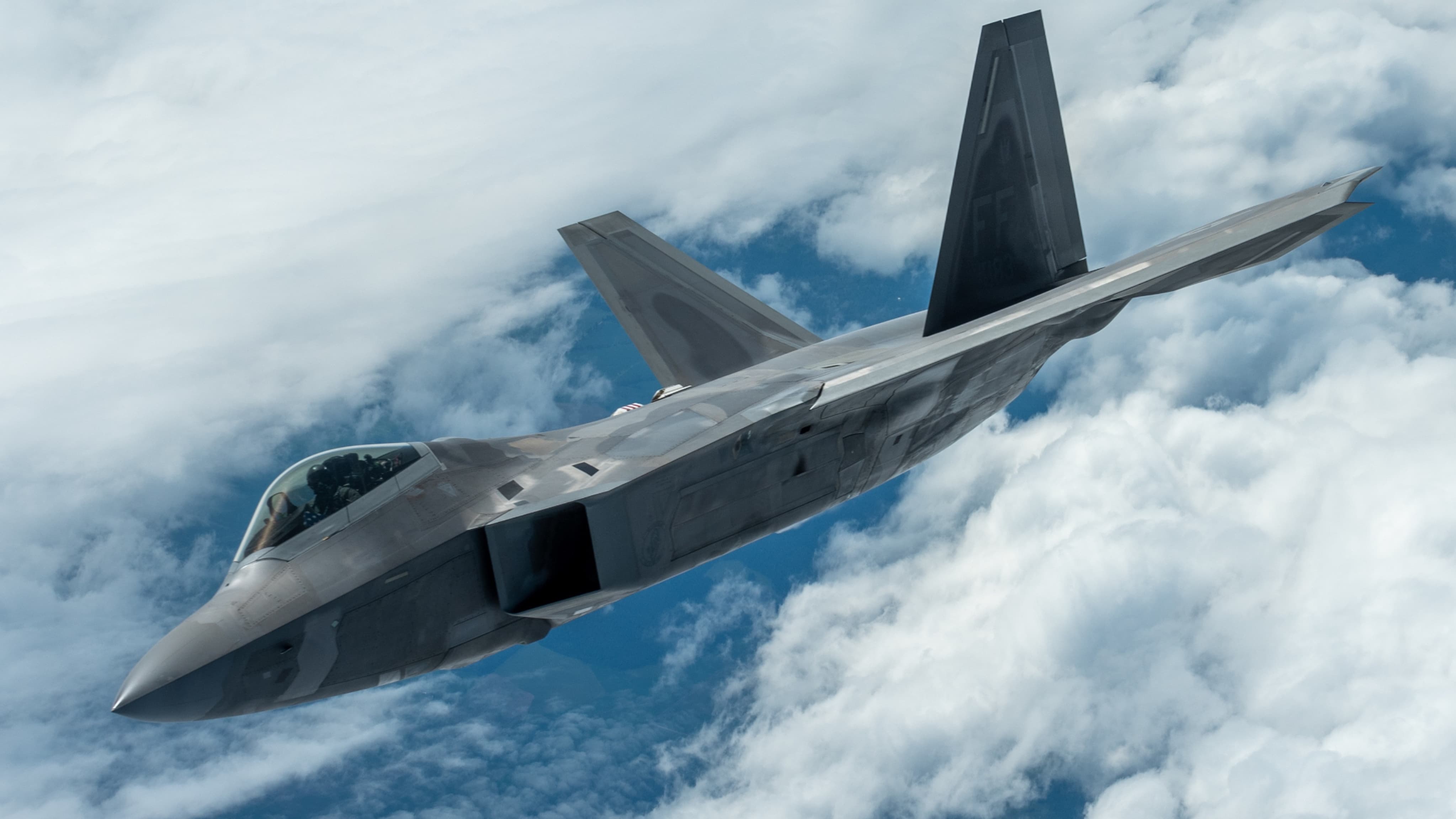
In contrast, the Lockheed Martin F-22 Raptor, deployed from the 2000s, is an imposing aircraft used for “power projection,” according to Pierre-Henri Chuet, a former fighter pilot. The U.S. Air Force claims it can travel up to 3,000 kilometers without refueling at its full capacity. The aircraft also has a supercruise capability, allowing it to reach supersonic speeds without afterburners—accelerating by burning a considerable amount of fuel.
These features, combined with its stealth capabilities (its shape and materials absorb radar waves) and its data fusion capabilities, make this fighter the king of aerial combat. This superiority has led the U.S. to prohibit the export of the most expensive fighter jet in the world (a recent estimate by Iffri calculated it would cost $282 million).
This is not the case for the F-35 Lightning, which, 10 years after its introduction, is operated by 14 NATO member states, including Italy, Poland, and Denmark. The characteristics of this “multirole” fighter allow it to conduct precision bombing, aerial combat, and electronic reconnaissance. It is designed more as a “mass-produced” product, adaptable to the needs of acquiring countries.
Why create a sixth generation fighter?
Launched in 2015, the U.S. Air Force’s Next Generation Air Dominance (NGAD) program envisions the introduction of a 6th generation fighter to replace the F-22 by 2030. The 187 aircraft currently in service will all be over 20 years old, with production halted in 2011. But the wear and tear of the aircraft and their structure is not the only reason.
“The Americans are caught in an escalation process with the Chinese,” says Pierre-Henri Chuet. “They need to compete in ultra-technology because it is a form of deterrence.”
The F-47 is intended to be deployed in the Pacific and to be able to reach the United States’ great rival on the other side of the ocean.
But beware of military marketing. The label “sixth generation” is not based on objective criteria. It actually signifies a technological breakthrough compared to current fighters in service, across a range of characteristics.
What will be the innovations of this model?
The promises of the F-47 are numerous, but rumors about its characteristics will have to be tested in reality.
In terms of design, it is already known that the aircraft will be massive. It will need to be able to carry enough fuel to cross the Pacific and carry larger armaments than the F-22. A source in the military mentioned that “the missiles are now completely outdated compared to Chinese capabilities. If you want a missile that goes further, you need a large bomb bay.” It is impossible to attach these munitions under the aircraft for stealth reasons: missiles reflect radar waves strongly, making them easily detectable by radars.
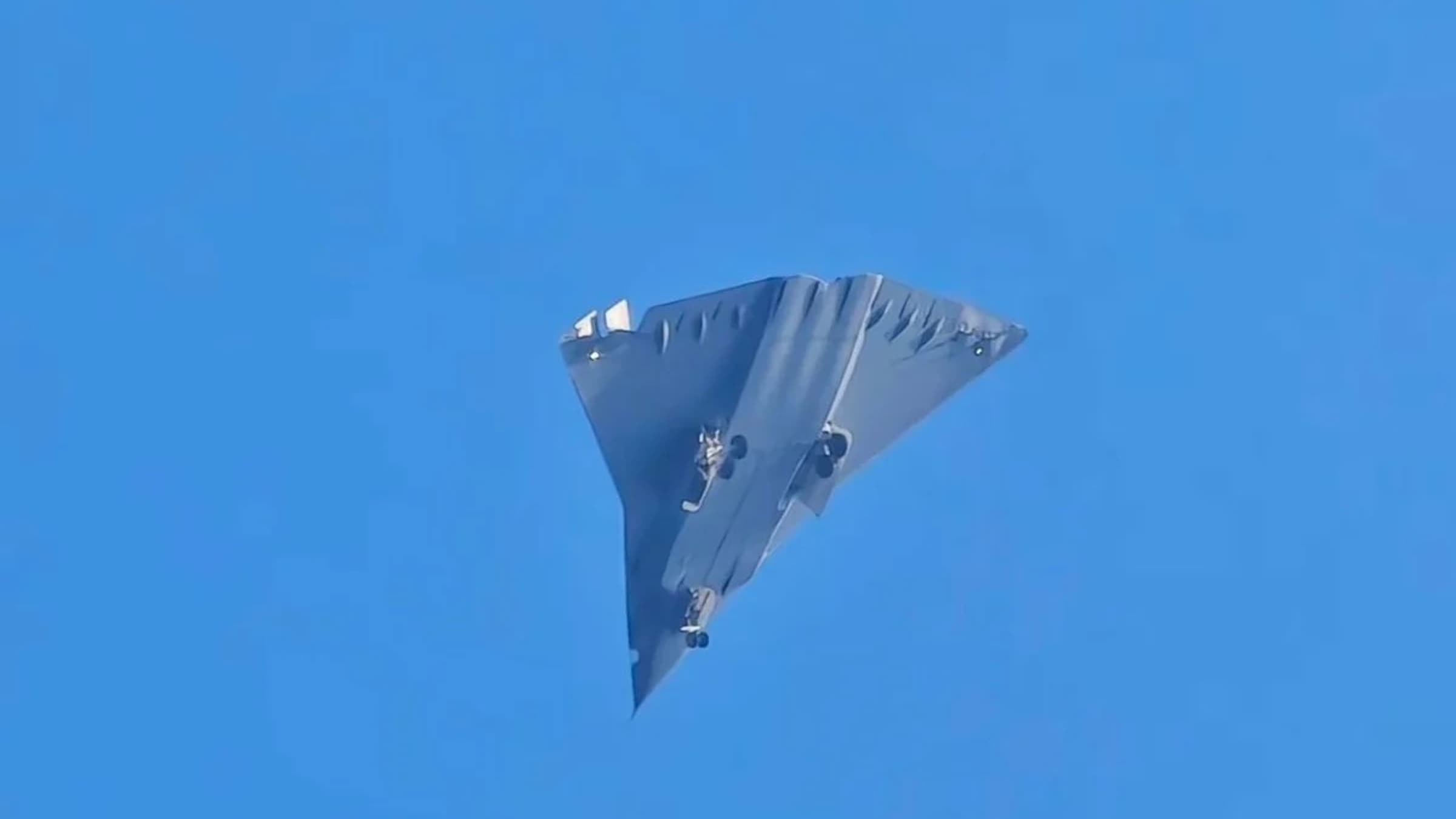
In this regard, the 6th generation of fighters is expected to be the most invisible. Chinese prototypes and visual creations released by the American military resemble flat triangles—a shape designed to deflect waves from any direction, unlike current aircraft, often only detectable head-on. This is a crucial factor in the age of modern networked radars.
The main innovation of the F-47 could lie in its software. The aircraft is designed as a command system that could be accompanied by drones—referred to as “loyal wingmen.” The U.S. military is heavily investing in a fleet of drones through its Collaborative Combat Program—companies like General Atomics and Anduril are involved. This network between unmanned aerial vehicles and a fighter is technically feasible on an F-22 or even a Rafale F5, but the F-37 is expected to integrate this function from the start.
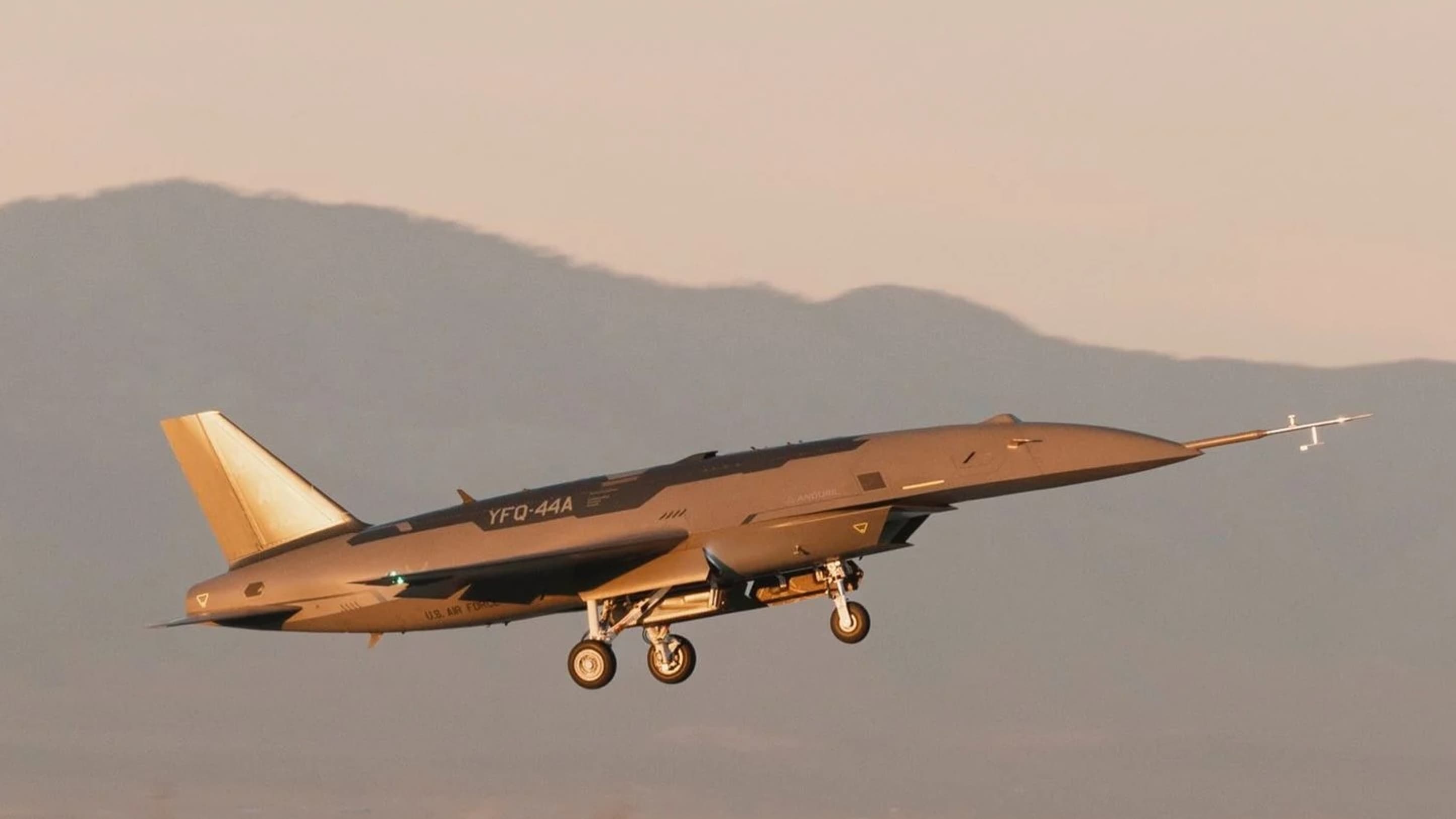
The fighter pilot would then become the “proximity manager” of a micro-flying armada that allows for attacks without overexposure. It also allows for gathering new data near the target.
“The future aerial platforms will increasingly process more data,” says Christophe Piubeni, a defense strategy expert. “Coming from other aircraft, but also from the visible spectrum or electromagnetic spectrum. In this maelstrom, artificial intelligence must deliver the most relevant information to the pilot in the cockpit.”
Military engineers speak of “data fusion” to describe this software’s ability to manage information and present it as a single tactical reality. This tool becomes more valuable as electronic warfare methods evolve continuously.
Pierre-Henri Chuet sees the F-47 system as the potential culmination of the targeting loop shortening process enabled by the development of war AI. Just as the Maven system currently allows the U.S. to identify potential targets in Iran at record speed, the AI integrated into the F-47 is expected to provide the pilot with the level of information equivalent to a ground command center, thereby reducing all decision-making loops.
For the former pilot, “this is the future of warfare,” with all the ethical questions raised by assigning more responsibility to software when deciding on the deaths of individuals.
Will France have its sixth-generation aircraft?
Currently, the European Future Combat Air System (FCAS) is facing challenges. A last-chance mediation mission was launched by Emmanuel Macron and Friedrich Merz to save this next-generation fighter project. As for the Rafale, a multirole aircraft like the American F-35, it has been flying for over twenty years, and its successor is not yet in sight.
The Rafale F5, a new model formalized two years ago, is set to enter service starting in 2033. “But I doubt we will have the means to fund everything that needs to be onboard,” whispers the military source mentioned earlier. Especially since the United Arab Emirates, which were supposed to finance its development, have announced their withdrawal.
The ASN4G (4th Generation Nuclear Air-Surface Missile), the Meteor (a new air-to-air missile, a new drone control technology— the requirements are ambitious. “In a way, it’s going to be a big F22 capable of carrying a nuclear payload … and that’s going to be expensive. I’m not convinced we will have the means to finance everything, given the current state of public finances.”
In 2024, the French Ministry of Armed Forces referred the case of Pierre-Henri Chuet’s consultancy activities in 2018 and 2019 to the Paris Prosecutor’s Office. The former Navy pilot had traveled to China to train Chinese military personnel. The speaker denies any illegal activity. In January 2024, Sébastien Lecornu included a ban in the military programming law for former military personnel to work for a foreign state without prior approval.

/2026/04/02/69ce960b3c935794299979.jpg "TRUE OR FALSE. War in the Middle East: Can Donald Trump unilaterally withdraw the United States from NATO?")